

Kalasuara -
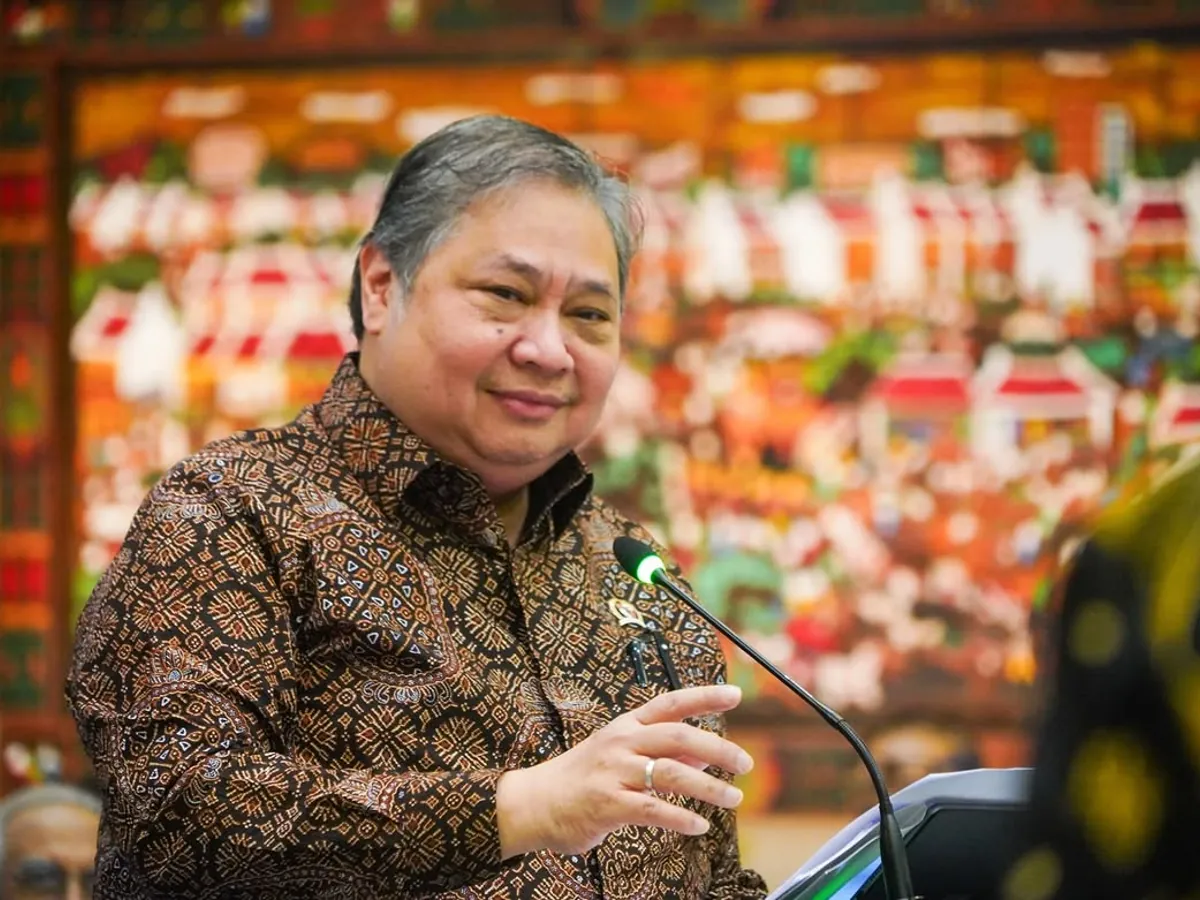
Indonesia's Coordinating Minister for Economic Affairs Airlangga Hartarto has invited Chinese companies to invest in a 100 gigawatt (GW) solar power project, a target President Prabowo Subianto wants completed by 2029. He made the pitch during a bilateral meeting with China's Minister of Commerce Wang Wentao in Shanghai on Friday night, July 17, 2026, in remarks made public only through an official statement received in Jakarta the following day.
At the same forum, Airlangga praised Chinese investors' involvement in the Cirata Floating Solar Power Plant as proof of the potential for clean energy cooperation between the two countries. He then asked that the domestic solar panel supply chain be "strengthened and further developed" so production becomes more integrated at home, a request that came from the same speaker, at the same forum where he had just credited Chinese capital for Cirata's progress.
Why is Airlangga chasing Chinese investment for the 100 GW solar project?
The 100 GW target Prabowo set for 2029 demands funding and production capacity far beyond what Indonesia's domestic solar industry can currently muster. China is one of Indonesia's three largest sources of foreign investment, with realized investment of nearly $8.1 billion in 2025, about 13 percent of total foreign investment inflows. That makes China the most logical partner for chasing a deadline that is already close.
"Indonesia appreciates China's investment in the Cirata Floating Solar Power Plant. The project shows the great potential for Indonesia-China cooperation in supporting the energy transition, developing clean energy, and meeting our emissions reduction targets," Airlangga said.
A supply chain request that exposes dependency
Airlangga's praise for Cirata points to the fragile side of the government's flagship clean energy project: the modules and technology running there have long relied on foreign supply. His request to strengthen the domestic supply chain, made at the same forum, is an implicit admission of that. China, the world's largest solar panel maker, is being offered a dual role: financier of the project, and partner asked to help build up the national solar industry so it no longer depends permanently on imported capital and components.
China's investment in Indonesia's energy sector has so far sat in a broader basket alongside manufacturing, trade, property, and transport and warehousing, according to the official statement from the meeting.
By the numbers: 30 MoUs worth trillions, still not projects
The Two Countries Twin Parks (TCTP) scheme, an Indonesia-China industrial park partnership, has so far produced 30 memoranda of understanding with an estimated investment value of around Rp37.1 trillion. That figure sounds substantial, but Airlangga himself acknowledged the gap between promises on paper and what has actually been built.
"The various memoranda of understanding that have been signed need to be followed up quickly with real investment. We are also pushing for joint ventures so TCTP cooperation can deliver more concrete economic benefits," he said.
He then asked China's Ministry of Commerce to support more Chinese companies investing in Indonesia's industrial and commercial zones, and pressed for joint ventures between businesses from both countries. This pattern of large memoranda that have yet to turn into running projects is not new in Indonesia's bilateral investment relationships.
Context: from Cirata to Danantara
Indonesia-China trade reached $154.6 billion in 2025, growing an average of 7.24 percent a year from 2021 to 2025. That scale is why the Shanghai forum covered more than one solar project: Indonesia also asked for China's support in establishing and hosting the Regional Comprehensive Economic Partnership (RCEP) regional secretariat in Indonesia, and in strengthening the RCEP 3.0 agenda.
Airlangga named Danantara Indonesia a strategic partner for attracting quality investment and building national production capacity, a point that echoes his call for a stronger domestic solar supply chain. Indonesia's renewable energy ambitions already have a precedent: the launch of B50 biodiesel as the world's first also faced similar questions about the domestic supply chain behind it.
"The Indonesian government is committed to policy certainty and to creating a conducive investment climate. We hope this meeting can be followed up with concrete cooperation and projects that deliver balanced, mutually beneficial results for both countries," Airlangga said.
Priority projects ahead of APEC 2026
Indonesia has voiced support for China's APEC 2026 chairmanship and hopes priority projects from both countries can be identified for announcement at the next Indonesia-China leaders' meeting. Three things will determine whether the Shanghai meeting produces real results: whether the 30 TCTP memoranda worth Rp37.1 trillion actually turn into construction or joint ventures, whether the government announces concrete steps to build domestic solar panel production capacity, and which priority project is ultimately chosen for announcement ahead of APEC.
Comments