

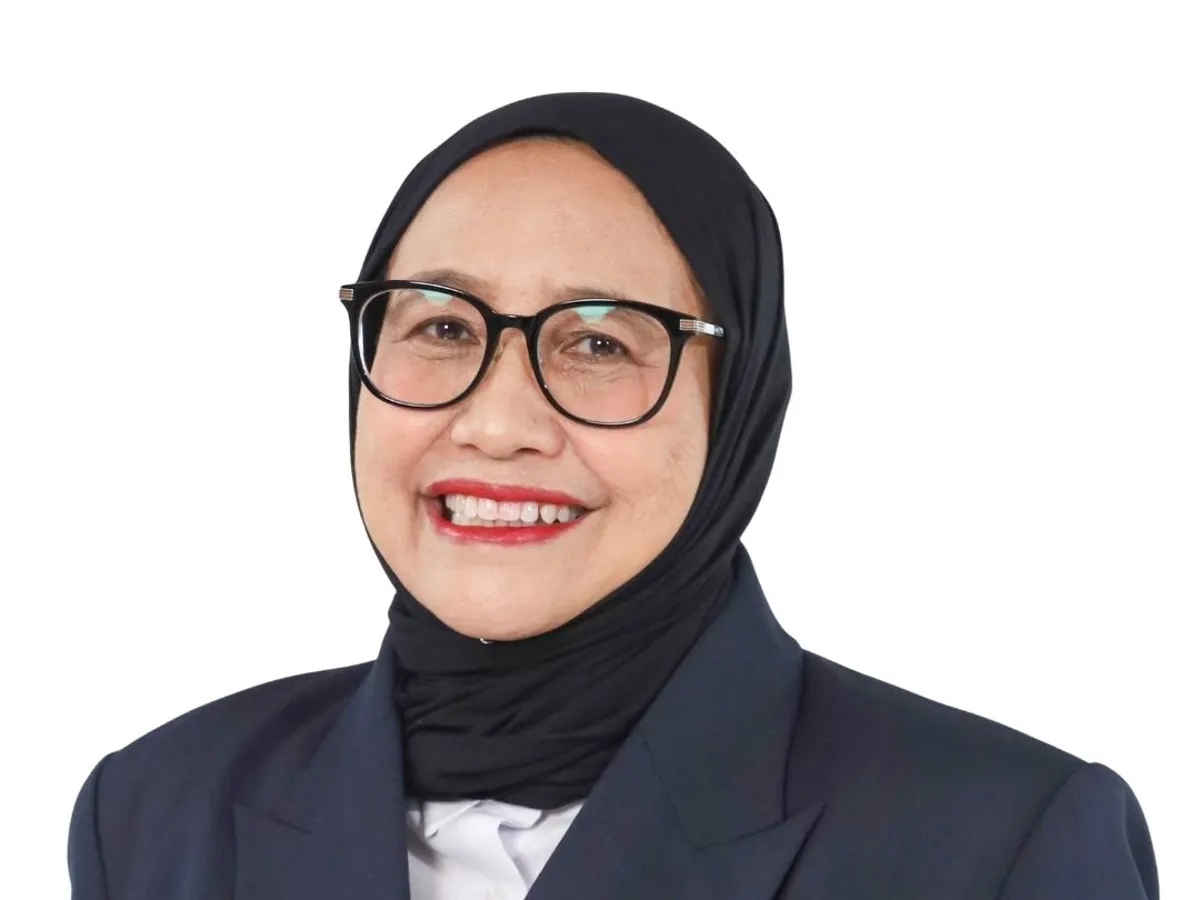
Kalasuara - Nanik S. Deyang resigned as head of Indonesia's National Nutrition Agency (BGN) on Wednesday, July 22, 2026, to seek heart treatment abroad. President Prabowo Subianto approved the request but asked her to keep overseeing the agency, which runs the government's free nutritious meals program.
Presidential Special Assistant for Communications and Policy Dirgayuza Setiawan confirmed the news the same day. "Today Ms. Nanik Deyang took her leave from President Prabowo to undergo heart treatment and to resign as head of the National Nutrition Agency," he said. Nanik said she was traveling abroad to seek a second medical opinion, not because she doubted the ability of doctors at home.
BGN reports directly to the president and runs the free meals program through tens of thousands of Satuan Pelayanan Pemenuhan Gizi (SPPG), or nutrition service units, across Indonesia. Nanik had led the agency since she was sworn in at the State Palace on Monday, June 8, 2026, replacing Dadan Hindayana, alongside two deputy chiefs, Agustina Arumsari and Trenggono.
Why isn't a BGN oversight board a done deal yet?
Because Nanik herself called it a "possibility," not a decision the president had issued. "I told the president, with a thousand apologies, that it seems I have to step down as BGN chief for my health, and because the president was concerned and felt for me, he approved it, but asked me to keep helping oversee BGN," Nanik said. She added that she would likely be named chair of an oversight board, an organ that current BGN regulations do not mention.
Presidential Regulation No. 83 of 2024, still in force, makes the BGN chief both the agency's leader and the person responsible for carrying out its duties, with a steering board tasked with directing the executive arm. The regulation contains no oversight board of the kind Nanik described. If the new body is actually created, the government would need to issue a legal basis for it, along with its mandate, membership and the limits of its authority, including whether it could overrule the BGN chief's decisions or only offer input, as the steering board does.
Nanik also sketched out the kind of authority she wants. "If I'm asked to chair the oversight board, nagging is probably fine, as long as it has nothing to do with handling money. I swear I'm still traumatized by that," she said, referring to her experience running BGN's day-to-day operations.
44 days as BGN chief
Nanik resigned just 44 days after taking office. According to Dirgayuza, cited by ANTARA, BGN evaluated nearly 28,000 SPPG units, classified 3,000 kitchens by quality standard, halted kitchen expansion in areas already considered saturated, found 414 SPPG units with problems, and formed 11 reform teams, all within about a month and a half. Those figures come from government statements, not an independent audit, so further verification of the claimed results remains open.
The pace of the review lines up with lawmakers' scrutiny of the meals program. House Commission IX has urged BGN to set a time limit on its moratorium on opening new kitchens, while the House more broadly has floated forming a working committee to evaluate the program's target of 82 million beneficiaries. A change in leadership mid-review risks delaying decisions on which kitchens meet quality standards and which should close.
Who will lead BGN through the transition?
Nanik did not name a successor. The president has the authority to appoint a new BGN chief, and while the agency has two deputy chiefs, Agustina Arumsari and Trenggono, available sources have not said either has been assigned to run day-to-day operations during the transition.
Nanik offered only a personal hint about who might replace her. "God willing, my successor is someone I consider family, someone I can scold if things go off track," she said. She named neither a person nor a title, and the official decision still rests with the president.
Several things still need clarifying from the palace and BGN: formal acceptance of Nanik's resignation, the name of the next BGN chief, whether an oversight board will in fact be created and on what legal basis, and what happens to the 414 SPPG units flagged as problematic during Nanik's tenure.

Comments