

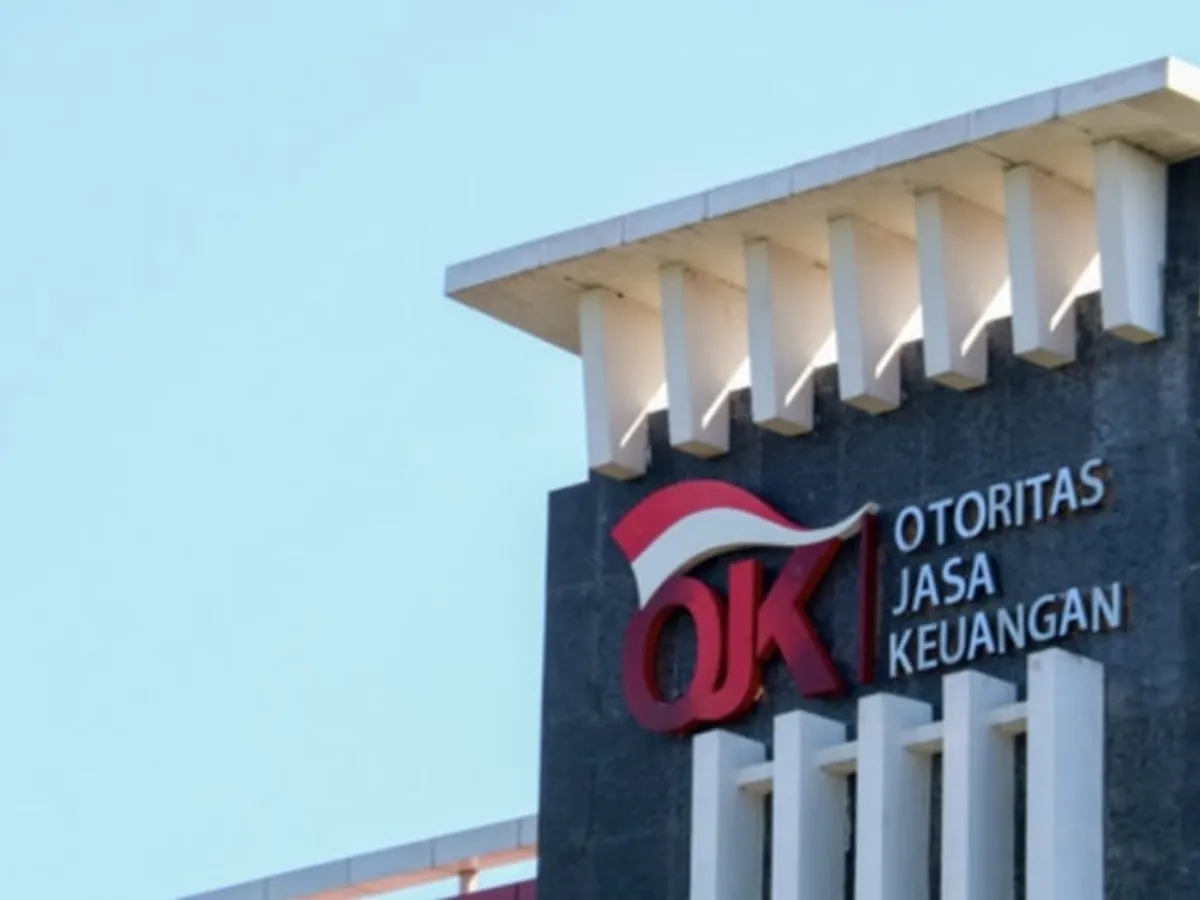
The idea that Indonesia's online loan interest rates dropped to a flat 0.1 percent a day in 2026 is wrong. Financial Services Authority (OJK) Circular Letter No. 19/SEOJK.06/2025 sets tiered rates by loan purpose, amount, and tenor, ranging from 0.3 percent a day for short-term consumer loans to 0.1 percent a day for large productive financing. The 0.1 percent figure does exist in the rule, but only for specific categories, not as a single rate across the industry.
What OJK actually caps is called the "economic benefit," the total cost a borrower carries under one combined credit limit: interest or profit margin, administrative fees, commissions, and platform fees, or ujrah. An app that advertises a low interest rate on its promotional screen can still bury other charges that count toward that same limit, so consumers need to add up every component in the product summary, not stop at the interest figure alone.
Paylater runs under different rules. POJK No. 32 of 2025 and PADK No. 2 of 2026, an OJK Board of Commissioners regulation, govern bank and finance company BNPL (buy now, pay later) through an effective interest method and a requirement to disclose every cost component, without setting a single daily rate cap the way online loans do. BNPL financing grew fast as these rules took effect: OJK data through April 2026 show finance company BNPL financing reached Rp12.93 trillion, up 56.92 percent year on year, while gross non-performing financing rose from 2.51 percent in March to 2.99 percent.
How much is Indonesia's online loan interest cap now?
For consumer financing, SEOJK 19/2025 caps the economic benefit at 0.3 percent a day for tenors up to six months, and 0.2 percent a day for tenors beyond six months. Productive financing up to Rp50 million is capped at 0.275 percent a day for short tenors and 0.1 percent a day for long tenors. Productive financing above Rp50 million is capped at 0.1 percent a day regardless of tenor.
That cap is a combined ceiling, not an interest rate that other fees can be stacked on top of. For example, a Rp1 million consumer loan over 30 days with a 0.3 percent daily cap means the economic benefit tops out at Rp90,000 for the loan's duration, covering interest, administrative fees, and platform fees together, not Rp90,000 in interest plus a separate platform fee. Late fees follow the same category and percentage, and the combined economic benefit and fine cannot exceed 100 percent of the financing amount in the agreement. Only three items sit outside the cap: certified electronic signature fees, tax, and the late fee itself, counted as a category separate from the daily economic benefit.
Does the online loan interest cap apply to paylater too?
No. LPBBTI (peer-to-peer lending, known locally as pinjol) and BNPL are two separate supervisory regimes covering different kinds of credit. LPBBTI matches lenders with borrowers through a joint funding platform, while BNPL is a facility offered by commercial banks or finance companies to buy goods or services on credit. Because the underlying product differs, the 0.1 to 0.3 percent daily cap in SEOJK 19/2025 does not automatically apply to the installment button in a shopping app or a bank's paylater product.
POJK 32/2025 does give OJK the authority to set a maximum BNPL economic benefit cap under Article 15, but the PADK 2/2026 rule currently in force only governs how BNPL providers calculate, disclose, and report costs. It does not yet set a daily rate ceiling the way the online loan rule does. Consumers should check the financing institution's name and license type in OJK's directory, since where the credit button appears in an app does not determine which rule applies.
How much does paylater actually cost?
PADK 2/2026 defines the BNPL economic benefit as the sum of interest or profit margin, administrative fees, commissions or platform fees, insurance if applicable, and other charges. An official OJK example shows how that figure grows with tenor: Rp5 million in financing over one month, at 12 percent effective annual interest and a Rp100,000 administrative fee, produces Rp50,000 in interest, for a total economic benefit of Rp150,000. On the same principal and effective rate, a 12-month tenor produces Rp328,000 in interest for a total of Rp428,000, and a 24-month tenor produces Rp652,000 in interest for a total of Rp752,000.
The 5 to 60 percent annual BNPL interest range OJK cites in that example illustrates its reporting method, not a mandatory cap binding all providers. PADK 2/2026 bans compound interest and extra fees for early repayment on finance company BNPL, and from July 1, 2026, providers must confirm prospective borrowers are at least 18 years old or married, with average gross monthly income of at least Rp3 million, validly verified before approving eligibility.
Why does OJK keep online loan and paylater interest rules separate?
Ahmad Nasrullah, head of OJK's Department of Financing Institution Regulation and Development, said the daily interest rules for online loans are meant to steer the industry back to its original purpose. "The most important thing is how we, as regulator and supervisor, can bring this industry back to its purpose: providing financing as easily as possible to the public at an interest rate that is tolerable relative to the risk," he said.
He added that risk in peer-to-peer lending falls entirely on lenders, since there is no guarantee scheme like the one banks have. "We're also trying to mitigate risk on the lender's side, so their investment is protected. We don't yet have something like the Deposit Insurance Corporation for this industry, so the risk is borne entirely by the lender," he said.
Agusman, OJK's Chief Executive Supervisor for Financing Institutions, said the economic benefit cap also helps separate legal lending from illegal lending. "Setting this maximum economic benefit, or interest rate, is meant to protect the public from high interest rates while also distinguishing legal online lending, or Pindar, from illegal online lending, or Pinjol," he said.
Why doesn't the old rule about dropping to 0.1 percent still apply?
A gradual schedule toward a 0.1 percent daily rate did once appear in SEOJK 19/2023. OJK reviewed that policy and issued SEOJK 19/2025 on July 31, 2025, which kept higher caps in place for short-term consumer financing and for micro and ultra-micro productive financing up to Rp50 million. The 2023 schedule is no longer the current reference, even though the figure still circulates widely.
What should consumers watch for?
Late payments, on both online loans and paylater, are recorded in OJK's Financial Information Service System and can affect access to other credit. PADK 2/2026 even requires BNPL apps to warn users that a problem loan can block their access to other financial services. The rise in finance company BNPL's gross non-performing financing, from 2.51 percent to 2.99 percent in a single month, amid credit that grew 56.92 percent year on year, shows default risk expanding along with the market. Bank BNPL credit reached Rp29.3 trillion over the same period, across 31.76 million accounts.
Before agreeing to a loan or a paylater installment plan, consumers should compare four figures on the offer: the funds or price of the goods financed, total installments until paid off, all upfront and third-party fees, and the late fee. The gap between the total amount paid and the loan principal is the real rupiah cost, regardless of the percentage rate shown on the app screen.

Comments