

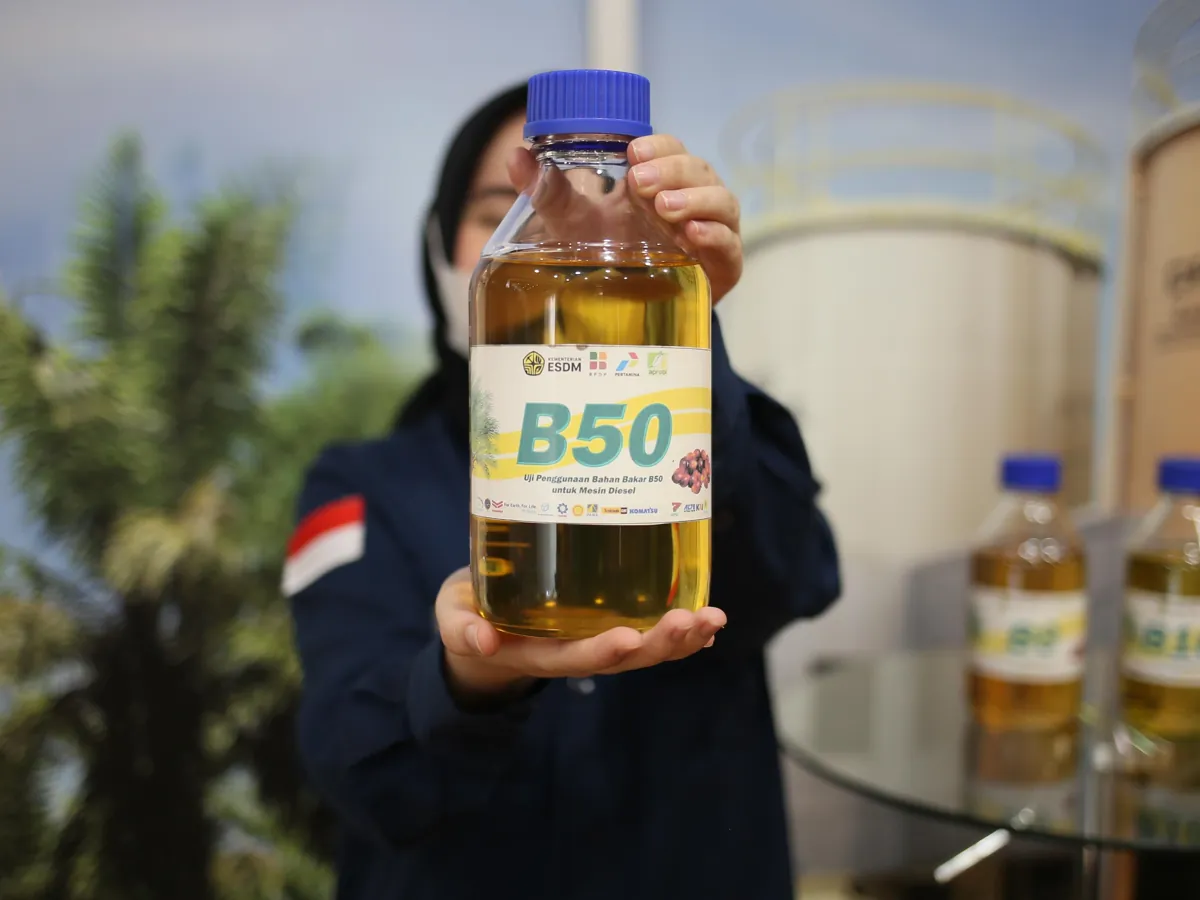
Indonesia's Energy and Mineral Resources Ministry (ESDM) says B50 biodiesel is safe for all vehicle types and will not damage engines, two weeks after the 50 percent palm oil blend began selling at gas stations in stages on July 1, 2026. Spokesperson Dwi Anggia's statement on July 15, 2026 came two weeks after the official B50 quality standard, Ministerial Decree No. 257.K/EK.01/MEM.E/2026, took effect on the same day B50 sales started.
Safety claims rest on nearly two decades of testing
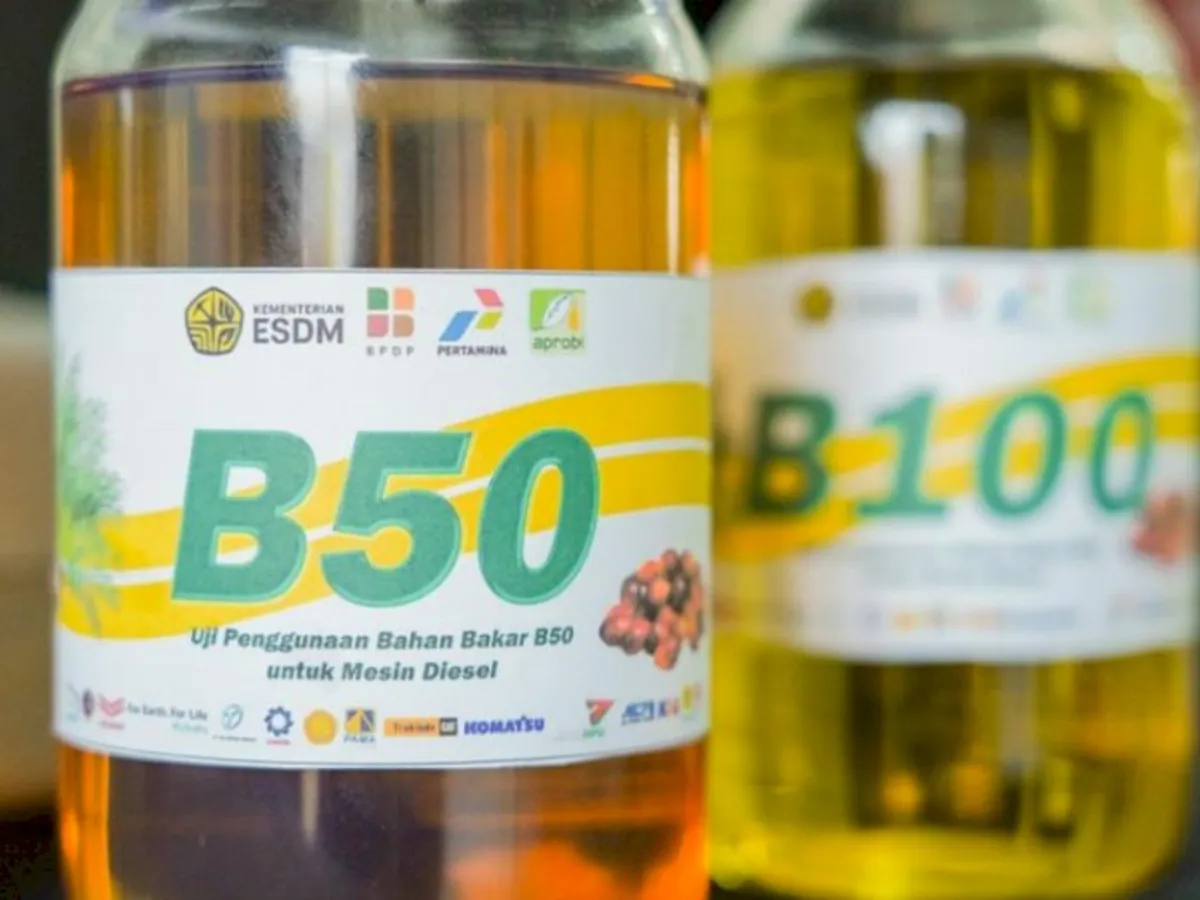
B50 is a diesel blend, half fossil diesel and half fatty acid methyl ester (FAME) made from palm oil. Since President Prabowo Subianto launched it in early July 2026, Indonesia has become the first country in the world to mandate that high a palm biodiesel blend across its entire transportation and energy sectors.
Rollout is not yet complete. Muhammad Qodari, head of Bakom RI, said on July 13, 2026 that all gas stations nationwide are targeted to sell B50 only by October 1, 2026. During the three-month transition period from July 1 to September 30, 2026, some stations can still sell B40.
Dwi Anggia said the B50 policy did not appear overnight. Indonesia's national biodiesel program began in 2008 with B2.5, then rose step by step through B10, B20, B30, B35, and B40 before reaching B50 this year. He said each increase in blend ratio was preceded by technical testing and field performance evaluation.
"B50 is not a policy that emerged suddenly or a reckless leap. It is the result of a long, nearly two-decade journey in developing national biodiesel," Dwi Anggia said.
This time, testing expanded to six sectors: motor vehicles, agricultural machinery, mining heavy equipment, trains, sea transport, and power plants. Dwi Anggia said the results beat B40's track record. "B50 fuel quality has proven to perform even better, surpassing the previous B40 formula's results," he said.
Why does ESDM believe B50 won't damage engines?
ESDM bases its claim on a series of staged trials since 2008 across six diesel-using sectors, from private vehicles to power plants, plus performance data it says shows B50 outperforming B40. The government also acknowledges that public concern about engine safety existed well before B50's official launch, and says that concern shaped the quality standard.
USU expert: safety depends on tank and filter condition
An independent academic assessment adds nuance to the government's claim. Prof. Dr. Ir. Tulus Burhanuddin Sitorus, a mechanical engineering lecturer and head of the Master's and Doctoral Program in Mechanical Engineering at Universitas Sumatera Utara's Faculty of Engineering, said B50 is workable if backed by strict quality control.
"B50 is fit to be implemented, but it must be backed by strict quality control and technical monitoring," Prof. Tulus said, pointing to the need for consistent quality and technical oversight across the distribution chain.
He added that engine damage typically stems from dirty fuel tanks, worn filters, and poor vehicle maintenance, risks unevenly spread across the millions of vehicles, heavy equipment units, ships, and locomotives now running on B50.
Consumption rises, storage gets trickier
Prof. Tulus said B50 fuel consumption rises 1 to 3 percent compared with B40, because biodiesel's calorific value is slightly lower than pure fossil diesel. Biodiesel is also more sensitive to water, oxidation, and microbial growth during long-term storage than fossil diesel.
For vehicle owners and fleet operators, that means old habits, such as leaving a tank half-empty for long stretches or delaying filter changes, carry more risk in the B50 era than they did under B40 or pure diesel.
Quality standard takes effect alongside B50's launch at gas stations
Ministerial Decree No. 257.K/EK.01/MEM.E/2026 references Indonesian National Standard SNI 7182:2024 and sets several B50 quality parameters, including a minimum cetane number of 51, maximum sulfur content of 10 milligrams per kilogram, minimum methyl ester content of 96.5 percent, and minimum oxidation stability of 900 minutes.
The rule took effect on July 1, 2026, the same day B50 sales began. That sequence means the official quality standard was already binding from the first day of B50 circulation, and Dwi Anggia's safety claim followed two weeks after the standard took effect.
A Rp170 trillion foreign exchange bet
The government projects the B50 mandate will save up to Rp170 trillion a year in foreign exchange, provided the country secures 19 million kiloliters of FAME supply without pushing up domestic cooking oil prices. That projection is the main economic argument behind the decision to raise the palm oil blend to the world's highest level, and it remains an untested bet at full, year-long scale.
Whether that forex savings target is met without triggering a cooking oil price spike for households will depend on securing that FAME supply, on gas stations and non-automotive sectors complying with the new quality parameters, and on expanding coverage to all gas stations by October 2026.
So far, ESDM has issued no official guidance on filter change schedules or tank cleaning for diesel vehicle owners under B50, though Prof. Tulus said quality control and technical monitoring are conditions that cannot be ignored.


Comments