

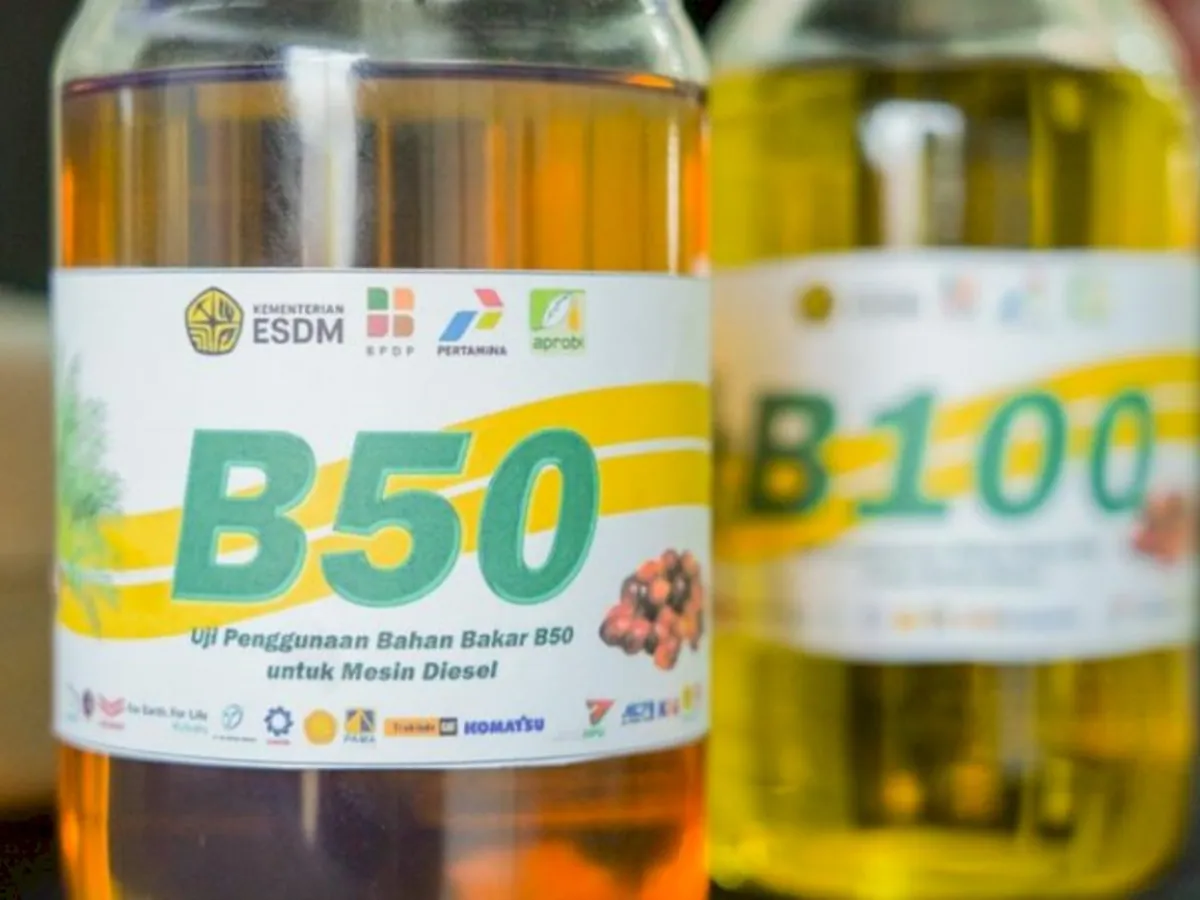
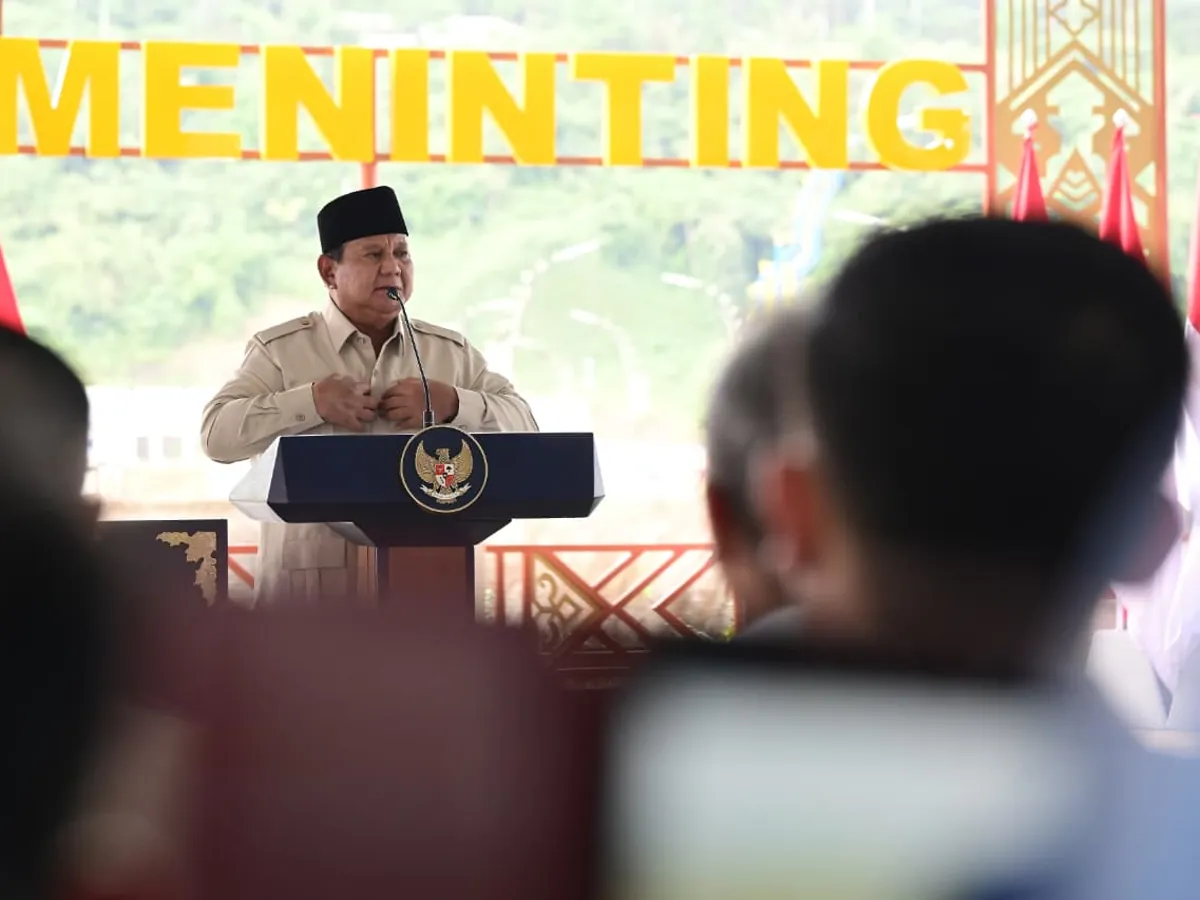
Indonesia became the first country to mandate a 50 percent biodiesel blend in diesel fuel on Thursday, when President Prabowo Subianto launched the B50 program at a toll-road rest stop in Karawang. The headline claim: annual foreign exchange savings of Rp170 trillion, or roughly $10 billion. "We can now save Rp170 trillion in outgoing foreign exchange. We're saving $10 billion," Prabowo said.
That figure is Rp36.7 trillion higher than the Rp133.3 trillion claimed under B40, a gain from a single ten-point jump. Behind the gap is a new feedstock demand: total Fatty Acid Methyl Ester (FAME) supply must reach around 19 million kiloliters per year, up from roughly 15.6 million KL under B40, all drawn from crude palm oil (CPO), the same commodity that feeds Indonesia's domestic cooking oil market.
What is B50 biodiesel and how does the savings mechanism work?
B50 blends 50 percent palm-oil-based FAME with 50 percent fossil diesel. The program extends Indonesia's mandatory blending ladder from B20 (2016), B30 (2020), B35 (2023), and B40 (January 2025). The savings logic is direct: each additional percentage point of biodiesel means one percentage point less imported diesel paid in dollars, keeping foreign exchange in the country.
For subsidized consumers, the price is unchanged: B50 biosolar holds at Rp6,800 per liter, the same as B40. The industrial segment faces a different bill. Energy Minister Bahlil Lahadalia put the non-PSO (non-subsidized) price at Rp15,000 to Rp16,000 per liter, roughly twice the subsidized rate.
One feedstock for energy and the kitchen
The sharpest pressure point is the CPO supply chain. The palm oil processed into FAME for fuel comes from the same crop that produces cooking oil for Indonesian households. The more biodiesel the program demands, the tighter the competition between energy demand and food demand on the available CPO stock.
The 2022 precedent remains a relevant risk benchmark. When cooking oil turned scarce four years ago and prices spiked, one trigger was a CPO allocation imbalance between exports and domestic needs. B50 opens the same potential squeeze, this time from domestic energy demand itself. With inflation already at 3.34 percent and two-thirds of the second-half stimulus absorbed by rice subsidies, added pressure on cooking oil prices is a concrete risk.
Riezcy Cecilia, a campaigner at Satya Bumi, laid out projected land requirements. "The implementation of B50 is estimated to require an additional 5.36 million hectares by 2039, with potential deforestation reaching 1.5 million hectares, equivalent to 22 times the area of Jakarta and approaching the size of Timor-Leste," she said in a Greenpeace Indonesia press release.
Respati Bayu of Forest Watch Indonesia noted that palm expansion between 2021 and 2025 already cleared 424,000 hectares of natural forest. "Increasing the biodiesel mandate to B50 also has the potential to intensify pressure on remaining natural forests and trigger competition between energy and food needs, which could push up domestic cooking oil prices," Respati said.
The government offered counter-projections: CPO added value is forecast to rise from Rp20.92 trillion to Rp23.49 trillion, the program is claimed to support 2.1 million jobs, and emission reductions are pegged at 44.46 million tons of CO2 through 2026. Those projections rest on the assumption that palm production can grow to meet energy and food demand at once, without sacrificing either.
Why is the mining sector the real compliance test for B50?
Mining companies are Indonesia's largest diesel consumers. For them, non-subsidized biosolar at Rp15,000 to Rp16,000 per liter hits directly on operational costs.
Minister Bahlil left no room for negotiation. "I've already said, if you don't use B50, I'll review your RKAB. So there are no excuses," he said, referring to the Rencana Kerja dan Anggaran Biaya (work plan and budget document), the mandatory operational permit every mining company needs to operate.
The threat shows that compliance with the mandate does not rest entirely on economics. With a licensing lever, the government ensures B50 uptake even from the segment most resistant to the price gap.
The Rp170 trillion annual savings claim still needs time to prove itself. A separate projection puts realized savings through December 2026 at around Rp157.28 trillion. The gap between the two figures can only be measured once actual diesel import data is available at year's end, alongside two more decisive questions: whether the additional FAME demand above B40 levels can be met by intensifying existing plantations, and whether domestic cooking oil prices hold steady in the months ahead.

Comments