

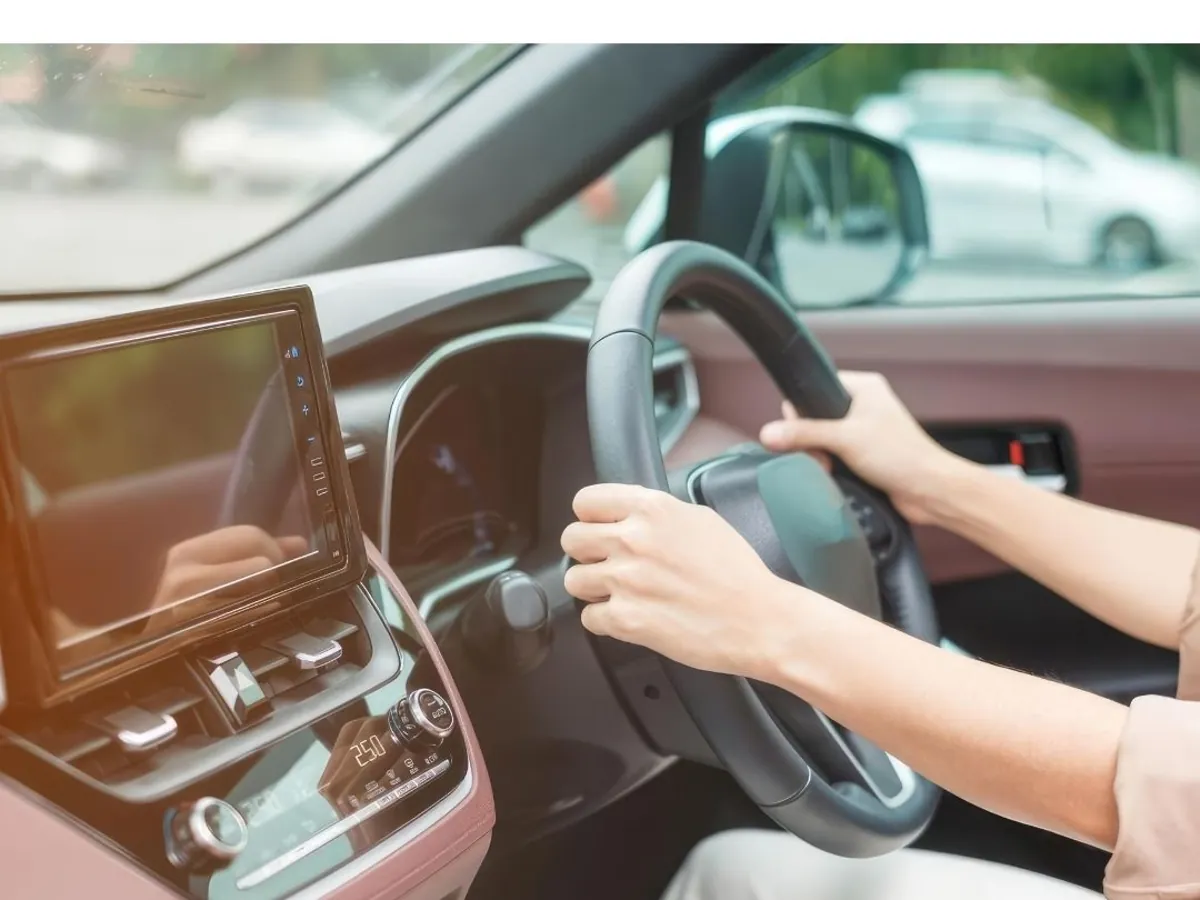
Of the ten categories measured in JD Power's 2026 Initial Quality Study (IQS), every one improved except one: in-car infotainment. Complaints about cabin entertainment in mass-market vehicles rose to 44.4 problems per 100 vehicles (PP100) from an industry average of 42.6 PP100 in 2025, even as the auto industry posted its best overall quality gain since 1997. PP100 measures complaints per 100 vehicles surveyed; the lower the figure, the fewer problems owners reported.
Released in late June, the study drew on responses from 78,514 owners and lessees of 2026 model-year vehicles after 90 days of use. The industry's overall problem rate fell to 175 PP100 from 192 PP100 the previous year. Nearly every category improved: body, engine, transmission, and driver-assistance systems all recorded fewer complaints. Infotainment moved the other way.
Why are infotainment systems getting worse?
The biggest driver of the decline was Apple CarPlay and Android Auto connectivity issues, which alone added 1.4 PP100 to the industry figure. In the premium segment, infotainment recorded 38.3 PP100.
The root cause is update speed. Apple and Google refresh their operating systems multiple times a year, far faster than the four-to-seven-year vehicle development cycle. Each time iOS or Android releases a new version, automakers must verify that their infotainment system stays compatible. A failure at any point shows up as a dropped or intermittent phone connection for the owner.
That puts automakers in an uncomfortable position: they do not control Apple's or Google's update schedules, yet they absorb the complaints when a phone connection fails.
Frank Hanley, Senior Director of Auto Benchmarking at JD Power, named simplicity as the most decisive variable. "As more technology is introduced into vehicles, keeping the experience simple matters more than ever. The biggest gains in quality come from features that are easy to use: simple controls, less-intrusive driver assistance and software that works the way customers expect. When technology becomes too complicated, the likelihood of customers experiencing a problem rises considerably."
The irony is that CarPlay and Android Auto were adopted widely by automakers precisely to simplify cabin interfaces. Rather than building their own operating systems, they handed over the screen to the two tech giants. The result: when integration fails, automakers inherit complaints whose origins lie outside their control.
Cabin screens and road risk
The 2026 JD Power data sharpens the picture on driving safety. Of all driver-distraction complaints, 46 percent originated with infotainment systems and touchscreens, while 18 percent came from driver-assistance warning alerts. That makes cabin screens the top distraction source in new vehicles: 2.5 times more complaints than active safety features.
In Indonesia, the stakes are higher. A trend of watching videos or live streams while driving has already claimed lives on the roads, and screens that demand visual interaction add a new risk point for drivers.
Regulators are starting to respond. From January 2026, Euro NCAP tightened its five-star rating protocol: cars that place critical functions such as turn signals, hazard lights, horn, wipers, and emergency calls entirely on a touchscreen will struggle to earn the top rating. Controls needed quickly must take the form of physical buttons with tactile feedback. The rule reverses a years-long minimalist design trend that pushed automakers to move nearly all controls onto glass.
The challenge for Indonesia's market
Chinese electric vehicles entering the Indonesian market use large screens as their primary selling point, minimizing physical buttons in favor of a clean look. When data from 78,514 new-vehicle owners shows that software-based screens are the top friction point, the proposition "bigger screen equals smarter car" carries a different burden of proof in the showroom.
Indonesia has no safety regulation comparable to Euro NCAP that specifically evaluates driver-interface distraction. Without such a standard, buyers bear the risk of choosing an interface that looks attractive in a brochure but proves problematic in daily use.
Brand scores in the study offer a guide to what works. Porsche earned the highest quality score and led the premium segment at 138 PP100. Ford, which recently rehired 350 engineers after AI technology proved insufficient to control production quality, led the mass-market segment at 152 PP100. Genesis took second place in the premium segment at 151 PP100. All three reached the top through different approaches, but one commonality Hanley noted applies to all: technology that works the way owners expect scores better than technology that looks more sophisticated on paper.


Comments