

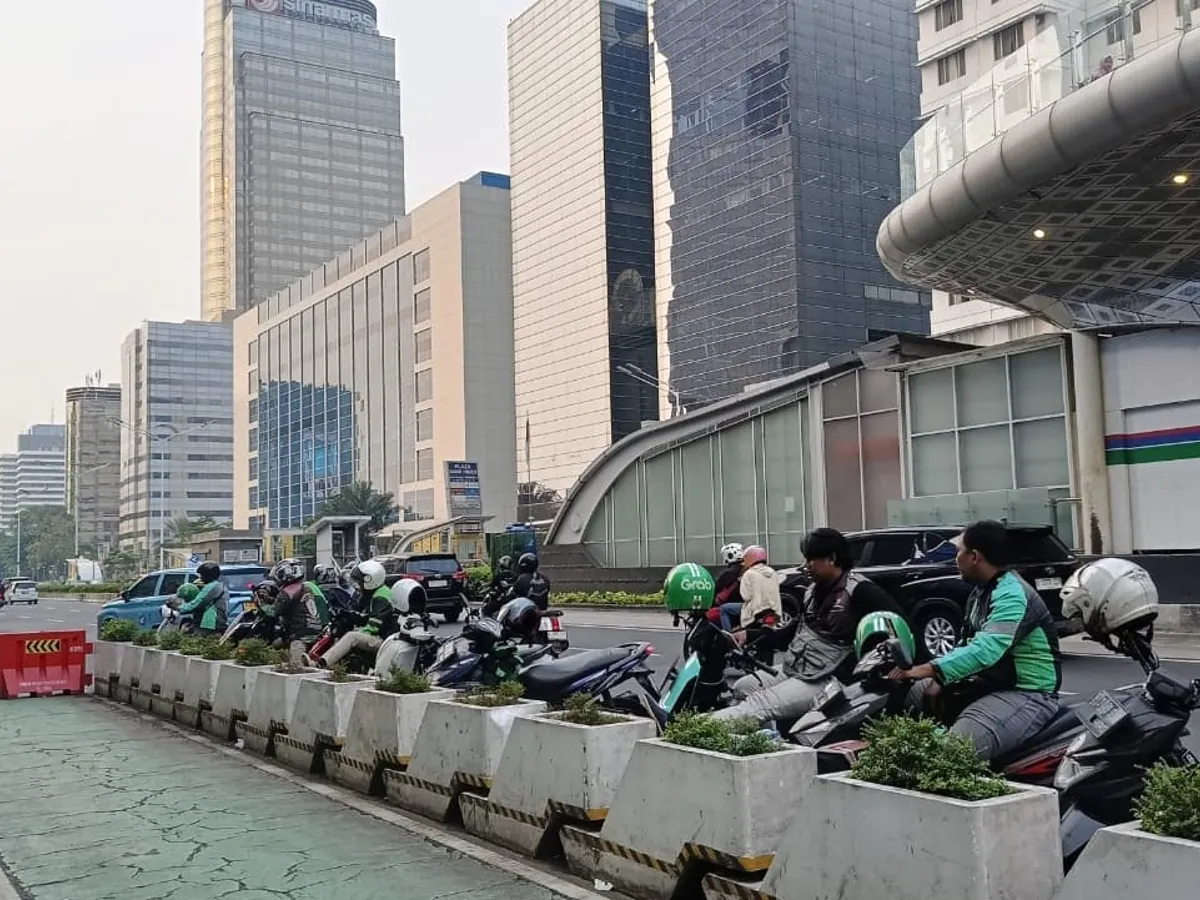
Indonesia limited the commission ride-hailing apps can charge drivers to 8 percent per trip from July 1, 2026, under Presidential Regulation No. 27/2026. Grab, Gojek, and Maxim all said they complied from day one. In the week that followed, drivers reported take-home pay that had barely moved. Some said it had fallen.
The complaints have a concrete explanation: the regulation locks only one of three components in the ride-hailing pricing structure.
Where did the 12 percentage points go?
Two unregulated components shifted at the same time. Service fees charged directly to passengers went up, and several platforms cut the base fare, known locally as the argo. Because drivers receive 92 percent of the argo only, not of the total amount a passenger pays, the net gain in their income was close to zero.
Raden Igun Wicaksono, chairman of the Garda Indonesia Online Ride-Hailing Drivers Association, described the shift: "Only the base fare falls under the 92 percent scheme. Meanwhile, the app companies are taking a service fee from our passengers that used to be Rp 2,000 and has been raised to Rp 4,000 in some cases, or Rp 3,000 in others."
The base fare picture was similar. "Some app companies have actually cut the base fare for passenger trips, so the income increase is not very significant," Igun said.
The arithmetic is clear. On an argo of Rp 10,000, a driver now receives Rp 9,200 (92 percent), up from Rp 8,000 under the old 20 percent commission. But if a platform cuts the argo to Rp 8,000 and raises the passenger service fee by Rp 2,000 to keep the total bill to the passenger unchanged, the driver takes home only Rp 7,360. That Rp 1,840 per trip shifts from the driver's pocket to the platform's service-fee account without breaching the regulation.
Cucun Ahmad Syamsurijal, deputy speaker of the House of Representatives (DPR), read the same pattern from the other side: "Because operators are cutting the base fare, driver income ends up falling. The ones who actually benefit are the passengers, the consumers."
What does the government say?
Transport Minister Dudy Purwagandhi said the policy had not raised fares. "No, fares have not gone up. Fares are not going up," he said. He added that insurance costs are now covered entirely by the platforms, so they no longer pass through to consumers.
Grab Indonesia also declared compliance. Managing Director Neneng Goenadi described the move as "Grab Indonesia's compliance with President Prabowo Subianto's directive, in line with the spirit of people's economy."
Coverage gaps still open
Presidential Regulation 27/2026 covers only GoRide and GrabBike, the two-wheel passenger services. Courier, food delivery, and car-based ride-hailing remain outside its scope. Many drivers combine order types in a single workday, and commissions on unregulated segments still run at the old rates.
Pressure is now on the Transport Ministry to issue technical rules that go beyond fixing a commission percentage: setting a floor for base fares and a ceiling for service-fee increases. Without those two safeguards, the 8 percent cap only shifts the contested variable between platform and driver to one that sits outside any regulatory oversight.
Drivers' unions are already preparing their next demands: expanding coverage to courier, food delivery, and four-wheel services. Real driver-income data from July will be the first test of whether grievances widen or ease as platforms adjust their pricing.

Comments