

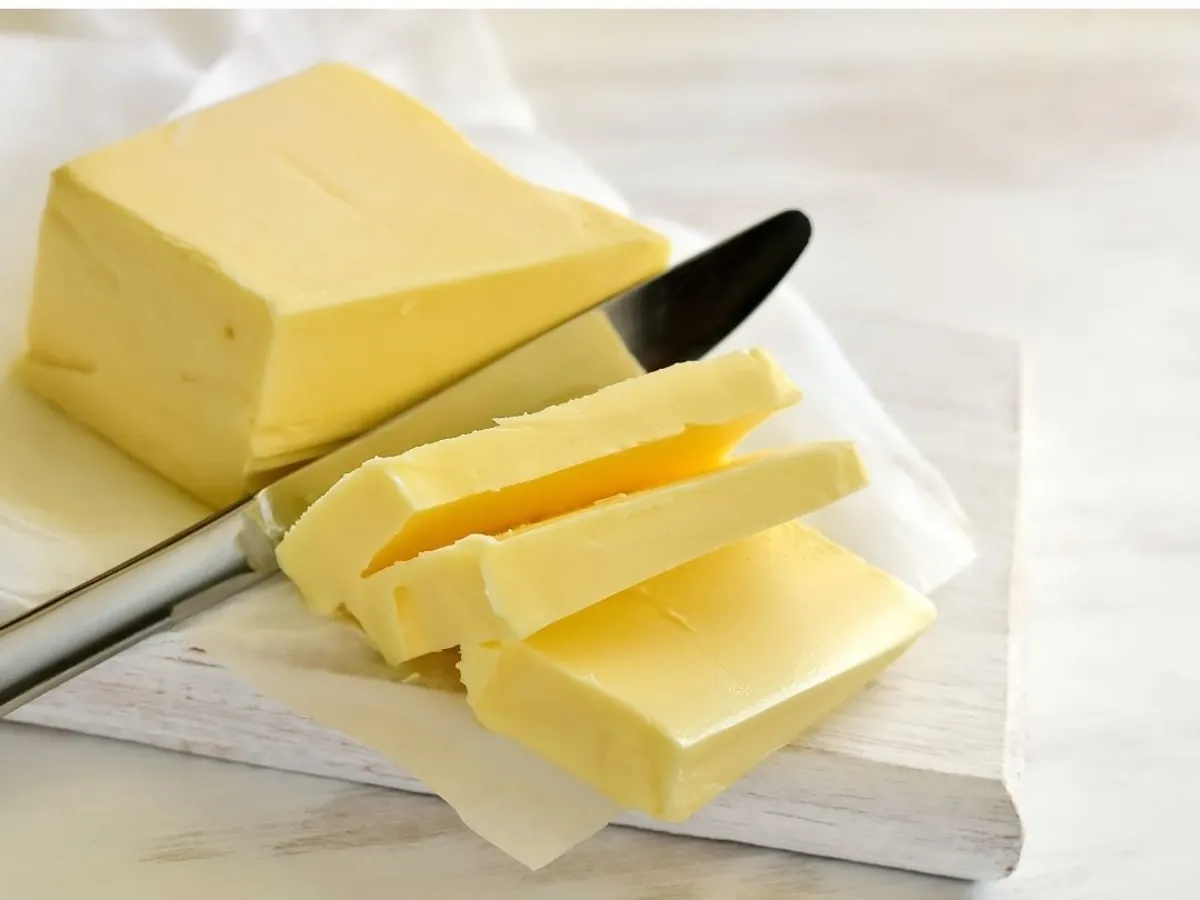
Butter-margarine blends sold in Indonesian markets contain trans fats at levels up to ten times the WHO recommended ceiling. A 2024 study by WHO and Bogor Agricultural University (IPB) tested 130 products and found roughly 10 percent exceeded that threshold; high levels were also detected in biscuits, wafers, and bakery goods. The findings now have regulatory backing: Government Regulation No. 28 of 2024, enacted July 26, 2024, requires product reformulation and a new front-of-pack nutrition labeling system, with implementation phased in through mid-2026.
What is the basic difference between butter and margarine?
The "butter or margarine, which is healthier?" debate has circulated for years, but the answer always turns on one variable that often escapes the nutrition label: trans fat content.
Butter is an animal fat made from churned cream. Margarine is a vegetable oil product hardened by chemical processing, in Indonesia typically from palm, soybean, or canola oil. That difference in raw materials determines fat composition: butter is roughly 63-64 percent saturated fat and contains cholesterol because it comes from an animal, while margarine is higher in unsaturated fat and effectively cholesterol-free.
In the kitchen, each has its strengths. Butter melts near body temperature, giving a silky mouthfeel, but its smoke point is low, around 150-177°C depending on type. Margarine holds up at higher temperatures, around 200°C, making it better suited to frying. For baking, butter delivers a savory aroma and good aeration when creamed with sugar; margarine produces a moister crumb at a lower price.
Why is stick margarine more dangerous than commonly advertised?
Trans fats are the answer. Hard or stick margarine is typically made through partial hydrogenation: liquid vegetable oil is solidified by adding hydrogen atoms, and the process generates trans fats as a byproduct. Trans fats raise LDL (bad) cholesterol and lower HDL (good) cholesterol. Cardiologists consider that combination more damaging to blood vessels than the saturated fat in butter.
Julia Zumpano, a nutritionist at the Cleveland Clinic's Preventive Cardiology division, notes that "vegetable-based margarine is often called heart-healthier, but not all margarines are created equal." She also cautions that butter "contributes significant saturated fat and, in excess, can raise blood cholesterol." Both fats carry risk: saturated fat in butter, trans fat in older margarines.
Harvard Health concludes that framing the debate as butter versus margarine is the wrong question. What matters more is avoiding trans fats entirely and limiting saturated fat, not simply choosing one over the other.
Soft tub and liquid margarines have largely been reformulated to near-zero trans fat and are considered the safer option. The problem is that stick margarine and soft margarine often look identical on store shelves, with few buyers checking the nutrition label.
One tablespoon of butter and the daily fat math
Portion size is easy to overlook in this debate. One tablespoon of butter contains about 7 grams of saturated fat. The daily recommended limit ranges from 10 to 15 grams. One or two tablespoons of butter can account for half to all of your daily saturated fat allowance. For cooks who use butter as a baking ingredient, the numbers accumulate quickly.
Dr. Alvin Nursalim, an internist at KlikDokter, considers trans-fat-free margarine relatively better than butter for heart health, but says both still need to be kept in check. For everyday cooking, olive oil remains the top choice.
The regulation is getting closer
Deputy Health Minister Prof. Dr. Dante Saksono Harbuwono has stated that the most effective way to reduce trans fats in the food supply is through regulation. PP No. 28/2024, enacted July 26, 2024, moves in that direction by requiring front-of-pack nutrition labeling and product reformulation.
Dr. N. Paranietharan, WHO Representative for Indonesia, described the WHO-IPB baseline study as an important step toward improving the food environment for more than 275 million Indonesians.
BPOM (Indonesia's food and drug authority) head Taruna Ikrar signed a revision to nutrition information regulations on April 6, 2026, adding the Nutri-Level label: grades A through D, color-coded for sugar, salt, and fat content, displayed on the front of processed food packaging. The label should make the differences between margarine products on store shelves far easier for consumers to read.
What remains uncertain: BPOM's technical rules on maximum trans fat limits per product, the Nutri-Level rollout timeline for margarine and bakery categories, and how far local producers have already adjusted their formulas. With the year-end baking season approaching, when butter and margarine sales spike, those two questions will determine whether the policy changes actually reach store shelves.



Comments