

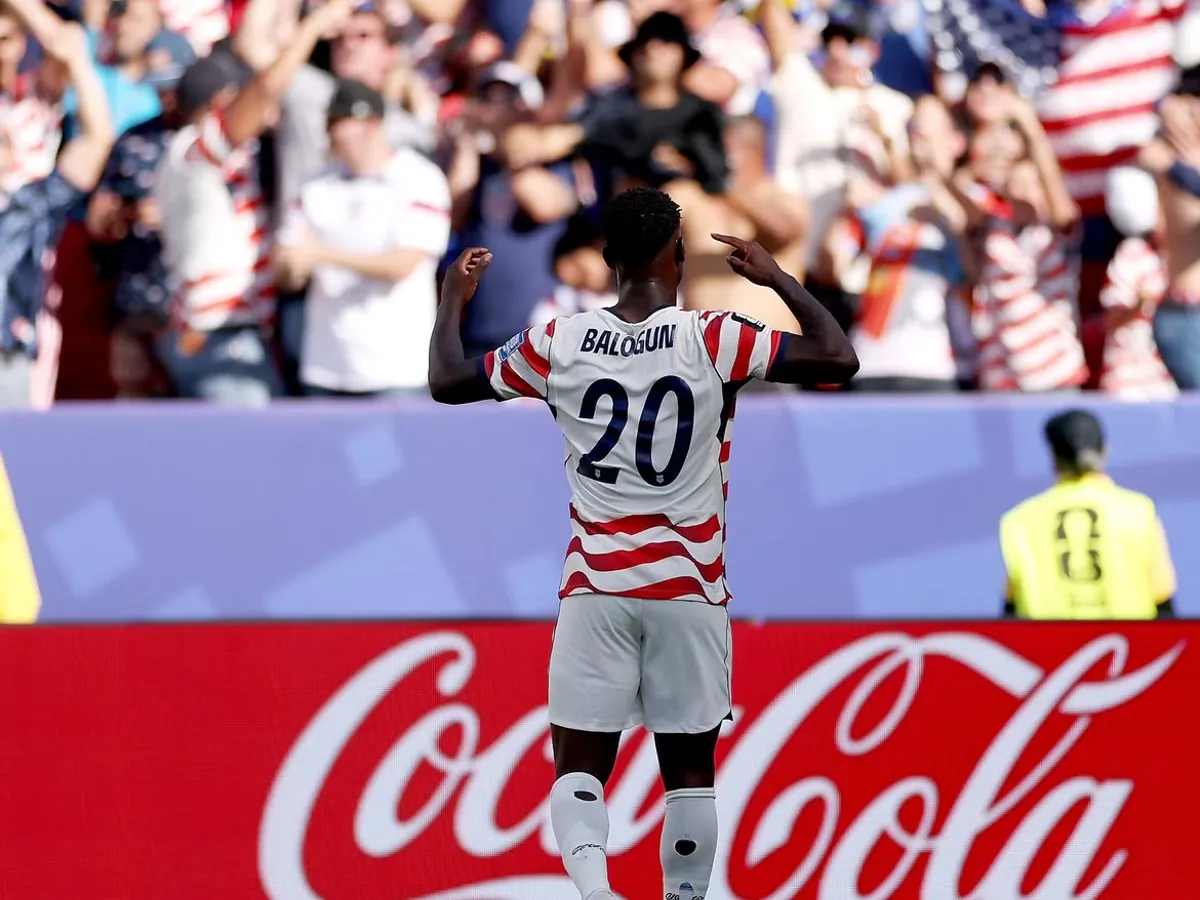
U.S. President Donald Trump confirmed he called FIFA President Gianni Infantino and asked for a review of striker Folarin Balogun's red-card suspension. FIFA lifted the one-match ban on July 5, 2026, one day before the United States faced Belgium in the round of 16 at the 2026 World Cup in Seattle. Balogun started. The U.S. lost 4-1.
Why did invoking Article 27 cause controversy?
The red card came in the round of 32 against Bosnia-Herzegovina. Video showed Balogun landing on Tarik Muharemovic's ankle as the match ended 2-0 for the U.S. The automatic penalty for that class of offense is a one-match ban. FIFA suspended the punishment under Article 27 of its Disciplinary Code and announced the decision one day before the U.S.'s first knockout fixture.
Trump did not hide his involvement. "That wasn't a foul. It wasn't even close to a foul," he told reporters, then added: "So yes, I asked for a review by FIFA." Infantino confirmed the contact: "Yes, I regularly discuss World Cup FIFA matters with the president of the United States."
Article 27 is a mechanism for suspending the execution of sanctions; it has historically been used for long-term bans. Applying it to overturn a one-match ban from a straight red card drew accusations that the rule was selected to satisfy an outside request, all the more so because the process bypassed any independent appeal body.
Reports indicated that U.S. government officials and the White House World Cup task force helped draft the arguments submitted to FIFA. Former FIFA President Sepp Blatter was blunt: "Red cards are not cancelled by political phone calls. Red cards are cancelled by rules, evidence, and independent bodies."
Belgium's reaction was more sardonic. "I didn't know that at the FIFA office, July 5 is April 1 in Europe," said coach Rudi Garcia. The Royal Belgian Football Association (RBFA) requested a written explanation from FIFA. The request was denied. UEFA called the decision a "red line" violation and described it as unprecedented, incomprehensible, and unjustifiable.
Garrincha 1962: a 64-year precedent, now broken
Until this week, only one comparable case existed in FIFA history. Garrincha, the Brazilian attacking midfielder whom many analysts ranked alongside Pele in his era, was sent off in the 1962 World Cup semifinal against Chile. FIFA still allowed him to play in the final against Czechoslovakia. Brazil won 3-1.
That record stood for 64 years, through the VAR era, multiple revisions of the disciplinary code, and the expansion of the 2026 World Cup to 48 teams and 104 matches. On July 5, 2026, it ended. The decision that ended it came from a conversation between a head of state and the federation chairman, without any publicly verifiable independent panel review.
PSSI 2015 and the view from Indonesia
For Indonesia, the case has its own distinct dimension. On May 30, 2015, FIFA suspended the Football Association of Indonesia (PSSI) for government intervention: the Ministry of Youth and Sports had dissolved a domestic competition and interfered in federation affairs. The ban was lifted on May 13, 2016, nearly a year later, during which the national team could not participate in international competition.
The ban imposed on Indonesia for "government intervention" now stands alongside the fact that FIFA's own president received and acted on a request from a head of state to overturn a field sanction. Debate over how FIFA interprets the limits of "intervention" in its statutes is likely to intensify, particularly among federations that have borne the consequences. Scrutiny of FIFA's technical decisions at the 2026 World Cup has been running since the tournament's start; the Balogun case adds another layer to that debate.
4-1 in Seattle
The diplomatic intervention changed nothing on the pitch. Charles De Ketelaere opened the scoring with a header, then added a second the same way. Malik Tillman equalized with a free kick from a foul that Balogun himself had drawn. Hans Vanaken restored Belgium's lead in the 57th minute before Romelu Lukaku sealed it with a fourth goal.
The United States was eliminated from the tournament they co-host. FIFA had not released written reasoning for its application of Article 27 in this case. Without that document, the precedent now on the books remains open for any team to claim for the rest of the tournament.

Comments