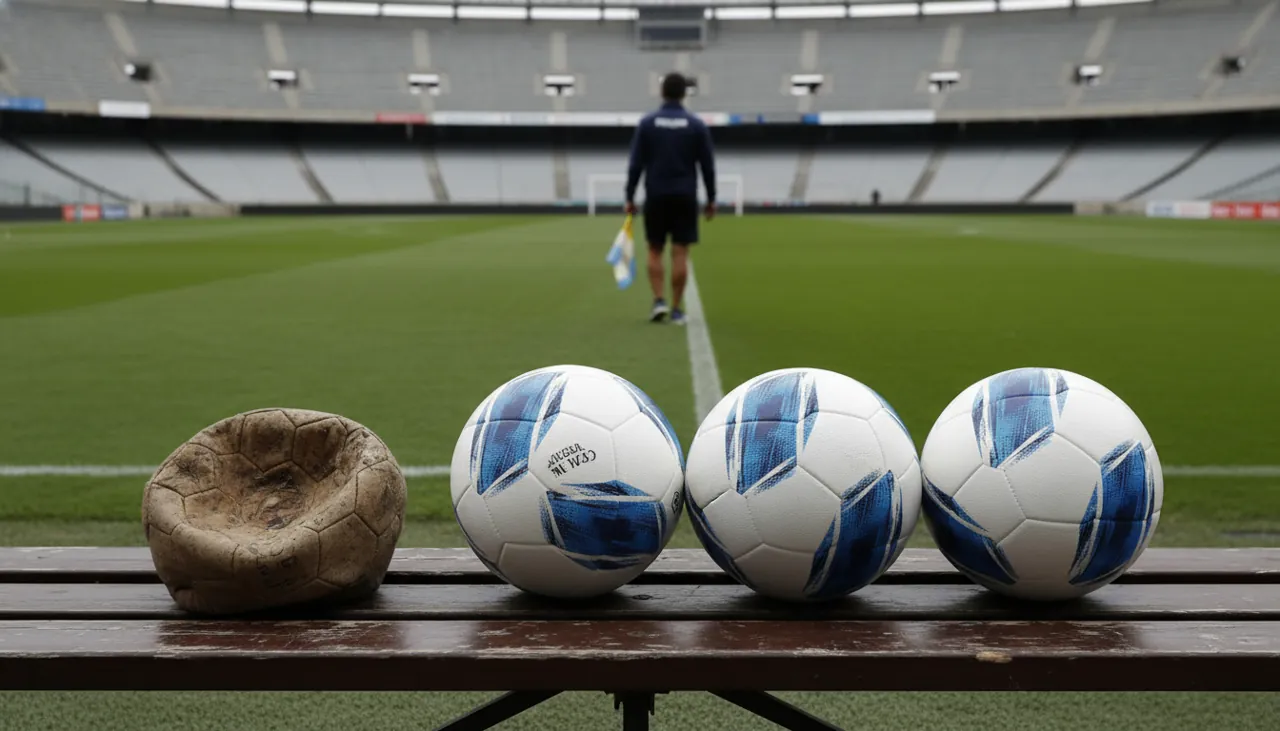

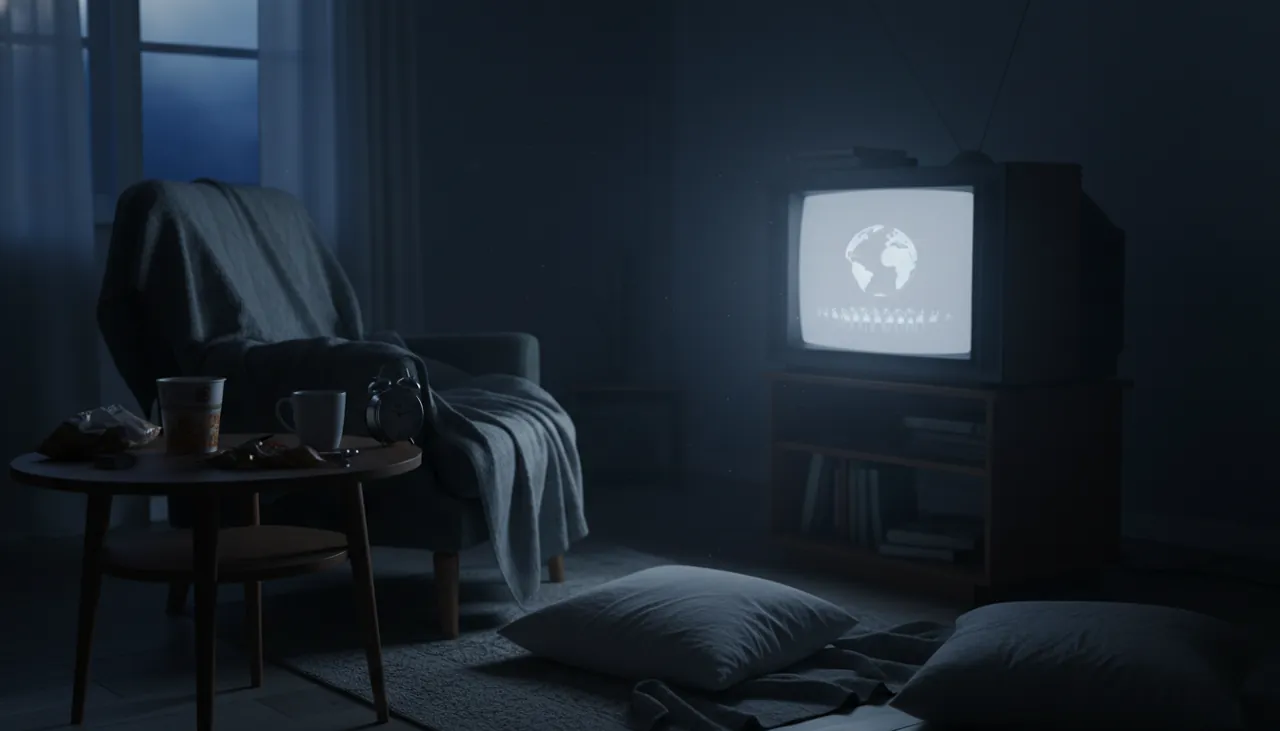
Four days before the first ball is kicked, the calculation that matters most to Indonesian viewers has nothing to do with who lifts the trophy. It is about sleep. The 2026 FIFA World Cup opens on June 11 at Estadio Azteca in Mexico City, with hosts Mexico facing South Africa. Because every match is played across the Americas, more than half a day behind Western Indonesia Time (WIB), that opener will reach screens at home in the small hours of June 12. The world game arrives free in Indonesian living rooms through TVRI, but it arrives at the wrong time.
This 23rd edition is also the largest ever staged: 48 teams, 104 matches, and three host nations at once, the United States, Canada, and Mexico, spread across 16 cities. The tournament runs more than a month, from the opening at the Azteca to the final at MetLife Stadium in the New York and New Jersey area on July 19, 2026. By the numbers, the "biggest in history" label is hard to dispute. The match count jumps from 64 under the 32-team format used at Qatar 2022 to 104.
More than just a bigger field
The expansion is easy to misread. Going from 32 teams to 48 sounds like simple arithmetic, a matter of slotting in 16 newcomers. What actually changed runs deeper: FIFA has added a knockout round that never existed before, the round of 32. The tournament now has 12 groups of four. The winner and runner-up of each group advance automatically, joined by the eight best third-placed teams across all groups. That sends 32 teams into the knockout stage, which then narrows through the round of 16, quarterfinals, semifinals, and final.
This is where the least-discussed change lies. Under the 32-team format, only half the field cleared the group stage, 16 of 32. Under the new format, two-thirds advance, 32 of 48. The bar for survival drops sharply. A team can lose a match, even finish third in its group, and still hold a knockout ticket. The tactical consequence is real: the incentive to go all out from the opening group games shrinks, because the margin for error is far wider than before.
That leniency sits awkwardly with FIFA's own reason for redesigning the groups. The original 48-team plan used 16 groups of three. After Qatar 2022, FIFA switched to 12 groups of four, partly to avoid dead final group matches and keep the tension alive until the last whistle. But the eight-best-third-place scheme brings the complication back through another door. A team's fate can hinge on results in a group it never plays, which means some final matches could turn into cross-group ranking calculations rather than a straight contest to win. Whether the tension truly holds, or a new breed of play-it-safe match emerges, will only be answered on the pitch.
A free party, a public bill
For an Indonesia once again missing from the finals, the World Cup is a question of attention, not achievement. The audience remains enormous even with Garuda absent. What has changed this year is who carries the cost of bringing it home. TVRI holds exclusive broadcast rights and has committed to airing all 104 matches free through TVRI Nasional and TVRI Sport, with official streaming as a complement. The decision shifts the rights cost onto the public broadcaster rather than a pay operator, as in several earlier editions.
"The 2026 World Cup on TVRI is being brought to all Indonesians, with inclusive access," said Iman Brotoseno, President Director of state broadcaster LPP TVRI. He pointed to the simplicity of the technology as the strength of the free model. "People can access the World Cup broadcast through free-to-air or terrestrial platforms using an ordinary antenna," he said.
The inclusivity claim is not empty rhetoric. An ordinary antenna reaches households that do not subscribe to streaming services or pay television, including in areas with limited internet. But the model places the bet squarely on TVRI itself. Broadcasting 104 matches, nearly double the load of a 32-team edition, demands consistent technical quality, enough companion channels when many games run in parallel, and a commercial strategy that can cover the rights cost without straining the state budget. Free for viewers does not mean cheap for the organizer.
The pre-dawn marathon and a cost few are counting
The time difference reshapes how the tournament is consumed in Indonesia. With kickoffs set to American time zones, most matches fall between late night and the small hours, WIB. For more than a month, and especially during the packed group phase from June 11 to 27, millions of viewers will face a nightly choice between following the games and getting enough sleep.
The knock-on effects touch things football coverage usually overlooks. Weeks of mass late nights could dent morning workplace productivity, push electricity use into odd hours, and drive spikes in streaming and social media traffic before dawn. These are not certainties but reasonable expectations, worth tracking against electricity and telecom usage data before and during the tournament. An event Indonesia is not playing in still becomes a question of logistics and household economics at home.
The stars and the final tune-ups
Argentina arrive as defending champions and begin in the group stage, opening against Algeria on June 16. In the run-up, Lionel Scaloni's side played a string of friendlies, including matches against Honduras on June 6 and Iceland on June 9. Through that preparation, the sharpest focus has been on the fitness of Lionel Messi.
Scaloni said Messi's condition was improving and that the captain had begun training partly with the team, raising the prospect of a few minutes in a friendly. The signal reflects a familiar pattern at major tournaments: top players are managed carefully and given minutes in stages so they peak when it matters, not during the warm-ups. On his team's identity, Scaloni had no doubts. "Our team has a clear style of play, and we're not going to betray it," he said ahead of the Honduras match.
From the organizers' side, FIFA President Gianni Infantino promised a lasting experience. "We'll make sure that it'll be an unforgettable experience for everyone who will be there on the weekend of the FIFA World Cup final," he said in a statement in mid-May. The promise was aimed at those present in person for the final weekend. For viewers at home, especially in distant time zones like Indonesia, the lasting experience may come more in the form of eye bags and pre-dawn coffee.
What to watch
A few things will decide whether the largest-format experiment runs smoothly or leaves problems behind. First, early momentum: the pre-dawn WIB kickoffs on June 11 and 12 will test how well Indonesian enthusiasm holds from one night to the next. Second, the fitness of stars like Messi and others not fully recovered during the friendly phase, a built-in risk of the crowded club calendar before the tournament.
Third, the format test itself. Will groups of four plus the eight-best-third-place scheme genuinely sustain the tension, or instead produce final group matches full of calculation? Fourth, TVRI's stamina in maintaining broadcast quality across 104 free matches while covering the cost. And fifth, the social impact of prolonged late nights, an angle measured more honestly with data than guessed at. For the kickoff time of each match, TVRI's official schedule before the opening day remains the safest reference, given that the broadcast windows follow kickoff times in the Americas.