

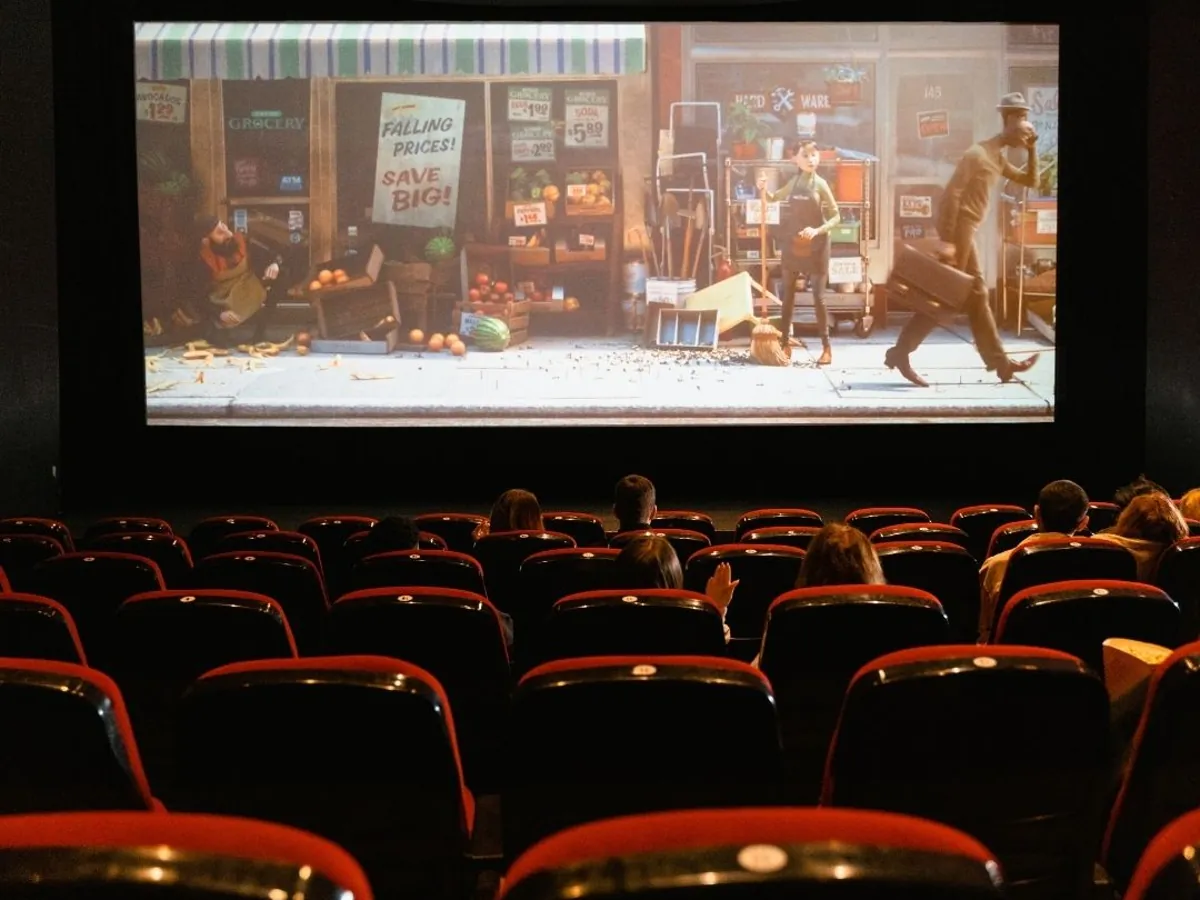
Alfamart opened its second mini cinema at its Sudirman Raya branch in Bogor on July 3, 2026. The 49-seat studio charges Rp15,000 on weekdays and Rp20,000 on weekends and screens films that have finished their run at major cinema chains.
Victor Timothy, CEO of Layar Digi, the studio's operator, said attendance far exceeded early projections. "We were only expecting around 50 percent, but what we have in our database is 97 to 100 percent," he said.
The Bogor location is the second; the first opened at Alfamart Ruko Agricola in Gading Serpong, Tangerang, on April 1, 2026.
How does it differ from a regular cinema?
Alfamart's mini cinema is a second-run micro studio: a small screening room that picks up films after they have completed their first-run window at major theater chains. Tickets cost far less, the venue sits on the second floor of a minimarket, and the lineup spans animation, religious drama, horror, and thrillers.
One difference is immediately noticeable: no food or drinks are sold inside the studio. Audiences buy snacks at the Alfamart downstairs, at standard retail prices. In conventional cinemas, in-house concessions are among the highest revenue sources per viewer, with lobby snack prices often exceeding the ticket itself. Here, that function sits one floor down, handled by the store's cashiers at ordinary retail prices.
The shift changes the monetization logic: from expensive in-house concessions to audience volume that drives shopping traffic to the store below.
Tickets are purchased through a vending machine on site or through the Alfagift app. Five to six sessions run each day.
How do the two partners divide roles?
Alfamart supplies the commercial space, typically a second floor that was previously idle. Layar Digi operates the studio, manages content, and handles customer service. For Alfamart, the studio adds a reason to visit beyond everyday shopping. For Layar Digi, Alfamart's extensive retail network is ready-made distribution infrastructure with no need to build new venues.
Solihin, Corporate Affairs Director at Alfamart, described the partnership's aim: "This collaboration is not only about bringing entertainment, but also about creating a new experience that is closer, more practical, and accessible to everyone."
Victor Timothy put Layar Digi's ambition more plainly: "Entertainment should not be exclusive."
Why show films that have left major theaters?
Films that have finished their primary theatrical run are cheaper to license and free of the exclusivity windows held by major cinema chains. Micro studios like this are not part of the first-run distribution pipeline.
That choice aligns with the audience being targeted: people looking for affordable entertainment close to home, where price and travel distance drive the decision. During the school holiday period, when Museum Passport drew thousands of visitors to 16 museums across Jakarta and demand for cheap entertainment rose, the model found its moment.
The remaining question concerns content supply: six sessions a day across dozens of locations requires a catalog that stays full and varied enough that audiences do not repeatedly find the same title on offer.
How solid is the 97 percent occupancy claim?
The figure comes from a single source: Layar Digi's internal database, covering just one or two locations in Greater Jakarta (Jabodetabek), a dense urban area with high mobility.
From the available data: 49 seats across six sessions a day produces a maximum of 294 ticket slots per location per day. At 97 percent occupancy, that works out to roughly 285 viewers daily. Layar Digi's original projection was 50 percent, or about 147 viewers. The actual figure is nearly double that.
If those numbers hold at future locations, including outside Java, the model has a distribution base that extends beyond the Greater Jakarta test area. That would also answer the core claim: whether these studios genuinely reach areas with no cinema screens at all, or simply fill a new entertainment pocket on the fringes of the metropolitan region.
Layar Digi is targeting around 500,000 viewers in its early phase and about 50 active locations before the end of 2026. With two studios running as of early July, 48 more must open in six months. The pace of openings in the second half of the year is the first indicator of whether that target is achievable.



Comments