

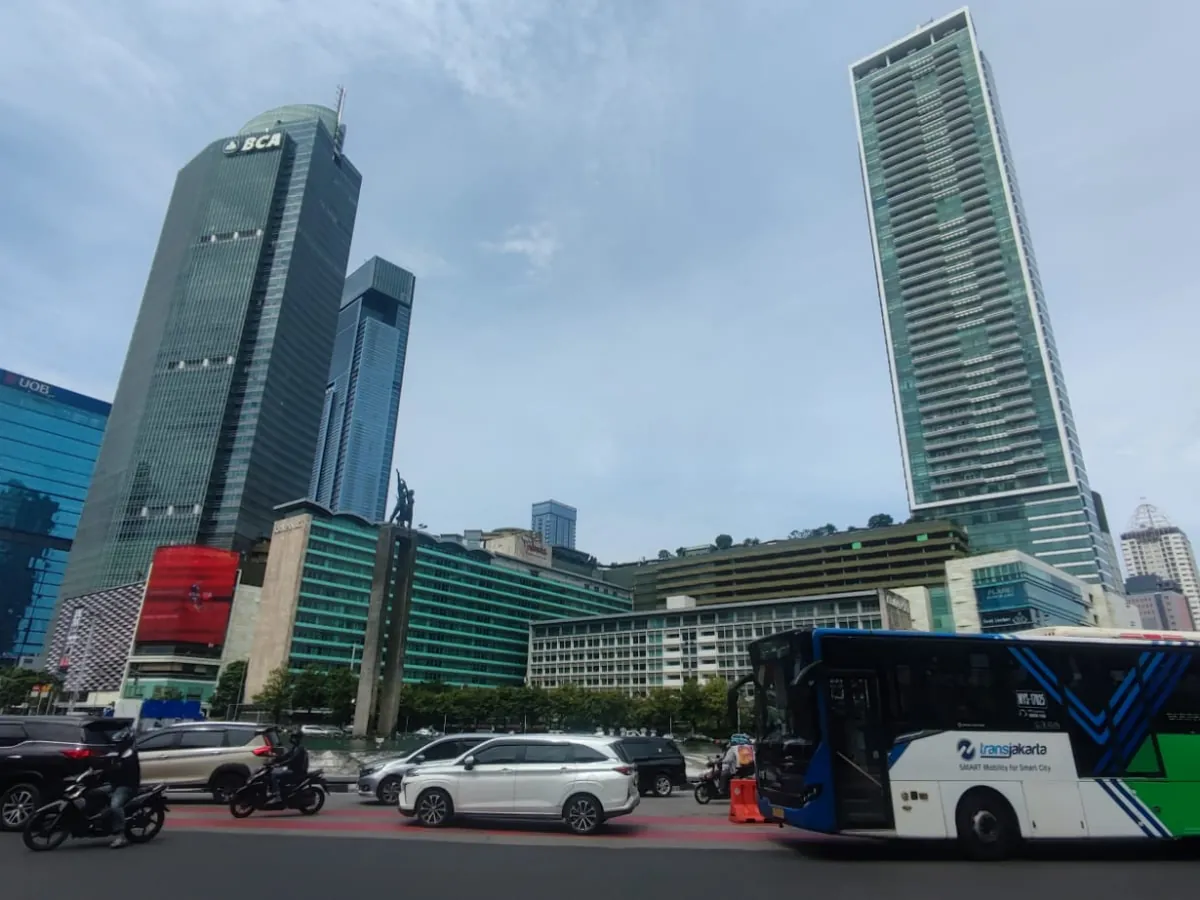
Jakarta Governor Pramono Anung put off a decision on TransJakarta fares on July 8, 2026, saying subsidy calculations must be completed before any official figure is set. On the table is a proposal from the Jakarta City Transportation Council (DTKJ): a single Rp5,000 in-city fare across all services, up from Rp3,500 unchanged since 2005. The figures deserve a closer look: projected savings of Rp400-500 billion a year amount to roughly one-eighth of the total subsidy burden on the city budget.
What does DTKJ propose?
DTKJ wants to restructure fares into two tiers. Within the city, one price of Rp5,000 would cover Bus Rapid Transit (BRT), non-BRT, and integrated Mikrotrans routes. Cross-region trips on Transjabodetabek, which covers greater Jakarta and includes onward access to the MRT and LRT, would cost Rp10,000. Mikrotrans trips that do not connect to other services would carry a Rp2,000 fare.
DTKJ chair Sugihardjo argued the flat fare would actually lower costs for some riders. "If someone currently pays Rp3,500 on BRT and then transfers to non-BRT, that is Rp3,500 twice, so Rp7,000. With Rp5,000 now, is the fare going up or down?" he said. The proposal also includes a monthly subscription of Rp200,000, derived from an estimated 25 working days of round trips worth Rp250,000, discounted by 20 percent.
How much would this actually save?
The savings are far smaller than the headline increase suggests. Nova Harivan Paloh, chair of Commission B in the Jakarta Regional Legislature (DPRD DKI), put realistic annual savings at only Rp400-500 billion, because free-ride categories and transit discounts would limit the extra revenue from the nominal fare rise.
"Our estimate, with roughly 1.4 million passengers a day, savings would be around Rp400 to Rp500 billion," Nova said.
That figure needs to be read against the actual cost of each trip. TransJakarta spends around Rp13,000 per journey. Passengers now pay Rp3,500, and the roughly Rp9,000 gap is covered by the provincial government through a Public Service Obligation (PSO) scheme, a subsidy that fills the space between the fare charged and the real operating cost. At 1.4 million daily passengers, the annual PSO bill is estimated at about Rp4 trillion. The proposed fare increase would trim only about 10 to 12 percent of that.
The fiscal strain is already visible. TransJakarta's subsidy allocation in the 2026 budget fell to Rp3.7 trillion because of efficiency cuts and reductions in revenue-sharing transfers from the central government. Jakarta Transportation Agency head Syafrin Liputo said that budget covers only about nine months of operations, with a shortfall of around Rp1.1 trillion expected to be plugged through a mid-year budget revision.
Why is Mikrotrans being charged?
Charging Rp2,000 for Mikrotrans, which is currently free, is primarily about data integrity, not revenue. Sugihardjo explained a structural flaw in the contract system: operators are paid based on passenger counts and kilometers covered, which creates an incentive to inflate both figures.
"In the contract between Transjakarta and operators there are targets for km traveled and targets for passenger numbers... if I were an operator, 'To avoid having targets cut, I'll just tap myself so the targets are met,'" he said.
With a fare in place, each transaction generates a legitimate record, making ridership data more reliable for evaluating operator performance.
What happens next?
The Jakarta legislature is asking for more time. "We want more in-depth studies to be done first, and public forums to hear from the community, from TransJakarta users," Nova Harivan Paloh said.
Governor Pramono Anung agreed. "We need to look at how subsidies must be calculated and carried out for that," he said. A formal decision is waiting on discussions around the 2026 mid-year budget revision and the outcome of public consultations. Pramono confirmed that 15 categories of free-service recipients, including the elderly and people with disabilities, would not be affected by whatever scheme takes effect.
Two variables will determine whether the plan delivers: whether higher fares push some riders back to private vehicles, cutting ridership volume and making the savings projections miss, and whether the Rp400-500 billion annual target actually materializes once transit discounts and subscriptions are applied together.

Comments