

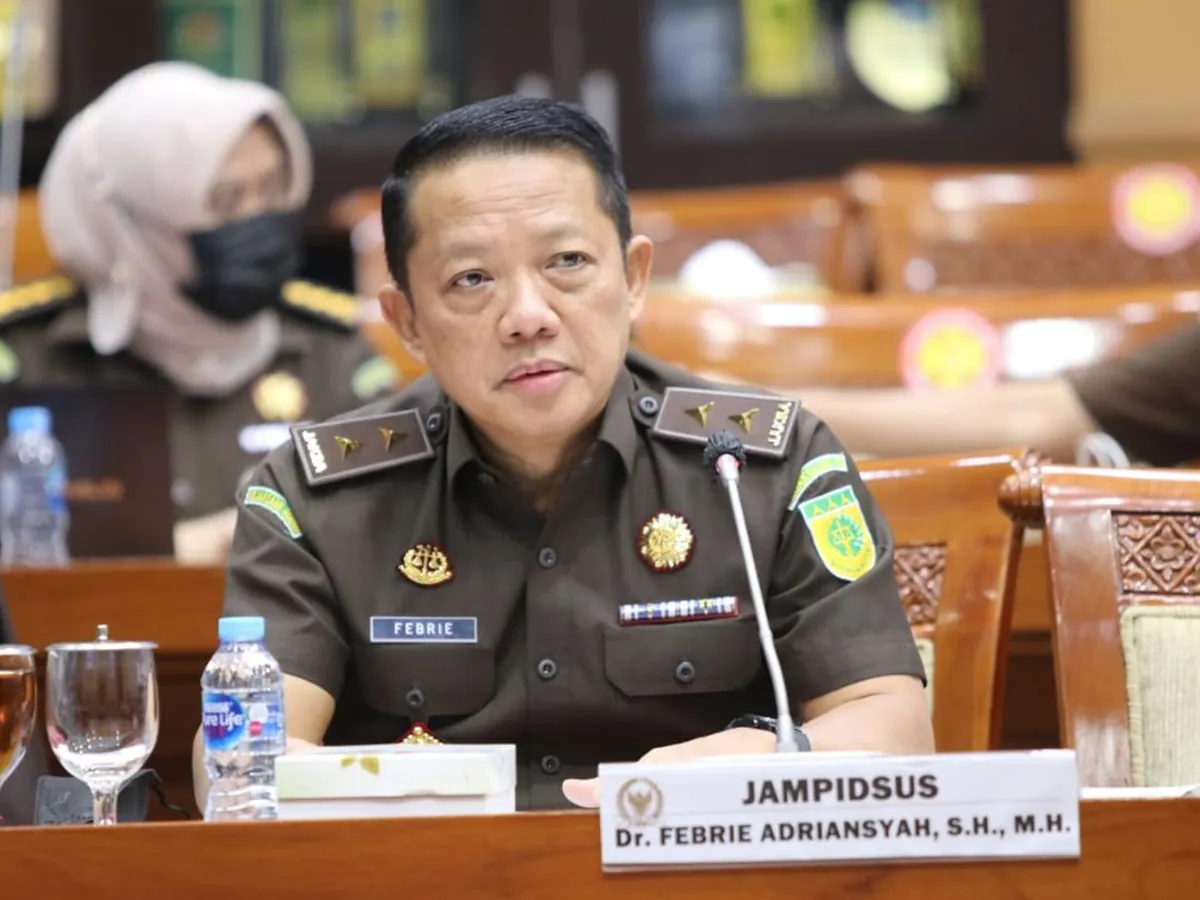
Indonesia's Attorney General ST Burhanuddin accepted the resignation of Febrie Adriansyah as deputy attorney general for special crimes (Jampidsus) early Saturday, July 11, 2026. Hours later, the National Police's anti-corruption unit, Kortastipidkor, named him a suspect in a coal procurement corruption and money laundering case tied to a coal-fired power plant, alongside two related cases involving PT Asabri and PT Krakatau Steel.
"Today, Saturday, July 11, 2026, the Attorney General has accepted Mr. Febrie Adriansyah's resignation from his post as deputy attorney general for special crimes," said Anang Supriatna, head of the Attorney General's Office's legal information center, announcing the decision.
Irjen Pol Totok Suharyanto, head of Kortastipidkor, followed with the suspect designation for Febrie shortly after the resignation became official. The move came after a joint Kortastipidkor and Jakarta Metro Police team searched 13 locations on Wednesday night, July 8, 2026, including Febrie's private home in the Parahyangan Golf complex in Babakan Madang, Bogor Regency, as well as a cafe and a money changer in Cipete, South Jakarta.
What was seized in the raids?
Investigators seized 74 kilograms of gold bars along with cash in several currencies, including US dollars, Singapore dollars and rupiah, from the searched locations. The total value of the evidence is estimated at hundreds of billions of rupiah, one of the largest seizures in the history of corruption cases involving Attorney General's Office officials.
Another suspect, identified only by the initials DR, a private citizen, has been held at the Jakarta Metro Police detention center since July 10, 2026. Febrie himself has not been detained, despite his suspect status.
While his house was still under public scrutiny, Febrie defended his ownership of the property. "About the house in Sentul, that has genuinely been my personal home as deputy attorney general for special crimes for a long time. You can trace how it was acquired from the start," he said, while still in office.
Febrie recommended an audit, two days after his own house was raided
What makes this timeline striking is the gap. Febrie's house in Sentul, along with the cafe and money changer in Cipete, had already been searched by the joint team on Wednesday night, July 8, 2026. Two days later, on July 10, 2026, Febrie still appeared at the Attorney General's Office building to discuss the police's handling of the coal case, without mentioning that his own property had already been searched. "If that's the issue, I think a full audit should be carried out first," he said, suggesting police audit the volume, quality and procurement mechanism of the coal before taking further action.
A day later, the same case made him a suspect.
Calls for Febrie to resign had emerged before his resignation was officially announced. "As a matter of moral responsibility to the institution and the public, I urge the deputy attorney general for special crimes to act like a gentleman and resign," said constitutional law expert Muhammad Rullyandi, referring to the findings about Febrie's Sentul house.
Why is the Jampidsus post so critical to this case?
Jampidsus is the unit that helps the Attorney General exercise the Attorney General's Office's authority over special crimes, including major corruption cases, under Article 21 of Presidential Regulation No. 15 of 2024. That authority spans every stage of a case, from initial inquiry and investigation to pre-prosecution, prosecution and the execution of final court rulings.
Throughout 2026, the directorate Febrie led handled a string of major cases, from the detention of former National Nutrition Agency (BGN) head Dadan Hindayana in the free nutritious meals program corruption case to the conviction of Nadiem Makarim in the Chromebook procurement case. With the directorate's own leader now a suspect in corruption and money laundering, the independence of every case he has overseen is being called into question.
The coal-fired power plant procurement case that ensnared Febrie was elevated from a preliminary probe to a full inquiry on July 4, 2026, with state losses and economic damage estimated at around Rp5 trillion. The case also overlaps with the rolling blackout compensation dispute that Bahlil pushed onto state utility PLN in June 2026, since the alleged corruption in coal supply procurement is said to be one root cause of the power crisis that hit small businesses at the time.
A structural anomaly has emerged because the case is being handled by the police's Kortastipidkor unit rather than the Attorney General's Office itself. The head of the AGO's own corruption enforcement arm is now the one being investigated, rather than doing the investigating, by another law enforcement agency.
What remains unresolved
The Attorney General's Office has yet to name a permanent replacement for the Jampidsus post, while several major cases at the directorate remain open. Febrie's legal status remains that of a suspect who has not been detained, meaning Kortastipidkor's next steps will shape the direction of the case.
Investigators are still examining whether new suspects will emerge from the 13 searched locations, while completing a full audit of the coal-fired power plant procurement chain, including its ties to the mid-2026 blackouts. The Prosecutorial Commission has yet to take an official position on the structural conflict of interest created by a former head of the AGO's corruption enforcement arm becoming the subject of an investigation by another law enforcement agency.
Comments