

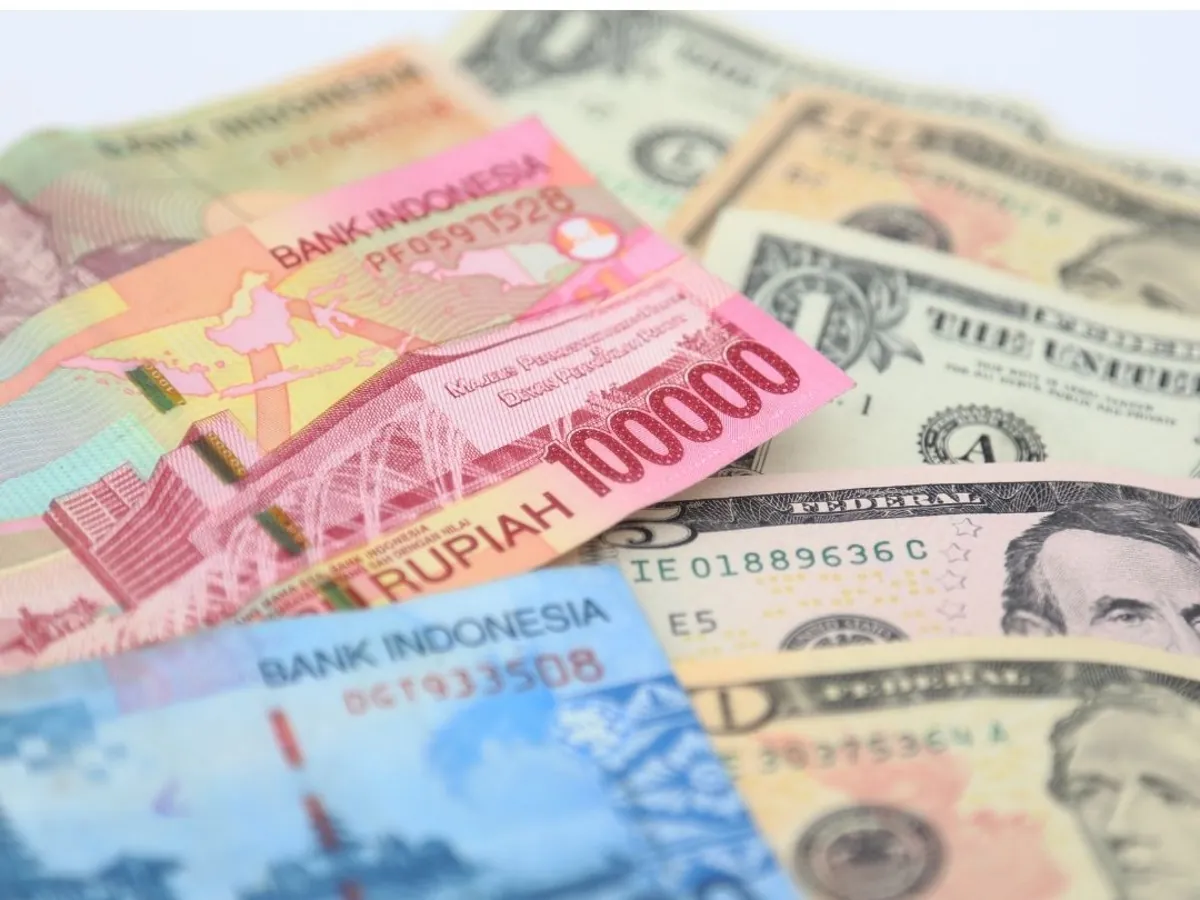
The rupiah closed 65 points, or 0.36 percent, stronger at Rp17,921 per US dollar on Friday (17/7/2026), up from Rp17,986 in the previous session. It was the best performance among major Asian currencies that day: the rupiah's 0.36 percent gain outpaced the Philippine peso (up 0.06 percent), the Japanese yen (up 0.06 percent), the Indian rupee (up 0.03 percent), and the Singapore dollar (up 0.008 percent) against the dollar. The Taiwan dollar fell hardest, down 0.22 percent, while the Malaysian ringgit and Thai baht also weakened as Middle East tensions kept markets on edge.
Foreign funds pivot back to bonds and bank stocks
The rally's main support came from domestic data. Bank Indonesia's Business Activity Survey (SKDU) for the second quarter of 2026 showed its weighted net balance (SBT), a gauge of business sentiment, rising to 12.97 percent from 10.11 percent the previous quarter. Production capacity utilization climbed to 73.80 percent from 73.33 percent, and BI's Purchasing Managers' Index stayed in expansion territory at 51.43. Agriculture, forestry and fishing, construction, and mining led the gains, while accommodation and food services got a lift from school holidays and religious celebrations.
That data landed alongside a renewed appetite among foreign investors for rupiah assets. In the stock market, foreign investors booked a net purchase of Rp39.90 billion in Friday's first session, concentrated in three major bank stocks: BBCA, BBRI, and BMRI. Over the whole of the second quarter of 2026, foreign capital inflows into Indonesia reached $7.98 billion, or roughly Rp143.34 trillion. Bank Indonesia Rupiah Securities, known as SRBI, were the biggest channel, with estimated inflows of about $8.48 billion, enough to offset a $2.3 billion net outflow from the stock market and still add $1.78 billion to government bonds (SBN). In other words, foreign investors spent the past three months favoring central bank instruments and fixed-income debt over equities, a pattern that showed up again on Friday through the combination of bank stock buying and central bank instrument demand.
Why does BI's business survey data move the rupiah?
The rise in the weighted net balance to 12.97 percent tells currency traders that domestic businesses see genuinely improving conditions, not just a seasonal bounce. The market read the higher capacity utilization and expansionary PMI as signs of strengthening domestic fundamentals, which is why Friday's rupiah buying went beyond short-term profit taking. Money market analysts also pointed to the SBT's climb from 10.11 percent to 12.97 percent as a factor supporting the rupiah.
Ibrahim Assuaibi, an economic, currency, and commodity analyst, described the session's moves:
"In this afternoon's trading, the rupiah closed up 65 points, after earlier gaining as much as 85 points, at Rp17,921, from the previous close of Rp17,986."
— Ibrahim Assuaibi
Rupiah and won outperform, ringgit and baht slide
Across the region, the rupiah's 0.36 percent gain was the strongest that day, followed by South Korea's won, up around 0.15 to 0.17 percent. The Philippine peso edged up 0.06 percent, while the Japanese yen and Indian rupee each rose just 0.01 percent. The Malaysian ringgit fell 0.23 percent and the Thai baht slipped 0.09 percent. The ringgit and baht came under pressure from safe-haven demand tied to the escalating Iran-US conflict, which made the rupiah's and won's gains stand out even more against a region under strain.
The Iran-US conflict is now in its fifth month. US strikes on targets in Iran were met with Iranian missile and drone attacks on a US military base in a neighboring country, pushing global oil prices higher and weighing on some Asian currencies. Ibrahim Assuaibi pointed to the effect on inflation expectations:
"Renewed hostilities have extended the Middle East conflict into a fifth month, keeping crude oil prices high and reviving fears that higher energy costs could reignite inflation."
— Ibrahim Assuaibi
Tensions in the Strait of Hormuz have repeatedly disrupted oil supply and shipping this year, as seen when the tanker Gamsunoro slipped through Hormuz while the Pertamina Pride was still waiting its turn. Yet domestic fuel prices actually fell in June 2026 even as Hormuz-related pressure pushed global oil prices up, a gap that shows how far domestic pricing can drift from global market turmoil.
Context: from Rp18,070 to below Rp18,000
The rupiah spent much of mid-July 2026 under pressure, even opening slightly weaker around Rp18,070 on Thursday (16/7), before reversing course to strengthen for three straight days and break below Rp18,000 per dollar. On the policy side, Bank Indonesia had already tightened its cap on dollar purchases without an underlying transaction to $10,000 per month per party, one of its tools for supporting the rupiah by curbing domestic demand for dollars.
What to watch
Money market analysts project the rupiah will trade between Rp17,850 and Rp17,950 per dollar next week. Three factors will set the direction: the Federal Reserve's interest rate policy, global oil prices amid an Iran-US conflict that shows no sign of easing, and how consistently foreign capital keeps flowing into government bonds, SRBI, and bank stocks, which have still fluctuated day to day through July 2026.


Comments