
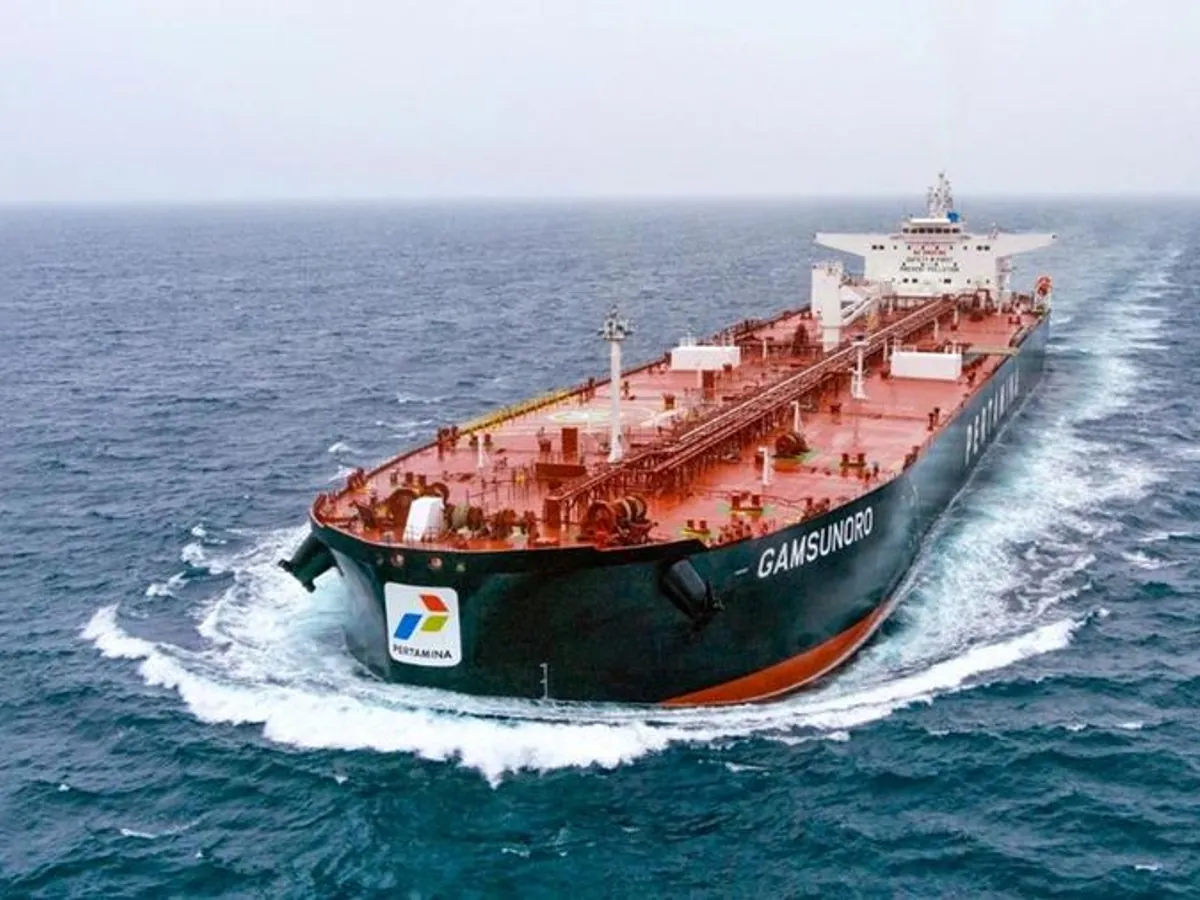
Indonesia's Gamsunoro supertanker safely transited the Strait of Hormuz on June 24, 2026, after a 16-hour passage from the Persian Gulf. The vessel carried third-party commercial cargo. But a sister ship, the Pertamina Pride, remains stranded in the Gulf, now 84 days overdue on its scheduled April 2 arrival. That VLCC carries 249,821 metric tons of crude oil bound for Indonesia's Cilacap refinery and awaits final risk clearance before attempting the crossing.
Both tankers have been trapped since early March 2026. Escalating US-Iran tensions forced shipping companies, insurers, and flag-state authorities to reassess the risks of operating in the region.
Why did Gamsunoro cross first?
Gamsunoro received transit approval earlier because its risk assessment was completed ahead of schedule. Before departure, PT Pertamina International Shipping (PIS) had to satisfy dozens of requirements: insurance coverage, technical and operational specifications, security protocols, and crew readiness. The approval process took about a month and required coordination with Indonesia's Foreign Affairs Ministry and its embassy in Tehran.
"We recorded dozens of requirements that the vessel had to meet, from insurance to technical and operational aspects, security, and crew preparedness," said Vega Pita, acting corporate secretary of PIS. "The selection of timing and route went through strict discussion and risk assessment."
Gamsunoro departed Dubai at 01:06 local time, reached the strait entrance around 13:00, and was declared safe four hours later.
The 249,821 metric tons still waiting
The Pertamina Pride is a Singapore-flagged VLCC (very large crude carrier) built in 2021 with a capacity of roughly 2 million barrels. It carries 249,821 metric tons of crude oil and condensate (equivalent to 1.86 to 1.90 million barrels) destined for processing at Cilacap. Its scheduled arrival date was April 2, 2026.
As of late June, the supply remains over 80 days past schedule, still floating in the Persian Gulf. PIS said the Pride will not be ordered to transit until a full risk assessment is complete and competent authorities issue an official recommendation.
The difference between the two vessels is stark. The ship carrying strategic domestic supplies, Pertamina Pride, is still in the approval pipeline, while the vessel with third-party commercial cargo got the green light first. The sequence reflects not a hierarchy of priorities but the pace at which each approval process concluded.
Indonesia-Iran diplomacy and practical barriers
Diplomatic channels have been active since late April 2026. "We are in contact with government authorities, and discussions with the Iranian government are continuing," Deputy Foreign Minister Arif Havas Oegroseno said. He stressed that alignment requires more than assurances from one side: "There are many elements that must be aligned. So it is not just about guarantees from state authorities; everything must be aligned."
Practical obstacles are layered. Maritime insurers are reluctant to cover voyages through the high-risk zone, ship captains have independent authority to assess security, and Iranian bureaucratic friction has further slowed the process.
One strait, one refinery waiting
The Strait of Hormuz is the narrow waterway linking the Persian Gulf to the Arabian Sea and the primary export route for oil from Gulf nations. When US-Iran tensions cloud the region, uncertainty over the strait's status directly shapes decisions by operators, insurers, and flag states.
For Indonesia, these two PIS tankers are the most concrete embodiment of the crisis's impact. Global oil price swings are an indirect effect. But Pertamina Pride, carrying 1.9 million barrels of Pertamina's own crude and now nearly three months late, represents a direct hit to Cilacap's supply plan and refinery schedule. Neither Pertamina nor the Energy and Mineral Resources Ministry has confirmed whether the delay disrupts production targets or forces a search for alternative supplies.
The process that cleared Gamsunoro must now be repeated for the Pride: risk assessment, insurance coordination, crew approval, and diplomatic communication, with every element needing to align.