
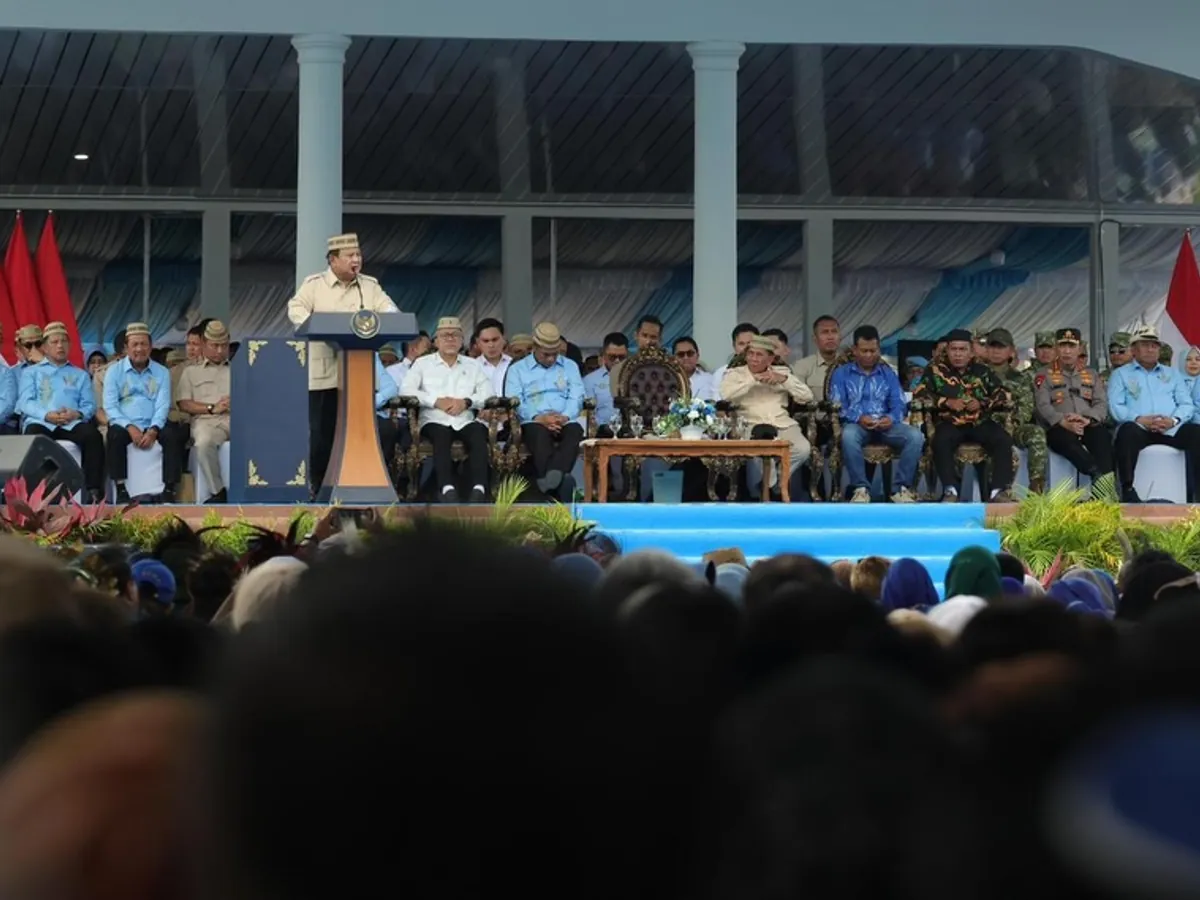
President Prabowo announced beef as Indonesia's next self-sufficiency target at a farming conference in Gorontalo on June 24, pledging to reach it within four to five years.
Indonesia's 2026 domestic beef production hit 421,200 tons against national consumption of 794,300 tons. The 373,100-ton gap represents 47 percent of demand. At current rates, Indonesia is 53 percent self-sufficient in beef. To cover the shortfall this year, the government opened an import quota of 700,000 breeding cattle, equivalent to roughly 189,700 tons of meat, plus 30,000 tons of frozen beef. These imports bring total national supply to 949,700 tons, surpassing consumption demand, though most of the shortfall relies on imports.
Prabowo first mentioned beef as the next target on May 23 in Kebumen, after claiming rice and corn had already reached self-sufficiency. "Our beef self-sufficiency is not yet achieved," he said then. "We're working on it now. Perhaps in four or five years we will reach beef self-sufficiency." At Gorontalo, he expanded the commitment: "I'm confident Indonesia's food self-sufficiency will not be limited to one year. Going forward, Indonesia will sustain food self-sufficiency."
Why is beef the hardest commodity?
Beef production cannot be accelerated through spending alone because cattle production is bound by biological cycles. Gestation takes nine months, and animals require more than two additional years before reaching slaughter weight. Breeding policies started today will not yield significant supply increases until 2028-2029. Doubling production from 421,000 tons to the 750,000-800,000 tons required for self-sufficiency is a fundamentally biological undertaking.
Prabowo himself acknowledged this constraint at Gorontalo when discussing agricultural patience. "Plant rice and you harvest in three months," he said. "Palm oil takes five years. Cassava takes ten months." Cattle production cycles exceed even palm oil: from breeding decision to meat reaching market takes nearly three years.
Failed targets before
Indonesia set a 2026 beef self-sufficiency deadline in 2019 under the previous government. That target went unmet. Beef imports have risen from roughly 50,000 tons in 2015 to hundreds of thousands of tons annually, deepening Indonesia's reliance on external supply.
The agriculture ministry's results announced at Gorontalo need context. Agriculture Minister Andi Amran Sulaiman reported that the Farmer Terms of Trade index reached 127, the highest in 34 years, and agriculture sector growth hit 5.74 percent, the highest in 25 years. These figures aggregate all agricultural subsectors; beef specifically remains a weak link in the trade balance and has not improved.
Strategy underway and risks
The government is pursuing a two-track approach. Near-term, it is closing the gap through conditional imports. The 700,000 breeding cattle quota allocated for 2026 goes to the private sector but comes with requirements to partner with local farmers as a capacity transfer mechanism. Long-term, the government is developing integrated livestock operations in 13 provinces outside Java and two dairy facilities funded by Danantara with estimated investment around Rp2.4 trillion per project, according to detikFinance. Deputy Agriculture Minister Sudaryono named egg and poultry, along with beef, as priority livestock programs for 2026.
This target hinges on three areas at once: meat prices in the market, which directly affect household budgets; the trade deficit the government aims to reduce; and protein supply for the Free Nutritious Meal program, which is being restructured. Livestock expansion outside Java also faces climate pressure. El Niño 2026 has already strained water availability across thousands of people in various regions, and drought immediately threatens livestock through feed and water shortages. If the four to five year timeline slips as the 2019 target did, pressure will land across all three fronts.
Three earliest signals
Progress toward 2030 can be tracked through three metrics before results appear. First, the direction of breeding cattle imports in 2027-2028: falling quotas show that domestic herds are beginning to grow; flat or rising quotas signal that local production has not yet responded. Second, when the 13 provincial livestock projects begin commercial operations, not just groundbreaking ceremonies. Third, the share of domestic meat in protein supply for the Free Nutritious Meal program: if most remains imported, program costs will fluctuate with currency movements.
Officials' use of deadline language is also worth monitoring. Are they consistently stating "four years," "five years," or "2030" interchangeably? Inconsistency, if it emerges, is an early signal that the target is already shifting before it can be measured.