

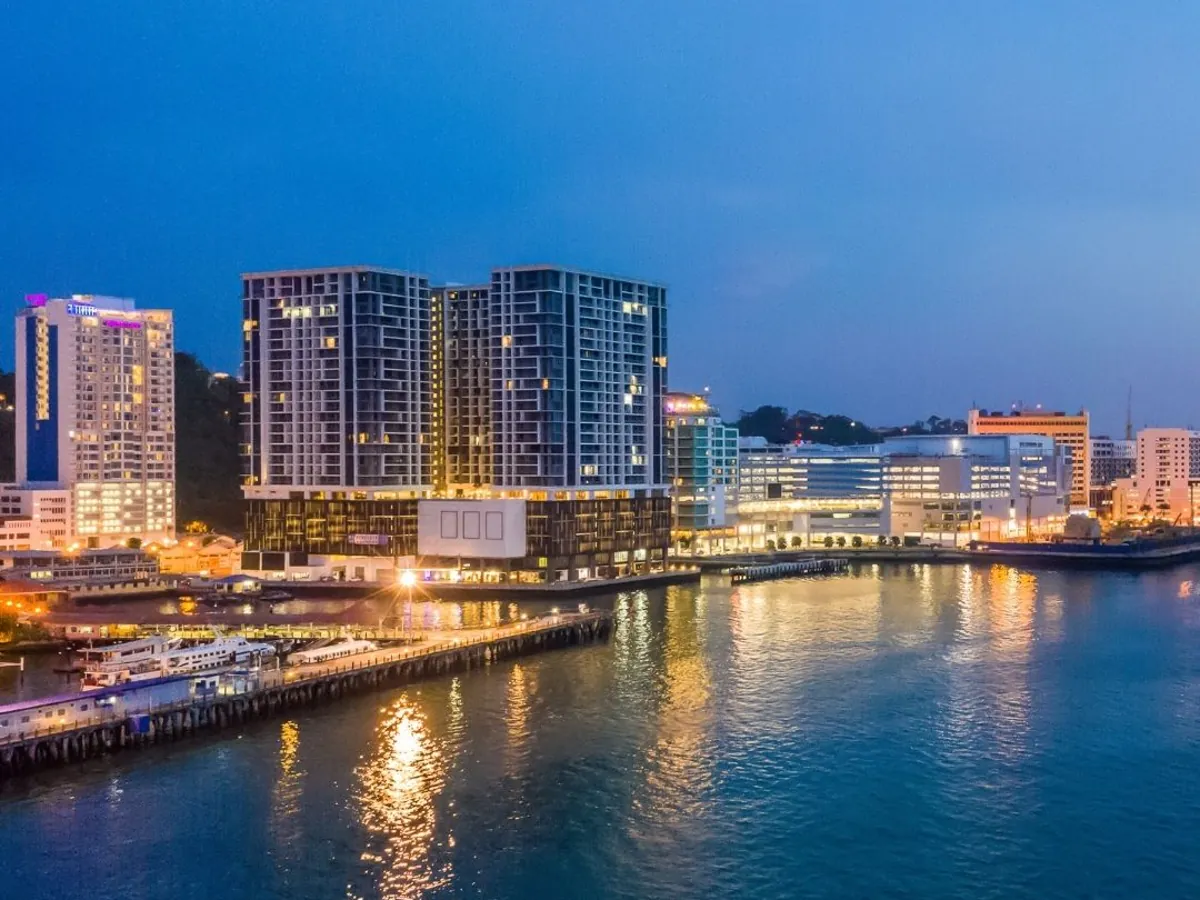
Between Yas Island and Saadiyat Island, Aldar Development is finishing a 2.7 million square meter island that isn't marketed as a typical resort or apartment complex. Fahid Island is sold as a residential district where every design choice, from green spaces to bike lanes, follows health standards. The AED40 billion project, worth roughly US$10.8 to 11 billion depending on the conversion rate different outlets use, holds the title of the world's first Fitwel-certified island.
Fitwel is a healthy-building certification system originally developed by the US Centers for Disease Control and Prevention (CDC) and the General Services Administration (GSA), now run by the Center for Active Design. Until now, the rating has applied to office buildings or single building complexes, not an entire island with an 11 kilometer coastline and more than 6,000 residential units. That distinction makes Fahid Island a new reference point for wellness real estate, a property segment that treats residents' physical, mental, and social health as the core design framework rather than an add-on like a pool or a lobby gym.
The story gained fresh momentum after CNN Travel published an in-depth feature on the Fitwel certification on July 13, 2026, which several Indonesian lifestyle outlets picked up in the days that followed. The relevance for Indonesian readers goes beyond Middle Eastern luxury: according to the Global Wellness Institute, wellness real estate is the fastest-growing sector in the $6.8 trillion global wellness industry, projected to grow 15.2 percent annually through 2029, far outpacing wellness tourism, the segment Indonesia has long leaned on for tourism promotion.
What makes Fahid Island different from a typical luxury resort?
Fahid Island builds health into every commercial decision rather than tacking it on at the end of the design process. More than 6,000 homes, ranging from apartments and townhouses to ultra-luxury villas, sit around Berm Park, a 10 kilometer green corridor with running trails and three bike paths linked to Abu Dhabi's citywide cycling network. About 30 percent of the island is set aside for green space, parks, and natural trails, alongside boutique retail, waterfront restaurants, five-star hotels, art galleries, and water sports facilities such as paddleboarding and kitesurfing.
"We've made sure that every single design decision and commercial decision has always looked at the product through the lens of wellness," Emma McCreery Breen, senior vice president at Aldar Development, told CNN Travel. Joanna Frank, CEO of the Center for Active Design, which runs the Fitwel certification, said what sets the project apart is its commitment to treating health as one system rather than a collection of separate amenities.
Beyond the Fitwel status, Fahid Island has also earned LEED for Cities and Communities Platinum pre-certification and is targeting an Estidama 3-Pearl rating from the Abu Dhabi government. The masterplan was first announced in early June 2025, and units worth AED3.5 billion, about US$953 million, sold within the first week alone. Aldar expects the project fully built by 2029.
For Jonathan Emery, CEO of Aldar Development, the trend goes beyond wellness tourism as the public knows it. "While consumers have long engaged in 'health tourism,' we're seeing home buyers become even more motivated by holistic wellbeing in all areas of life, suggesting 'health house buying' and 'health relocation' could become a wider trend over the next few years," he said. Wealthy buyers no longer want a healthy vacation once in a while; they want to live somewhere designed for health from the ground up.
Why does this matter for Indonesia?
Wellness real estate is a different category from wellness tourism: it sells permanent housing built to health standards, not a vacation package or a short retreat. Indonesia actually has wellness roots older than Abu Dhabi's, with jamu traditions, spas, and nature retreats in Bali, Yogyakarta, and Solo dating back thousands of years. Yet in the Global Wellness Institute's rankings, Indonesia sits 18th among the world's 25 largest wellness markets, worth $49 billion based on 2022 data, far behind China's $790 billion and India's $132.5 billion, and growing just 5.9 percent a year, well short of the pace set by global wellness real estate.
The gap isn't about cultural richness; it's about where the investment goes. Indonesia's wellness strategy still rests on tourism and hospitality rather than the kind of permanent, internationally certified residential development Aldar built from scratch in Abu Dhabi. Deputy Tourism and Creative Economy Minister Ni Luh Puspa said Indonesia "has all the fundamental capital needed to become a major player in the global wellness tourism trend, from natural wealth and culture to local wisdom that forms a strong foundation for building a sustainable wellness ecosystem," speaking at the opening of the Bali Wellness & Beauty Expo 2026 on June 4 to 6 at Bali Beach Convention Center in Sanur. The expo featured more than 140 brands from 90 national and international exhibitors, up 35 percent from the previous edition, but it remained an exhibition and promotion event, not a long-term property development.
Wellness momentum is already visible in Indonesia's big cities through a surge in structured sports, including the HYROX debut in Jakarta, which drew 11,500 participants and displaced padel's dominance. That enthusiasm hasn't yet turned into a residential project on Fahid Island's scale, one that brings thousands of homes under a single internationally certified health standard in one integrated district.
What to watch
Fahid Island's construction will keep drawing scrutiny as the 2029 completion target approaches, including whether Aldar's next projects follow a similar Fitwel standard. The Global Wellness Institute and Indonesia's Ministry of Tourism and Creative Economy are also due to update the country's wellness market data, which still relies on 2022 figures. The open question is whether wellness-themed property investment starts arriving in Bali or other Indonesian health-tourism destinations, tracking global wellness real estate's 15.2 percent annual growth, or whether the sector stays a strength reserved for Gulf states with the capital to build from scratch, like the UAE.

Comments