

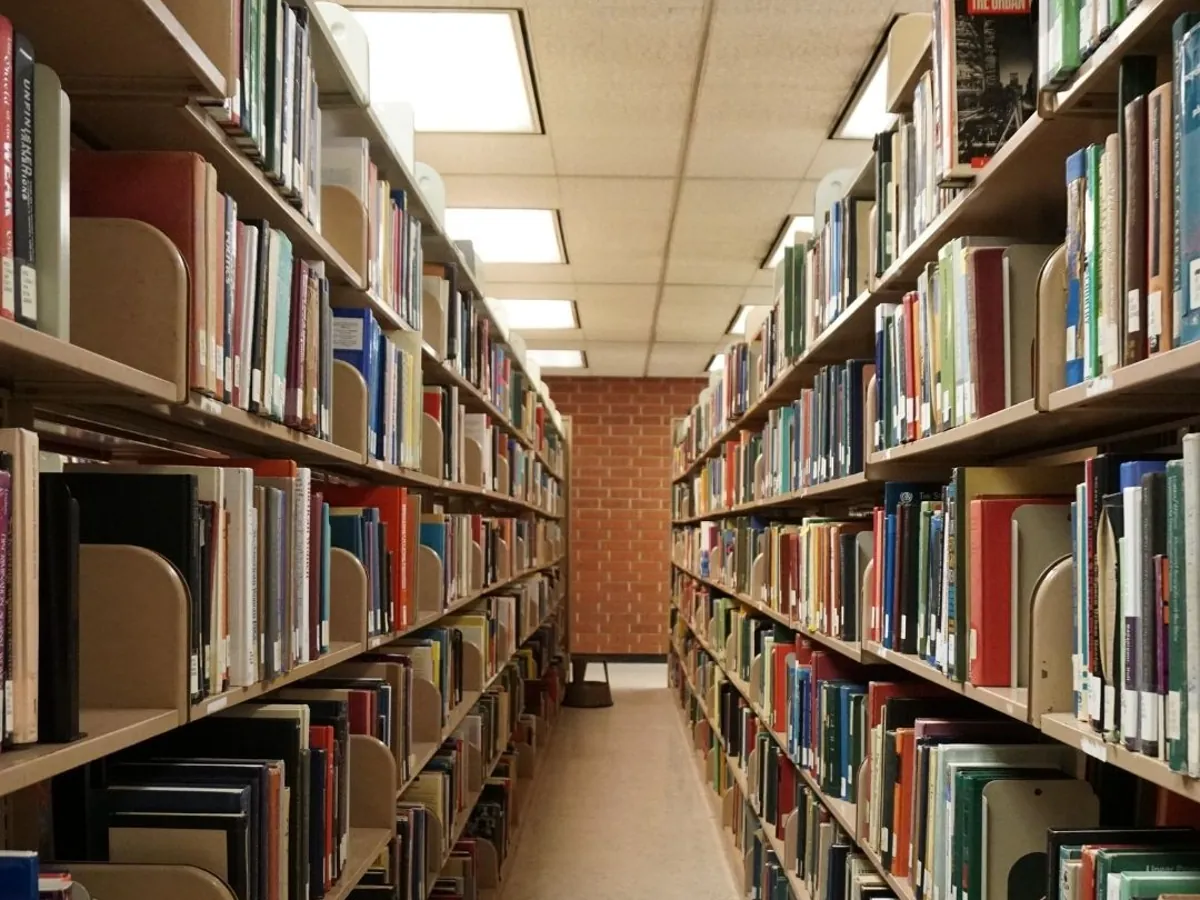
The National Library (Perpusnas) has again reported that its book distribution program to villages, community reading centers, prisons and health clinics has stalled, its head E Aminudin Aziz told a hearing with House of Representatives Commission X at the Parliament Complex in Jakarta on Thursday, July 16, 2026.
This is not a new complaint. Since January, Perpusnas has twice requested additional funding, and Commission X has twice voiced open support. Seven months on, the library's 2026 budget ceiling remains at Rp377.9 billion, nearly half the Rp721 billion it received the year before.
"With such a drastic budget cut, work related to literacy has been disrupted," Aminudin Aziz told the hearing.
Numbers repeated, funds never released
The record is laid out in the hearing's minutes. On January 14, 2026, in an official letter numbered B.84/1/PRC.01.02/I.2026, Perpusnas asked the president for an additional Rp644.68 billion. "We have proposed additional budget to the president. This has now been raised three times, in line with the timeline," Aminudin Aziz said at the time. Commission X voiced its support.
Five months later, on June 11, 2026, that request was revised down to Rp357.77 billion, up from an initial estimate of Rp204.04 billion, with total funding needs still put at Rp725.5 billion. The June figure was Rp286.91 billion lower than the January request, a major revision that no hearing has explained. Commission X again voiced collective support, this time pushing for priority to be given to Indonesia's 3T regions (underdeveloped, frontier and outermost areas).
Then came the July 16 hearing. Not once did anyone say the additional funds had come through. Aminudin Aziz only confirmed that the book aid program for villages, reading centers, prisons and health clinics, along with the disbursement of special regional allocation funds (DAK Fisik) to local governments, remained disrupted.
Why hasn't Commission X's support changed the budget figures?
That support is a political statement made in a hearing, not a budget decision. Releasing additional funds depends on fiscal room controlled by the Finance Ministry and the National Development Planning Agency (Bappenas) through the revised state budget or the following year's budget ceiling, and neither agency attended the Commission X hearing. Commission X chair Hetifah Sjaifudian acknowledged that limit herself: "Perpusnas has still managed to show dedication, innovation and maintained service quality despite the budget constraints. The impact of the budget cut on literacy development needs to be a focus in the next budget discussion."
The people hit hardest by this gap are not Perpusnas staff in Jakarta but residents in remote areas who have relied on the book distribution, including reading center beneficiaries, prison inmates and health clinic patients who are the program's target readers.
Cuts despite a strong track record
Perpusnas' record of managing its budget only sharpens the question of why the cuts happened. In 2025, the government froze Rp132 billion of an initial Rp721.6 billion ceiling, leaving an effective budget of Rp589.59 billion. Of that, Perpusnas spent Rp583.26 billion, or 98.93 percent. "Throughout 2025 we distributed that budget to our working units. We ended up spending Rp583.2 billion, which is equivalent to 98.93 percent," Aminudin Aziz said.
When Law No. 17/2025 on the 2026 state budget was passed, Perpusnas' final ceiling was set even lower, at Rp377,999,537,000, without restoring funding to 2025 levels. That near-perfect spending rate did not persuade the government to hold the ceiling steady, since the cut stemmed from an across-the-board spending efficiency policy for ministries and agencies in place since early 2025, not a response to Perpusnas' own performance.
Three things are worth watching next: whether the Rp357.77 billion request makes it into the 2026 revised state budget or only materializes in the 2027 ceiling, whether the Finance Ministry or Bappenas ever issues a formal response, since support so far has come only from Commission X, and how many villages, reading centers, prisons and health clinics actually went without book supplies through 2026, a figure Perpusnas has not detailed in any hearing.



Comments