

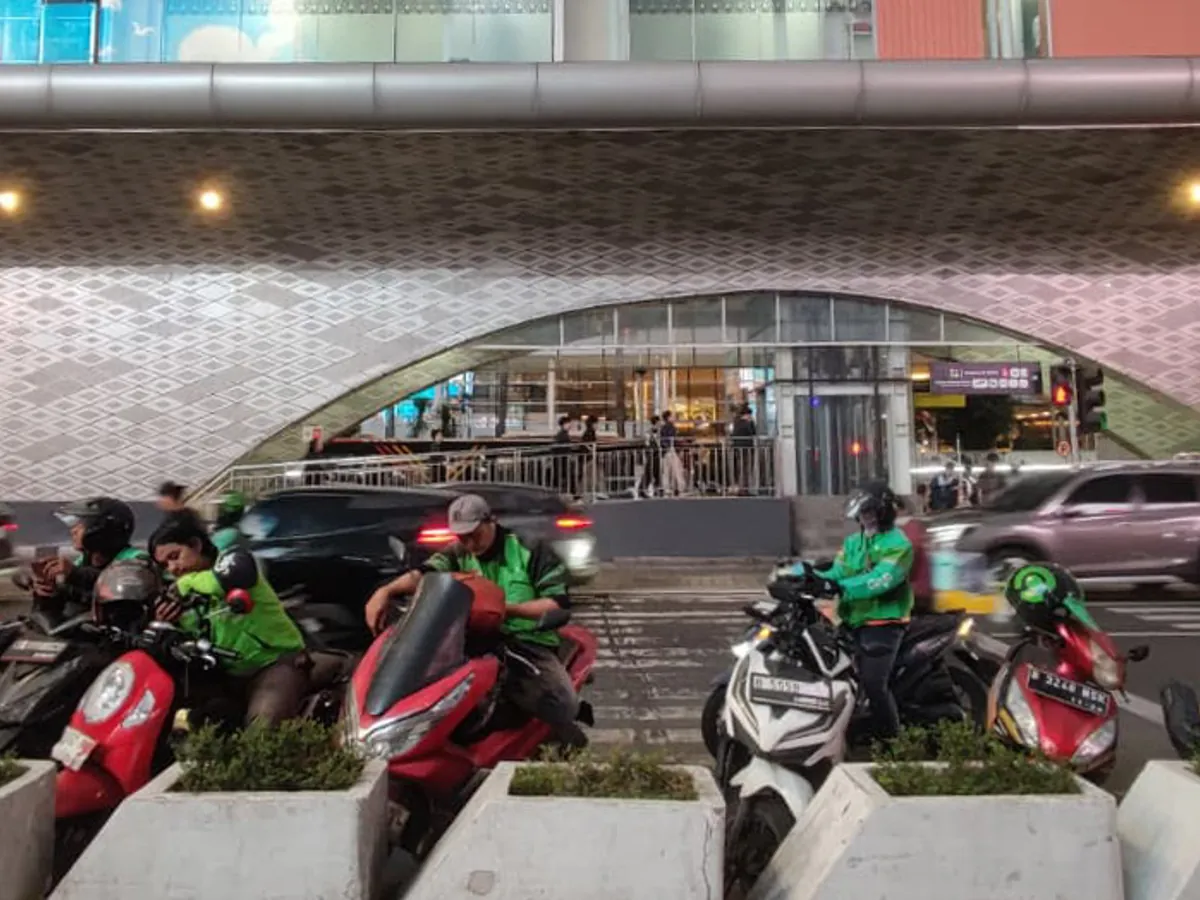
Herny Winata no longer has to track two separate deductions every time an order comes in. Since Grab's new 8 percent commission scheme took effect on July 1, 2026, the savings subscription service and the Gaspol program that used to eat into her earnings as a Grab driver-partner in Jakarta have both been discontinued. "The savings subscription service and Gaspol aren't running anymore, so now it's just the 8 percent deduction," Herny said.
The 8 percent commission is a new revenue split between Grab and its two-wheeled ride-hailing partners, set out in Presidential Regulation No. 27 of 2026, which caps what the platform can deduct at a level far below the up to 20 percent it could previously take. Grab Indonesia CEO Neneng Goenadi announced the company's compliance with the rule on June 24, 2026, a week before it took effect.
What changed from the old deduction scheme?
Before July 1, 2026, the deduction drivers actually felt wasn't just the app commission. It also included extra charges from the savings service and Gaspol, both layered on top of the base commission. Once the commission dropped to 8 percent and those two programs were shut down, partners were left facing a single deduction figure instead of a stacked one. Drivers say that shift from a layered structure to a single number has made it far easier to understand what they're actually earning.
The change traces back to President Prabowo Subianto's push during his Labor Day speech on May 1, 2026, at the National Monument (Monas) in Jakarta. "I'll say it here: I don't agree with 10 percent. It has to be below 10 percent," Prabowo said at the time, referring to the cap on what platforms can deduct from drivers. Two months later, Presidential Regulation 27/2026 set that cap at 8 percent, and Grab was among the platforms that announced compliance, through Neneng Goenadi's official statement.
Partner earnings still vary despite the simpler structure
Two weeks into the new rule, reports from drivers show that welcoming a simpler deduction structure doesn't automatically mean everyone is earning more. Seraki, a Grab partner working in Tangerang, says his order volume has held steady and his income has actually risen. "Orders feel about the same to me, but my income has actually gone up. It comes down to capital, effort and prayer," he said.
Siti Chodidjah, a Grab partner in Jakarta, has had a similar experience. "Orders have stayed steady for me, and now there are even more. The key is just staying consistent at work," she said. But other partners say order volume has more to do with local demand than with the commission scheme itself, a pattern also flagged in an earlier report on commission dropping to 8 percent while driver income stayed flat.
That gap in experience matches earlier coverage of GoRide and GrabBike's commission cut to 8 percent when it took effect in early July: the same rule applied uniformly to every partner, but what actually lands in each driver's pocket still depends on location and hours worked.
What to watch
Grab hasn't said whether the single 8 percent commission format will hold without new add-on programs layered outside the official commission. The gap in partner earnings, which drivers themselves attribute more to location and demand patterns than to the commission scheme, also hasn't been addressed with any targeted incentive policy for regions with lower order volumes.


Comments