

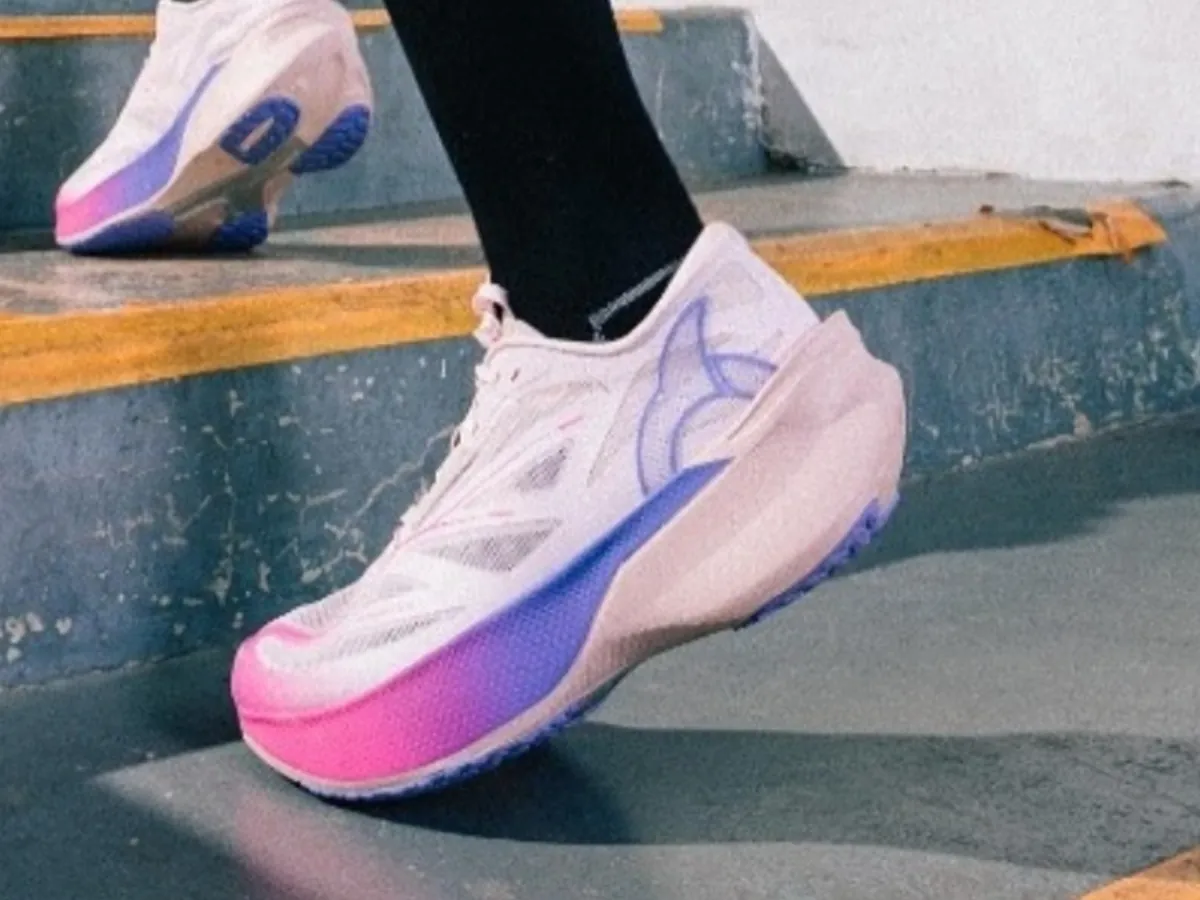
Dr. Zeth Boroh, a sports medicine specialist, often treats runners with flat feet who developed plantar fasciitis because their shoes did not match their foot shape. For him, choosing the right running shoe has nothing to do with brand or price. It comes down to matching the shoe to each runner's foot strike pattern.
Shoe choice is one of several injury risk factors for runners, alongside foot anatomy and training habits, he said. The UCSF Sports Medicine Center in the United States has published technical guidance on choosing the right running shoes. A July 7, 2026, article from Suara.com added the technical reasoning: the pressure on your feet while running reaches three times your body weight, double the 1.5 times load of walking. Walking shoes are not built to absorb impact that large.
"What causes runners to get injured is that there are many risk factors involved. Wearing the wrong shoes is one of them," Zeth said.
Measure first, don't just guess the fit
UCSF Health recommends leaving at least half an inch, about 1.25 centimeters, of space in front of your toes. The most accurate way to measure is to try shoes on in the late afternoon or evening, when your feet have swollen slightly after a day of activity. That condition is closer to how your feet feel during a long run, so the fit is more realistic than a morning try-on. The common practice of sizing up half a size from your everyday shoes follows the same logic.
Why can't you run in walking shoes?
Walking shoes flex at the middle of the sole to support a heel-to-toe stride, while running shoes need thick cushioning at the heel and forefoot, plus a flex point at the ball of the foot to absorb three times your body weight in impact. A running shoe's heel needs to stay stiff to keep your foot and ankle stable, and the front should bend right at the ball of the foot, not in the middle of the sole like a walking shoe.
Know your foot strike before you pick your cushioning
UCSF Health offers a simple way to check a shoe's support level: twist it. A shoe that resists twisting has stronger midfoot support, which suits runners with overpronation, when the foot rolls inward excessively on landing. Zeth cautioned against making this decision based on trends.
"So you can't just say, 'oh, I'm wearing this shoe because it's expensive, it's hyped,' no. Match it to your foot's condition," he said. "If it feels comfortable, that's the right shoe for your feet."
Buy in person, not through an app
Doctors recommend buying running shoes in a store rather than online, since every foot is different and comfort can only be confirmed by trying the shoe on. The twist test and toe-space check are hard to do from product photos or other buyers' reviews.
Don't wear new shoes on race day
Dr. Listya Tresnanti Mirtha, a sports medicine specialist at Universitas Indonesia Hospital, stressed the importance of a break-in period before competition. The hospital advises against switching shoes 3 to 4 months before race day; new shoes should be used for training first so your feet get used to them.
"Running isn't like a party or a fashion show, where on the big day you'd usually wear something brand new. With running, you just can't do that," Listya said.
This rule matters for runners targeting major events like the Jogja Marathon, which drew more than 10,200 runners from 17 countries this year. Shoes bought just a week before a race that size risk causing blisters or new pain right at the most critical point of the run.
When should you replace your running shoes?
UCSF Health notes that running shoe cushioning loses its elasticity after 450 to 600 miles, roughly 700 to 970 kilometers. Past that point, a shoe's ability to absorb impact drops even though it may still look fine. The hospital recommends keeping two pairs in rotation so each has time to recover its shape between runs, and drying them with newspaper rather than a machine dryer so the materials don't wear out faster.
Runners with a history of foot or knee pain should see a sports medicine specialist to determine their pronation type and foot shape before buying new shoes, rather than guessing from online reviews or following whatever shoe is trending.

Comments