

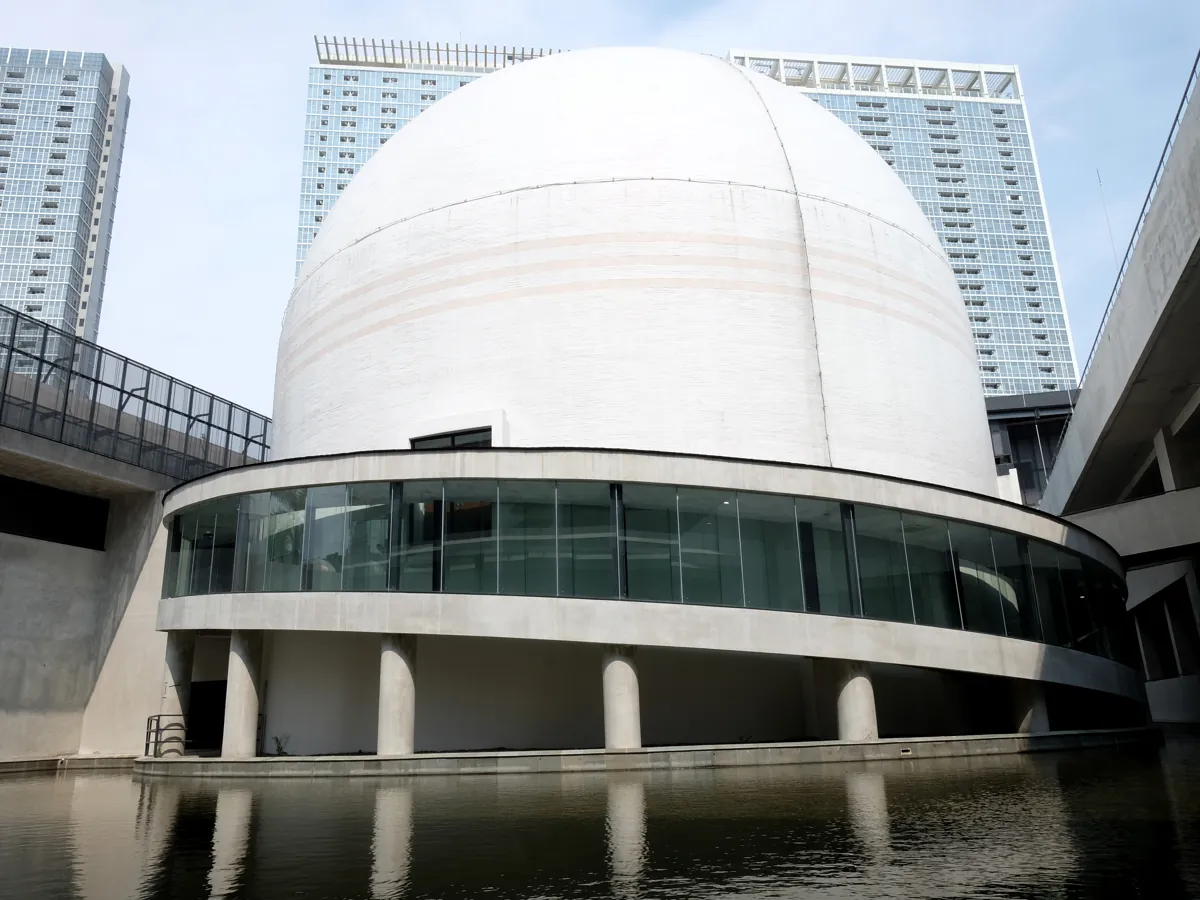
Jakarta Governor Pramono Anung pledged Tuesday to open Taman Ismail Marzuki to joint community management, speaking at a centenary event for founding governor Ali Sadikin at TIM in Cikini, Central Jakarta. Former Governor Fauzi Bowo also attended.
What has Pramono promised for TIM?
Pramono wants TIM run jointly by the provincial government and arts communities, with the broadest possible room for artists to create. He framed Ali Sadikin's central legacy not in physical terms but in culture and the arts, with TIM as its most concrete expression.
"I really want Taman Ismail Marzuki to become a public space managed together," Pramono said.
On June 23, 2026, Pramono confirmed 16 members of the Jakarta Academy (Akademi Jakarta), a cultural institution closely linked to TIM's governance: 9 returning and 7 new. He described the move as an effort to open more space for the arts.
Ali Sadikin founded TIM in 1968 as the capital's arts center. During a previous administration, a large renovation of the complex drew criticism from artists who said the area had shifted toward a property project and lost its community character.
The centenary program runs July 7 to 14, 2026, centered at Jakarta Theatre Plaza and open to the public. It includes archive exhibitions, public discussions, music, dance and theater performances, film screenings, an arts market, and food stalls.
Seven months in, 800 seats a day
Jakarta Planetarium was closed for more than 13 years from 2012. Pramono reopened it on December 23, 2025, with technology upgrades including an interactive AI feature displaying the faces of the governor and deputy governor. Management went to PT Jakarta Propertindo (Jakpro), the province's property company.
"After more than 13 years, since 2012, the planetarium conceived by Bang Ali Sadikin can thankfully be brought back to life today," Pramono said at the December reopening.
Teater Bintang on the planetarium's second floor holds up to 200 viewers per session, with four daily sessions at 09:00, 11:30, 14:00, and 16:30 local time, putting maximum daily capacity at 800 seats. In the early days after reopening, tickets sold out through the 27th and visitors began queuing before dawn.
Pramono made entry free for Jakarta students during the first three months with a student card or KJP (Jakarta student benefit card). Parents and companions paid a promotional rate of Rp10,000.
"When I was young, the facilities were not as good as they are now. With the added AI technology of the governor and deputy governor, visitors will get a different and more engaging learning experience," Pramono said.
Visitor numbers versus space for artists
The planetarium's queues provide a concrete figure, but the question relevant to artists and TIM's administrators is whether that foot traffic reflects a revival of the arts ecosystem or the success of a science venue refreshed with new technology and subsidized tickets.
Pramono named cultural spirit as Ali Sadikin's greatest legacy. The planetarium he cited as evidence, though, is the product of a physical renovation run by a provincial property company. Visitors come for new technology and cheap admission to see the stars.
Whether the promise of "shared management" takes concrete form in mechanisms such as rehearsal-space allocation, performance-hour slots for community arts groups, or a dedicated arts program budget: none of those answers exist today.
The three-month student promotion ended around March-April 2026. Attendance figures after the subsidy ends will show whether the planetarium's popularity holds because of its content or its price. At the same event, Pramono also mentioned plans to develop Pasar Baru in the style of Seoul's Myeongdong district and to continue the revitalization of Setu Babakan.

Comments