

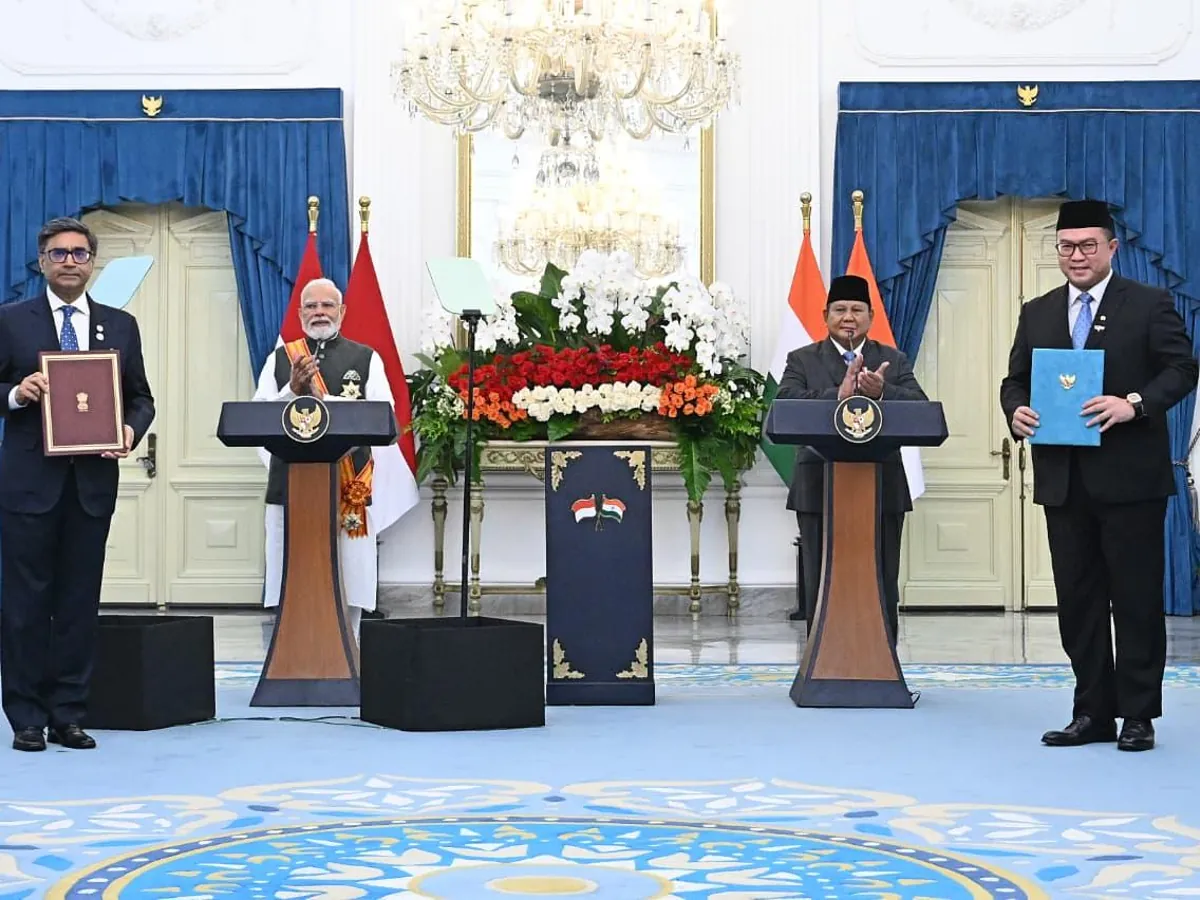
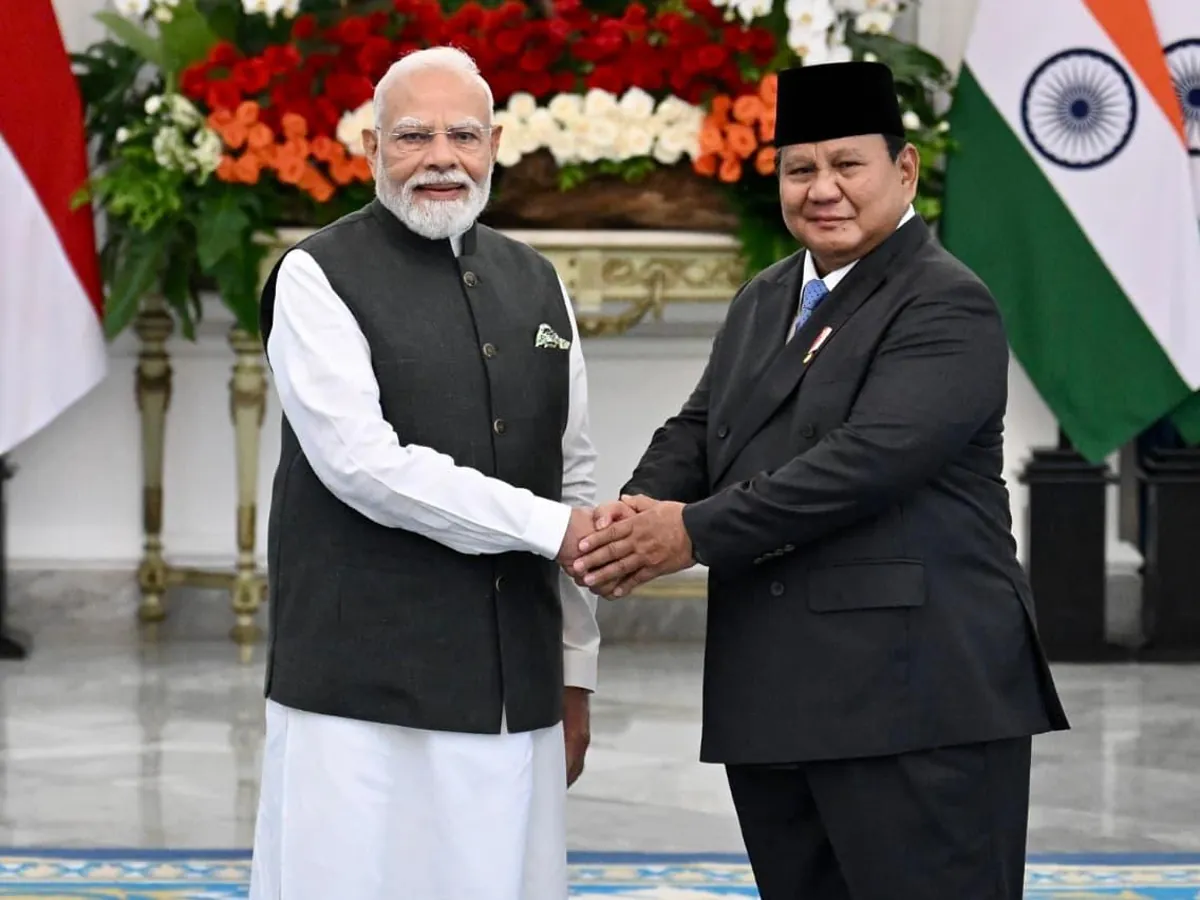
Indonesia became a BrahMos export buyer July 7 when President Prabowo Subianto and Prime Minister Narendra Modi signed a procurement contract at Istana Merdeka in Jakarta. The deal, between BrahMos Aerospace and Indonesia's Ministry of Defense, was one of 20 memoranda of understanding inked during Modi's fourth state visit to the country.
BrahMos is a supersonic cruise missile developed jointly by India and Russia. The Philippines was its first export customer in 2022, followed by Vietnam. Indonesia now completes that trio. A second defense deal was signed the same day: Astra Mk-1 air-to-air missiles, with a range of 80 to 110 kilometers, for 16 Indonesian Air Force Su-30 fighter jets, with system integration by Bharat Dynamics Limited.
Why is the port of Sabang in this package?
Sabang is included for its location: a deep-sea port at the northern tip of Sumatra, at the mouth of the Malacca Strait, the corridor through which most of Asia's trade and energy supplies flow. Joint development of the facility gives India a maritime infrastructure presence on the western side of the archipelago, in waters adjacent to India's bases in the Andaman and Nicobar Islands.
The port is said to accommodate all classes of warship. In the joint statement, Prabowo said the partnership rests on "a free, open, transparent Indo-Pacific based on international law while upholding ASEAN centrality." The language signals that the new defense ties should not be read as a shift in bloc alignment.
How much is the BrahMos contract worth?
Neither government has officially announced the contract value. An Indian government source cited by Reuters before the signing estimated around US$630 million, or about 5,985 crore Indian rupees. That figure is a pre-signing estimate. The number of units and the delivery schedule have not been publicly detailed.
Twenty MoUs, or seven?
India's Ministry of Foreign Affairs counted 20 memoranda of understanding in this visit. Pre-visit Indonesian reports put the figure at seven to eight MoUs covering education, health, and technology. The gap between the two counts needs to be reconciled against official releases from both governments.
Beyond defense, the package includes Indian investment in steel, nickel, and rare-earth permanent magnet manufacturing in Indonesia, and a planned branch campus of the Indian Institute of Management Bangalore at the Singhasari Special Economic Zone.
Prabowo called the visit "a historic milestone" and "a mirror of both countries' commitment to continue advancing the comprehensive strategic partnership through concrete and mutually beneficial cooperation." Both leaders also called for the Middle East conflict to be resolved through dialogue. Modi said: "We support the Two State Solution and long-term sustainable peace."
The trade base still lags
Behind the two defense contracts, bilateral trade has not moved in line with targets. Both countries have set an ambition to raise trade from around US$30 billion to US$50 billion, a US$20 billion gap that has not closed on schedule. New investment in critical minerals and the latest MoUs open potential pathways, but delivery depends on execution, not signatures.
The India-Indonesia Comprehensive Strategic Partnership has been in place since 2018. Its defense side is moving fastest: BrahMos and Astra add two new weapons systems in a single visit. The economic side is still catching up.
Three things will determine the real weight of this package: an official announcement of the BrahMos value and delivery schedule from Indonesia's Ministry of Defense, reconciliation of the MoU tallies between the Indian and Indonesian versions, and whether the port of Sabang moves from a memorandum of understanding to a binding agreement with clear funding details.

Comments