
The men killed on the road between Nabatiyeh and Marjayoun on Saturday, June 6, 2026, were not militia fighters. They were regular Lebanese soldiers: a brigadier general, a captain, and a private, killed when an Israeli airstrike hit the vehicle they were traveling in. Their deaths exposed a paradox eating away at the region's new ceasefire framework. The deal brokered by Washington was meant to strengthen the Lebanese state and its army as the sole holder of weapons in the south. Yet the most prominent first casualty of this latest chapter is the very institution it was supposed to bolster.
Casualties from the national army, not the militia
The distinction matters, and it often blurs in the rush to report on Lebanon. For two decades, Israeli escalation in the south has almost always targeted Hezbollah, the non-state armed group. This time, according to the Lebanese Armed Forces as quoted by NPR, the dead were regular military personnel. Nine people were killed in the day's attacks. Beyond the three soldiers on the Nabatiyeh–Marjayoun stretch, six others were killed and four wounded in a separate strike on the village of Saksakiyah, the official National News Agency reported.
The Israeli military offered its own account. It confirmed striking a vehicle it said was "moving suspiciously" toward Israeli troops near the village of Kfar Tibnit, claiming it had received "concrete indications" that Hezbollah would open fire from the area. The incident, the Israeli side said, was "under review." Internal reviews of this kind routinely follow strikes that kill the wrong target, and they rarely produce measurable accountability.
Lebanese President Joseph Aoun, a former army commander, responded sharply. He called the strike "a flagrant violation to Lebanese sovereignty and international law" and warned of "ongoing escalation that threatens stability and security in the south (of Lebanon), despite the efforts Lebanon is exerting in the Washington negotiations to put an end to the ongoing Israeli attacks without deterrent." The statement laid bare Beirut's bind: negotiating at the table in Washington while burying its own officers.
Why Jakarta cannot watch from afar
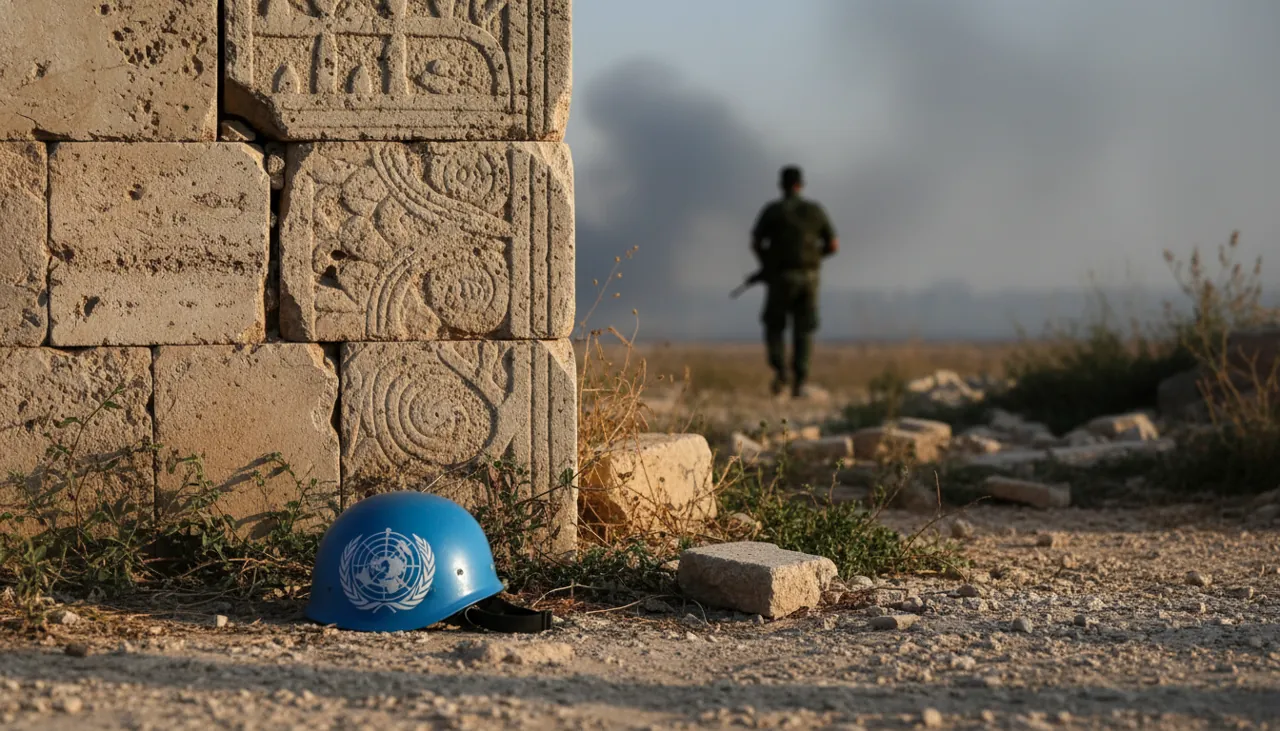
For Indonesia, the map is intensely personal. Indonesia is the largest troop contributor to the United Nations Interim Force in Lebanon (UNIFIL). As of May 1, 2026, the mission counted roughly 7,400 personnel from 47 countries, with Indonesia at the top of the list, ahead of Italy and Spain, according to Arab News. The Garuda Contingent has served in southern Lebanon since November 2006, and by 2026 Indonesia had deployed 19 contingents. Hundreds of TNI soldiers are now stationed in precisely the area that became the target of Saturday's airstrikes.
The risk is not hypothetical. On March 29 and 30, 2026, three TNI soldiers were killed in two separate incidents in southern Lebanon. The three, as reported by Al Jazeera, were Farizal Rhomadhon (28), Zulmi Aditya Iskandar (33), and Muhammad Nur Ichwan (26). Their bodies arrived home on Saturday, April 4, 2026. The March incidents were distinct events from the June 6 strike, and the two should not be conflated. But the thread connecting them is clear: each new escalation raises the danger for the soldiers still on duty and reignites a domestic debate that has yet to settle.
The March deaths left a sharp political mark. Susilo Bambang Yudhoyono, Indonesia's sixth president, called for an extreme measure. "Given this reasoning, the UN in New York should immediately take a firm decision and firm steps to end the UNIFIL deployment," he wrote on X on April 5, 2026. The position placed SBY, a figure known for caution in diplomacy, at odds with Indonesia's long tradition of supporting UN peacekeeping.
Foreign Minister Sugiono struck a different note. "This is a peacekeeping mission. Incidents such as this should not happen," he said, as translated and published by Al Jazeera, responding to the soldiers' deaths. The families' grief added a moral weight: the father of Zulmi Aditya Iskandar, one of those killed, spoke of his deep sorrow that his son had died on a peace mission rather than in war, Al Jazeera reported.
The root of the problem: who may bear arms in the south
To understand how Lebanon's army could become a casualty of a deal meant to empower it, the dispute has to be traced to its source. The core of the conflict is not who fired first on Saturday but who holds the monopoly on force. The government of Aoun and Prime Minister Nawaf Salam is pushing an agenda to disarm "armed groups," a polite term for pressing Hezbollah to surrender its weapons to the state. The ceasefire framework negotiated in Washington binds that agenda together: it demands a "full cessation of fire" by Hezbollah, plus a plan to create a "pilot zone" where the Lebanese Armed Forces hold full control with no non-state actors present.
This is where the knot will not come loose. On June 4, 2026, Hezbollah rejected the deal and set a precondition: a full Israeli withdrawal from southern Lebanon first. Israel, by continuing to strike, reads the framework as a license to act against threats unilaterally. The result is that Lebanon's regular army, the force that both Washington and Beirut hope will take over the south, is being weakened just when it most needs to look strong. The deal's logic is consuming itself. It is hard to convince the Lebanese public that the national army is fit to replace Hezbollah if that army cannot even shield its own officers from airstrikes.
The ceasefire chronology also needs untangling, because two stages are often confused. An initial 10-day pause was agreed on April 16, 2026. The framework announced in early June 2026 is a separate and far more ambitious document, with structural demands about a "pilot zone," not merely a temporary halt to fire. Reading the two as a single deal would obscure how quickly June's larger ambitions cracked, within a matter of days.
The dilemma awaiting Prabowo
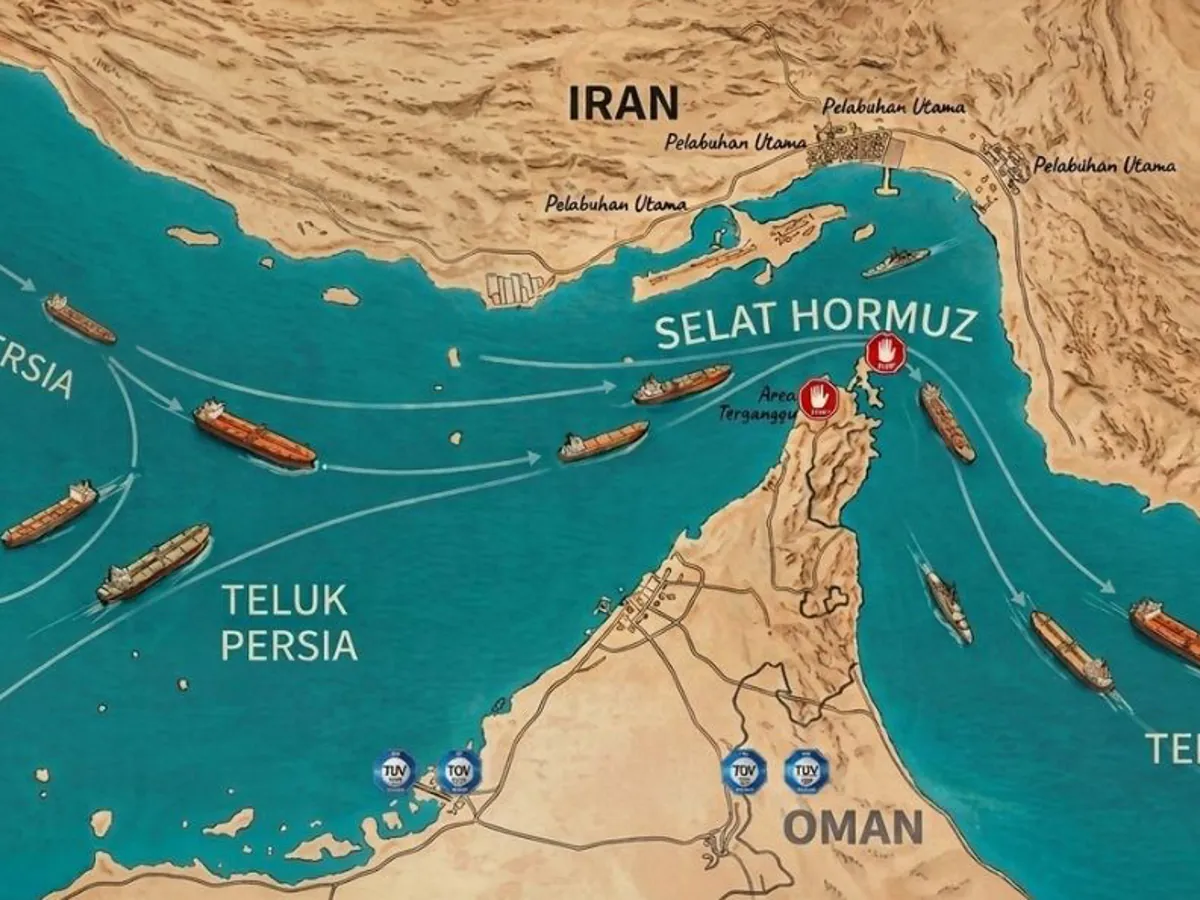
The regional backdrop hardens the stakes. The Lebanese front flared again after US and Israeli tensions with Iran rose in early 2026, triggering reprisals and reactivating fighting along the border. UNIFIL, created in 1978 to oversee Israel's withdrawal and to monitor the "Blue Line" as a de facto demarcation, now operates in conditions far hotter than its original mandate envisioned.
For President Prabowo Subianto, the calculation rests on two values pulling against each other. On one side, serving as the largest troop contributor is diplomatic capital that is hard to match, concrete proof of Indonesia's claim to be a guardian of world peace and a ticket to influence in UN forums. On the other side are the lives of hundreds of soldiers in an area that can become a target in any given week. Public pressure of the kind SBY voiced will not evaporate; it will intensify with each new casualty.
The available choices are not a binary between staying and going home. Some troop contributors have taken a middle path before, repositioning personnel to safer bases rather than withdrawing entirely, an option that preserves presence while reducing exposure. Rotation schedules and the completion of certain contingent assignments by mid-2026 add another layer to decisions Jakarta will have to make soon, not in the abstract.
Several things are worth watching. Whether the Foreign Ministry and the TNI issue new statements on the safety of the Garuda Contingent after the June 6 strike. Whether the Washington framework survives Hezbollah's rejection and the deaths of Lebanese soldiers. What the Israeli military's "review" of the strike on the army vehicle concludes. And how hard troop-contributing countries push the UN to guarantee UNIFIL's safety. The answers will determine whether southern Lebanon moves toward a state that monopolizes its own arms, or slips back into the old pattern: a deal on paper, gunfire in the field.