

Nearly 400 local and regional newspapers filed suit in federal court in New York on June 24, 2026, accusing OpenAI and Microsoft of copying millions of copyrighted articles to train ChatGPT and Copilot without permission or compensation. The lawsuit, led by Platkin LLP (founded this year by former New Jersey Attorney General Matthew Platkin), is the largest copyright action brought by local papers in the United States, according to the firm.
The coalition includes Richner Communications, AIM Media (which operates papers in Indiana, the Midwest, and Texas), The New York Amsterdam News, Arkansas Democrat-Gazette, WEHCO Newspapers, Ogden Newspapers, Community Impact, and dozens of regional outlets.
The suit comes nearly two and a half years after The New York Times sued both companies in the same federal court in December 2023.
The plaintiffs advance two legal theories. The first is direct copyright infringement: they argue that copying articles during AI model training already constitutes reproduction requiring the copyright holder's permission. The second claim is more technical and potentially costlier for the defendants.
Why could the DMCA metadata claim result in bigger damages?
The second claim rests on a Digital Millennium Copyright Act provision concerning the removal of copyright management information. Copyright management information (CMI) is metadata attached to digital works: writer bylines, article titles, publisher names, publication years, and copyright notices. The plaintiffs allege that this identifying data was stripped when articles entered the AI training pipeline. The DMCA prohibits CMI removal as a separate violation, independent of fair-use arguments that tech companies typically raise as a defense.
Damages are calculated per work infringed. If the CMI claim succeeds and applies to millions of articles from hundreds of newspapers over years, total statutory damages could far exceed typical estimates. The plaintiffs also seek a permanent injunction barring both companies from using their content to train or improve AI systems.
Platkin explained why local newspapers, rather than major national outlets, became a prime AI training target: "AI systems do not critically evaluate city council and community meetings. They don't investigate local crimes and corruption, publish obituaries, or cover the new restaurant opening downtown. Local reporters do."
Local journalism without expensive paywalls and freely available in digital archives is valuable AI training material because of its specificity and local detail. Yet the publishers producing it lack the financial capacity to pursue years of litigation. Platkin added: "This lawsuit is not about stopping AI innovation, but ensuring that innovation happens fairly and within the bounds of the law."
Indonesia's legislative path
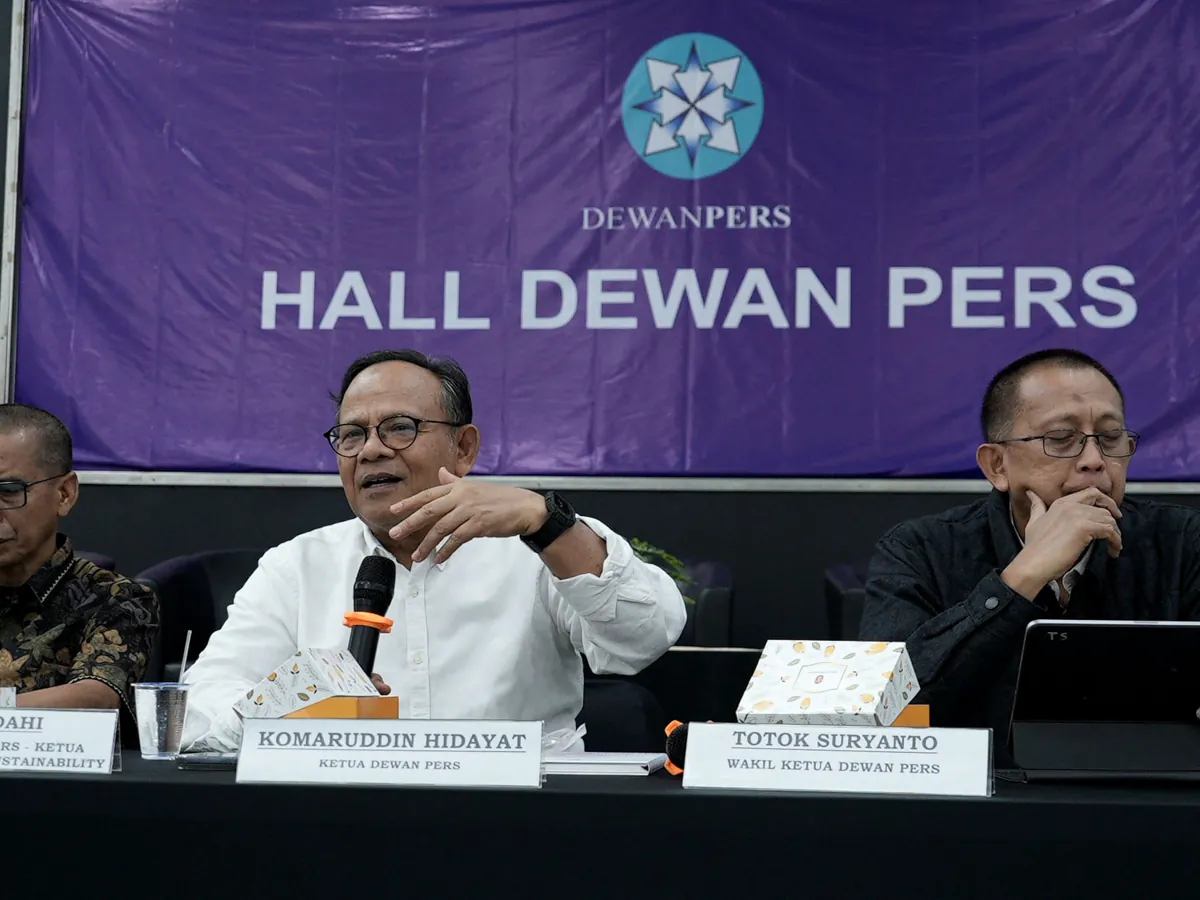
While US newspapers turned to court, Indonesia pursued legislation. The Press Council (Dewan Pers) is pushing three provisions in a draft copyright law under development: explicit recognition of journalistic work as a copyright-protected object, recognition of publishers' economic rights over the content they produce, and stricter rules for how digital platforms, aggregators, search engines, and AI systems use journalistic content. Use for education, research, and academic study remains exempt; the rules target commercial use.
Dahlan Dahi, chair of the Press Council's Digital and Sustainability Commission, summarized the situation: "Currently, journalistic work becomes the basis for algorithms that distribute information and news by artificial intelligence without any compensation whatsoever." On the intended outcome, he said: "So there will no longer be any free journalistic content."
Enforcement of digital intellectual property in Indonesia remains in development. The Digital Commission (Komdigi) reported 9,263 intellectual property violations in its latest monitoring, underscoring how broad the challenge remains before AI-specific rules take effect.
The most consequential development in New York is whether the judge will accept the CMI argument as a separate violation. If approved, that precedent would apply to every AI system training models on bylined text, regardless of location, including those serving the Indonesian market. If rejected, AI companies receive the signal that fair-use defense remains sufficient to defeat similar claims.