

Kalasuara -
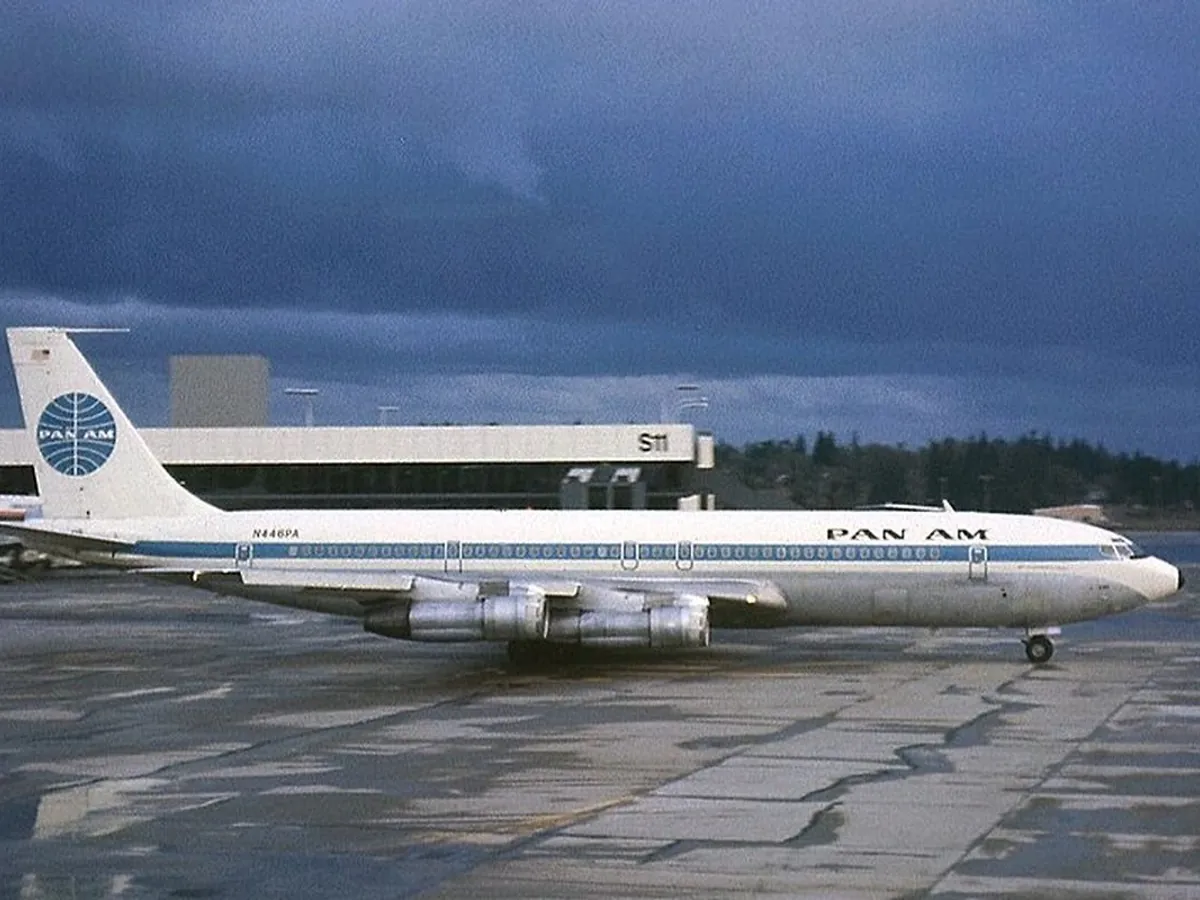
The wreckage of a Pan American World Airways Douglas DC-4, the Clipper Endeavor, has been found on the floor of the Atlantic Ocean at a depth of nearly 610 meters off the northern coast of Puerto Rico. It was located on June 2, 2026, at 7:14 p.m. local time (6:14 a.m. WIB on June 3). The Air/Sea Heritage Foundation, Deep Sea Vision, and the team behind Discovery Channel's Expedition Unknown announced the find on July 21, 2026, 74 years after the plane crashed and killed 52 people.
The Clipper Endeavor was operating as Pan Am Flight 526A when it went down in the waters off Puerto Rico on April 11, 1952, on its way to New York. The Civil Aeronautics Board's (CAB) investigation into the crash led to the oral safety briefing passengers now hear before takeoff on any flight over water, including the location of life vests and emergency doors.
Two engine failures and a cabin that sank in three minutes
The plane took off from Isla Grande Airport in San Juan bound for Idlewild Airport in New York, carrying 64 passengers and five crew. According to Air/Sea Heritage Foundation records, the flight lasted no more than nine minutes. The CAB found that the No. 3 engine failed shortly after takeoff, and the No. 4 engine on the right wing then lost power too, leaving the plane unable to hold its altitude.
Everyone aboard survived the initial impact with the water. The tail broke off, and the main cabin stayed intact briefly before water flooded in and sank it in under three minutes. Of the 69 people on board, 17 survived: 12 passengers and all five crew members. Fifty-two passengers died.
The CAB cited inadequate maintenance as the main cause: the No. 3 engine had not been replaced even though metal particles had already turned up in its oil. The board also found that the captain tried to climb again without using all the power still available after the other engine lost thrust.
Why did this crash lead to airline safety briefings?
Passengers on the Clipper Endeavor received no safety briefing before takeoff. Language barriers and the lack of a coordinated evacuation left many passengers unable to find life vests, while the crew struggled to deploy the life raft. The CAB went on to recommend easily accessible flotation equipment and an oral briefing on life vests, rafts, and emergency doors before any flight crossing open water.
"This accident was a catalyst. It drove safety measures like better flotation equipment and pre-flight briefings," said John Cox, a pilot and aviation safety expert who founded Safety Operating Systems. Those changes became part of the foundation for the pre-flight safety briefing still in use today.
Years of searching before the wreckage was found
The general location of the crash had been known since 1952. The crew had been in contact with the Isla Grande tower, and U.S. Air Force pilots training nearby watched the emergency landing and later sketched an approximate map of the site. But depths of 500 to 600 meters and the technology limits of the time kept the exact wreck location out of reach for decades.
Russ Matthews, president and co-founder of the Air/Sea Heritage Foundation, began investigating the case in 2019. His team combined CAB reports, Pan Am and U.S. Coast Guard archives, communication transcripts, survivor testimony, weather data, and the Air Force pilots' witness map to define a search area. A dedicated mission in April 2024 was disrupted by bad weather and equipment damage. Deep Sea Vision's autonomous underwater vehicle HUGIN, capable of diving to 6,000 meters and operating for up to four days, finally found the wreck on its first pass through a roughly 10-square-nautical-mile search area on June 2, 2026.
Sonar detected a fuselage split into two sections. A follow-up photo survey showed Pan American's winged logo and the name Clipper Endeavor still legible on the hull, confirming its identity. "This discovery gives us a rare chance to connect with a defining moment in history," said Tony Romeo, CEO of Deep Sea Vision.
What does this mean for airline passengers in Indonesia?
Indonesia's CASR 91.537 requires a pre-takeoff briefing covering emergency doors and exits, the location of safety equipment, and water-landing procedures and flotation device use for flights over water. That requirement traces back to a string of accidents including the Clipper Endeavor, and it applies directly to Indonesia as an archipelago with many air routes crossing open sea.
The routine briefing many passengers tune out is still what's at stake every time a plane has to make an emergency water landing, as seen in the Boeing 737 K2 Airways crash into the Arabian Sea, which remains under investigation. The Clipper Endeavor case shows that survival odds in a survivable crash depend not just on the aircraft's structural strength, but on how quickly passengers know where to find the emergency doors and flotation devices.


Comments