

Kalasuara -
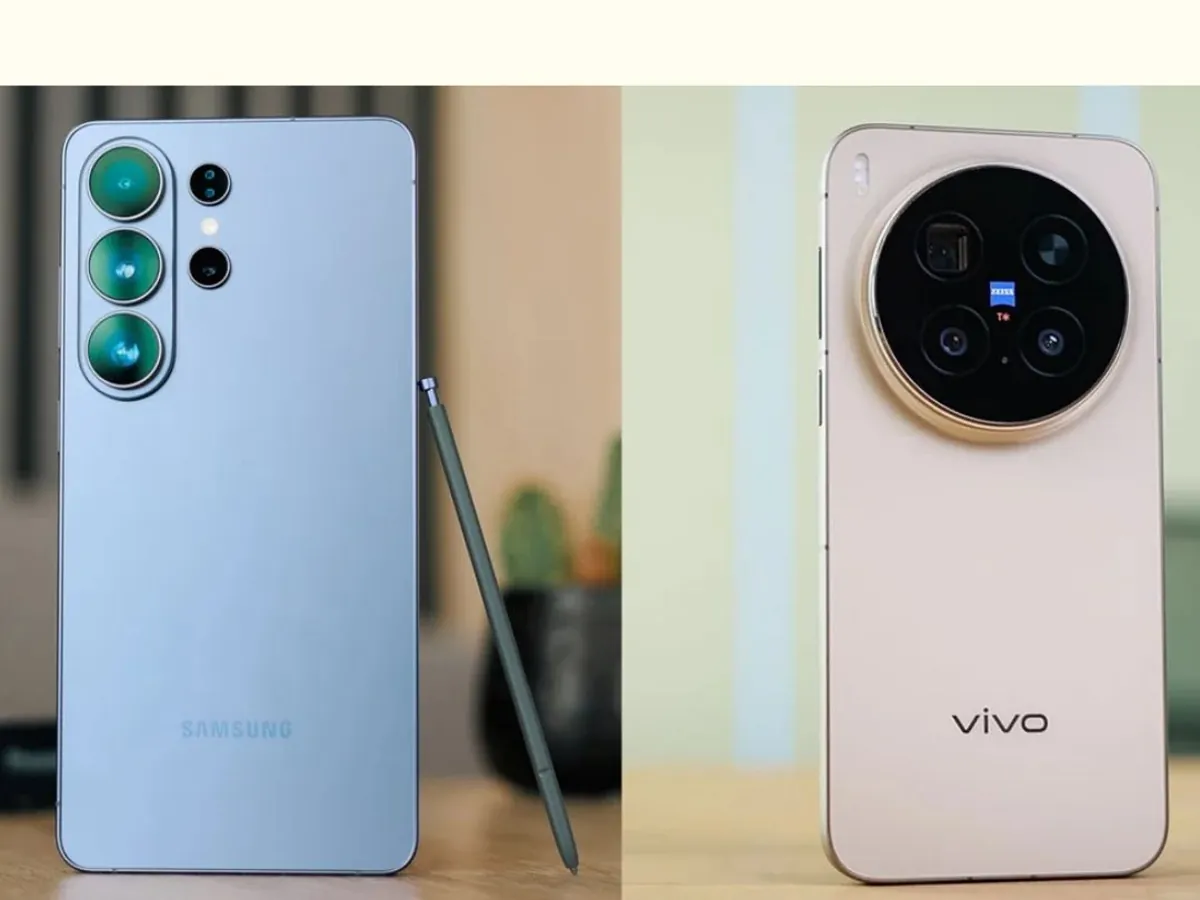
Samsung's Galaxy S26 Ultra and vivo's X300 Ultra, two of the strongest contenders for best camera phone of 2026, both earned an expert score of 8.7 out of 10 from spec comparison site 91mobiles. The matching numbers mask sharp differences in the two phones' camera setups, from lens count to aperture.
Same score, very different camera setups
The Galaxy S26 Ultra carries four rear cameras: 200 MP, 10 MP, 50 MP and 50 MP, plus a 12 MP front camera. The vivo X300 Ultra instead relies on three main cameras plus one extra: 200 MP, 50 MP, 200 MP and 5 MP, with a 50 MP front camera. Adding up the megapixel counts across the two phones doesn't tell you much, since each camera covers a different field of view and they don't always work together.
According to 91mobiles' review notes, the vivo X300 Ultra's strength lies in the consistency of its three lenses across different focal distances, its color character and its support for telephoto accessories. Its downsides include a high price and battery life that lasted only about a day in their testing.
Why doesn't a high megapixel count guarantee the best camera?
A megapixel figure only shows how many pixels a sensor records. Photo quality depends on how much light reaches the sensor, lens size, stabilization, focus and image processing. High resolution modes usually work best in good light with still subjects. In low light or fast motion, phones often combine several pixels together, so the final output ends up at a lower resolution than the maximum figure on the box.
That is why the Galaxy S26 Ultra can score the same as the vivo X300 Ultra despite a different number and mix of cameras. Samsung widened the aperture on its 50 MP periscope telephoto camera from f/3.4 on the Galaxy S25 Ultra to f/2.9 on the new generation. The company says the change lets in 37 percent more light at 5x optical zoom, while its main wide camera uses an f/1.4 aperture. The vivo X300 Ultra, meanwhile, relies on three main cameras with apertures of f/1.85, f/2.0 and f/2.67.
Ilham Indrawan, MX Product Marketing Senior Manager at Samsung Electronics Indonesia, explained the company's approach to long range zoom. "The Galaxy S26 Ultra combines stronger hardware with AI Zoom support that reconstructs detail in real time, so a 100x zoom result is no longer about how far the camera can magnify, but how clean and natural the captured detail looks," he said. Zoom claims of dozens or hundreds of times on any phone generally combine optical magnification, sensor cropping and software reconstruction, so quality at 3x, 5x, 10x and 30x needs to be judged separately rather than reduced to one maximum zoom number.
Stabilization also shapes the final result. OIS, short for optical image stabilization, compensates for hand shake directly at the camera module while shooting photos or video, and its benefit is most noticeable in low light, when using optical zoom, or when recording while moving. EIS uses electronic processing and frame cropping to dampen shake, but having EIS does not automatically replace what OIS does.
Interest in telephoto lenses is not new to the industry. Patrick Owen, Chief Marketing Officer of OPPO Indonesia, once pointed out the appeal of the feature when OPPO kept a telephoto lens in its Reno lineup. "The Reno11 Series' telephoto lens capability gives users the chance to enjoy advanced mobile photography experiences that are usually still limited to flagship class smartphones," he said.
Official Indonesia pricing and storage options
The Galaxy S26 Ultra starts at Rp24,499,000 for the 12GB/256GB variant, rising to Rp27,499,000 for 12GB/512GB and Rp31,999,000 for 16GB/1TB. The vivo X300 Ultra starts at Rp25,999,000 for 16GB/512GB and Rp29,999,000 for 16GB/1TB, running a Snapdragon 8 Elite Gen 5 chip with a 6,600mAh battery that supports 100 watt charging.
Comparing similar storage tiers, the Galaxy S26 Ultra's 12GB/512GB model at Rp27,499,000 still costs about Rp1.5 million more than the vivo X300 Ultra's 16GB/512GB at Rp25,999,000, even though their RAM capacities differ. That price gap doesn't prove either camera is better. Buyers still need to compare photo and video results in the situations they will actually face day to day.
This flagship camera rivalry is playing out as Samsung also prepares to release the Galaxy Z Fold 8 and Flip 8, while other competitors such as Huawei's Pura 90s Pro Max are also targeting the premium camera segment, even as it runs into Google service limits in global markets.
What to watch
Independent testing that compares the Galaxy S26 Ultra and vivo X300 Ultra on the same subject, lighting and software version will be a more honest benchmark than marketing scores. Three things are worth checking before buying: color consistency and sharpness when switching between lenses, the share of sharp photos on moving subjects, and video recording stability without overheating during long sessions.
Promotional pricing after Samsung launches its new foldable generation could also shift the value comparison in this class. For purchases above Rp24 million, clarity on official Indonesia warranty coverage, availability of camera module spare parts, and long term software update support matter as much as day one photo results.


Comments