

Kalasuara -
Dozens of journalists and student press coalition members rallied at the Gadjah Mada University roundabout in Yogyakarta on Sunday, demanding President Prabowo Subianto clarify remarks that likened reporters, journalists, analysts and NGOs to "londo ireng," and apologize if the comparison is found to have stigmatized journalism. The crowd also called on the president to guarantee press freedom under Law No. 40 of 1999 on the Press.
What did Prabowo say, and where?
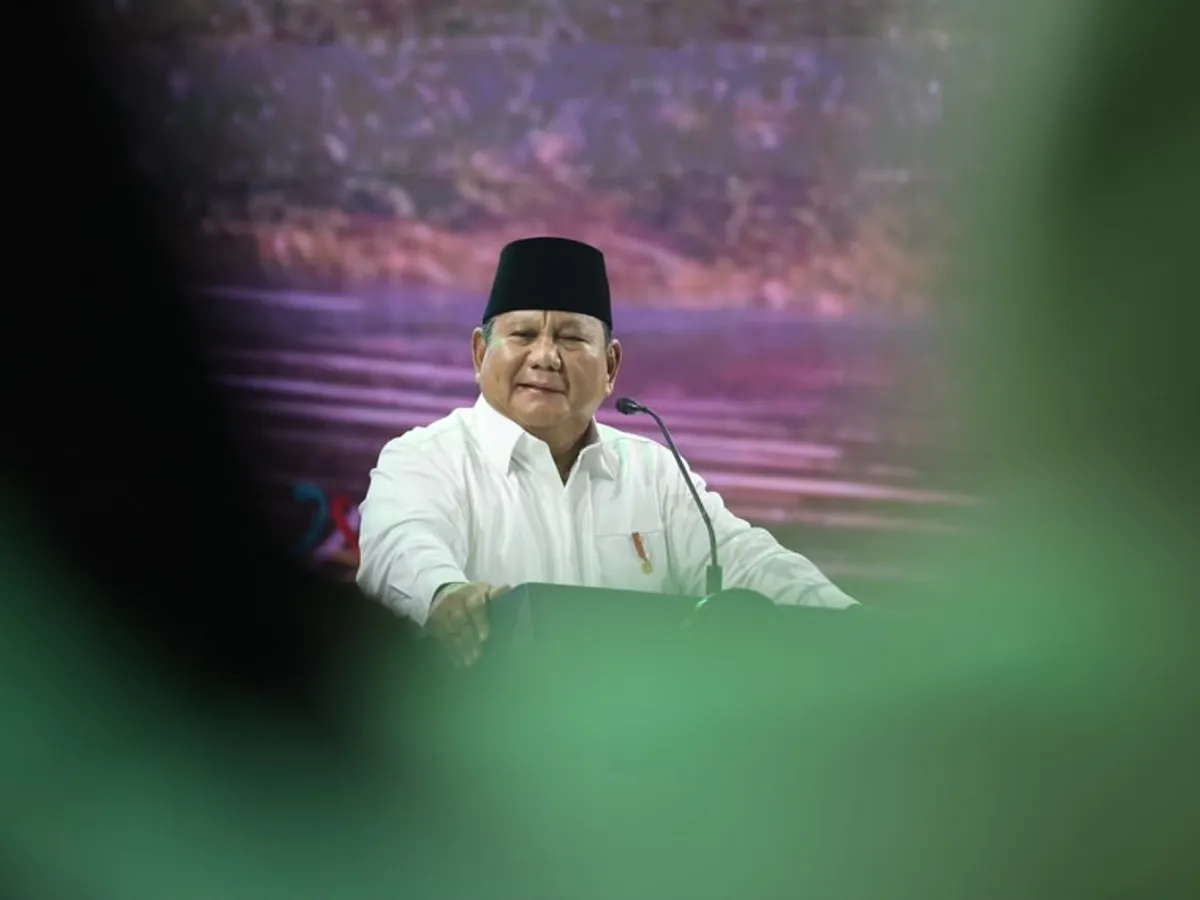
The remark at issue came three days earlier, when Prabowo spoke at the National Awakening Party's 28th anniversary event at the Jakarta Convention Center on Thursday, July 23. He first referred to Indonesians who serve foreign interests, calling them "londo ireng." He then said that group now "wears different clothes": reporters, journalists, analysts, NGOs. In the same speech, Prabowo also questioned NGOs' funding sources and pointed to media coverage of dilapidated schools despite the government's school renovation program.
Londo ireng is a pejorative from the colonial era, applied to Indonesians seen as siding with the Dutch colonial government or foreign interests. That connotation of betrayal is why press organizations objected once the term was attached to journalism. Six organizations, including the Alliance of Independent Journalists (AJI), AJMAN, KOMA, SIEJ, PFI and PPMN, issued a joint statement on Saturday calling the label degrading and a delegitimization of journalistic work. The protest moved to the streets of Yogyakarta the next day.
Why is this labeling seen as a threat to democracy?
The label risks treating factual criticism as a sign of disloyalty to the state. Afkar Aristoteles Mukhaer, advocacy coordinator at AJI Yogyakarta, said journalists, academics and civil society groups perform a social oversight function that lets the government learn about problems on the ground and fix its policies. "Journalists, NGOs and academics are a reminder, not an enemy of the state," he said.
The risk is not evenly distributed. The president holds political and symbolic reach far beyond that of the journalists or organizations he criticized, so a label from the presidential podium can be used by others to cast suspicion on or pressure press workers in the field. Article 4 of the Press Law guarantees press freedom as a citizen's human right, while Article 5 gives a right of reply and correction to anyone aggrieved by a report. That channel already exists to dispute the content of a story without attaching a collective label to the whole profession.
What pushed the protest onto campus?
Condemnation that began with national organizations has now turned into direct action on campus, driven by a gap in interpretation that the palace has yet to answer. Kahar Muamalsyah, chair of the national board of the Indonesian Legal Aid and Human Rights Association (PBHI), said the president's remark could build a dichotomy between the government and critical citizens. "Criticism is not hostility toward the state or the government. Democracy in fact depends on space for citizens to test, monitor, criticize and evaluate those in power," he said.
Iwan Setiawan, executive director of the Indonesia Political Review, reads the remark differently: as a political metaphor aimed at foreign-interest orientation, not a generalization about the entire journalism profession. That gap in interpretation is exactly what is driving the press community's calls for clarification, since the palace has not said whether it meant the profession, specific organizations, or individuals with actions that can be examined. Bayu Wardhana, AJI Indonesia's secretary general, put it more directly: "The president should apologize for this and fix his speeches."
The tension between freedom of expression and state authority is not new this year. A similar debate over the line between oversight and state control surfaced during the Police Law revision under the "people's police" banner. On protecting journalistic work itself, the Press Council is gathering input for a Copyright Law revision meant to give reporters' work clearer legal cover.
Comments