

Kamasutra -
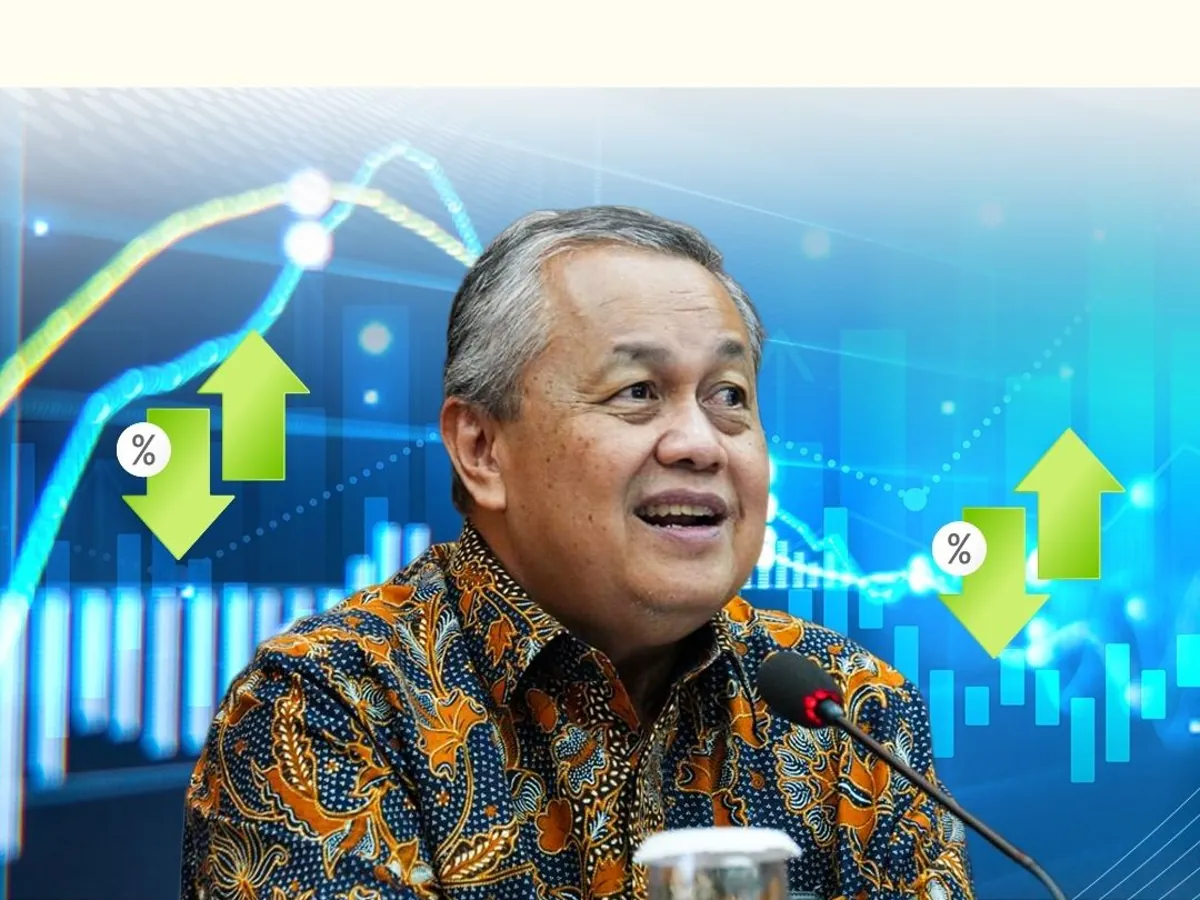
Bank Indonesia named Senior Deputy Governor Destry Damayanti acting governor on Sunday, a day after Governor Perry Warjiyo resigned for personal reasons. The bank did not announce the move until a press conference in Jakarta on Monday, July 27, 2026, immediately raising a bigger question than who fills the seat: who will lead Bank Indonesia permanently, and with what policy mandate.
Destry said her appointment followed a specific clause in the central bank law. "Pursuant to Article 48 paragraph 1 letter a of Law Number 23 of 1999 concerning Bank Indonesia, as most recently amended by Law Number 4 of 2026 on the Development and Strengthening of the Financial Sector, the Board of Governors, at its meeting on July 26, 2026, appointed Senior Deputy Governor Destry Damayanti as acting governor under Article 50 paragraph 2 of the Bank Indonesia Law," she said. A permanent governor will be nominated and appointed by the president with the House of Representatives' approval, following the Board of Governors membership requirements in Article 40 and the appointment procedure in Article 42.
Why doesn't a temporary handover automatically shift BI's policy?
Bank Indonesia's policy does not change automatically because central bank decisions are made by committee, through the Board of Governors' meetings, not by a single official. Destry made the point directly. "And lastly, and most importantly, leadership at Bank Indonesia is collective and collegial. So the five of us here will of course continue carrying out the duties and mandate that Bank Indonesia must fulfill, collectively and collegially," she said.
Destry herself sits on the same Board of Governors, so she is familiar with the policy framework already in place. That kind of operational continuity limits short-term turmoil, but it does not answer the bigger question of BI's direction once a permanent governor takes office, including whether interest rate policy, rupiah stabilization, and bond purchases will continue with unchanged priorities. Kalasuara previously reported that BI held its benchmark rate at 5.75 percent in July 2026, a decision that now needs to hold steady through the leadership change.
Markets moved fast, but Warjiyo wasn't the only reason
The Jakarta Composite Index (IHSG) opened at 6,185.79, down 0.26 percent, on July 27, 2026, at 9:00 a.m. local time, shortly after news of Warjiyo's resignation spread. The index dropped further to 6,154.59 before reversing to gain 0.09 percent, reaching 6,201.87 just ten minutes later, at 9:10 a.m. Transaction value at that point stood at 2.036 trillion rupiah on volume of 4.402 billion shares; 247 stocks gained, 270 fell, and 197 were unchanged.
That quick swing shows the market reacting to the transition news, but other data points to a broader picture. Kiwoom Sekuritas, cited by EmitenNews, reported that net foreign selling in the week before the announcement had already reached 1.25 trillion rupiah in the regular market and 1.36 trillion rupiah across all markets. That selling pressure built up before Warjiyo announced his departure, amid the US-Iran conflict, oil-price swings after Brent crude plunged 38 percent in the second quarter, and US tariff policy that was already weighing on Indonesian assets. Pinning that morning's entire volatility on the governor transition would overstate one variable among several moving at once.
The real test is the nomination process
Rangga Cipta, chief economist at Mandiri Sekuritas, said the identity of the permanent successor will shape Indonesia's monetary policy direction more than Warjiyo's resignation itself. He also warned that a leadership exit mid-term can read to investors as a sign of rising policy uncertainty, regardless of how smoothly Destry's appointment goes administratively.
For stock and bond markets, banks, floating-rate borrowers, and companies with dollar liabilities, the question that matters is no longer who holds the seat this week, but the track record of the eventual nominee, their institutional distance from the government's short-term interests, and how clearly they rank growth, inflation, the rupiah, and financial system stability. A weaker rupiah can raise the cost of imported goods, industrial raw materials, energy, and foreign-currency debt payments, so clarity on the policy mandate matters well beyond Bank Indonesia itself.
What to watch
Several things will determine whether this transition stays smooth or drags into prolonged uncertainty:
- The president's decision on Warjiyo's honorable discharge and clarity on Destry's status during the transition.
- The name of the permanent BI governor nominee, their track record, the timeline for the president's submission, and the House of Representatives' fit-and-proper test.
- Destry's statements after coordinating with the president, particularly on continuity of the BI Rate and the rupiah stabilization strategy.
- Movement in the rupiah, the IHSG, government bond yields, and foreign fund flows over the coming trading days, measured against pre-announcement conditions so the transition's effect can be separated from oil and global tariff pressures.
How consistently Bank Indonesia communicates, from Board of Governors meeting outcomes to how responsibilities are divided among its members, will be the earliest signal of whether market confidence holds until a permanent governor is named.


Comments