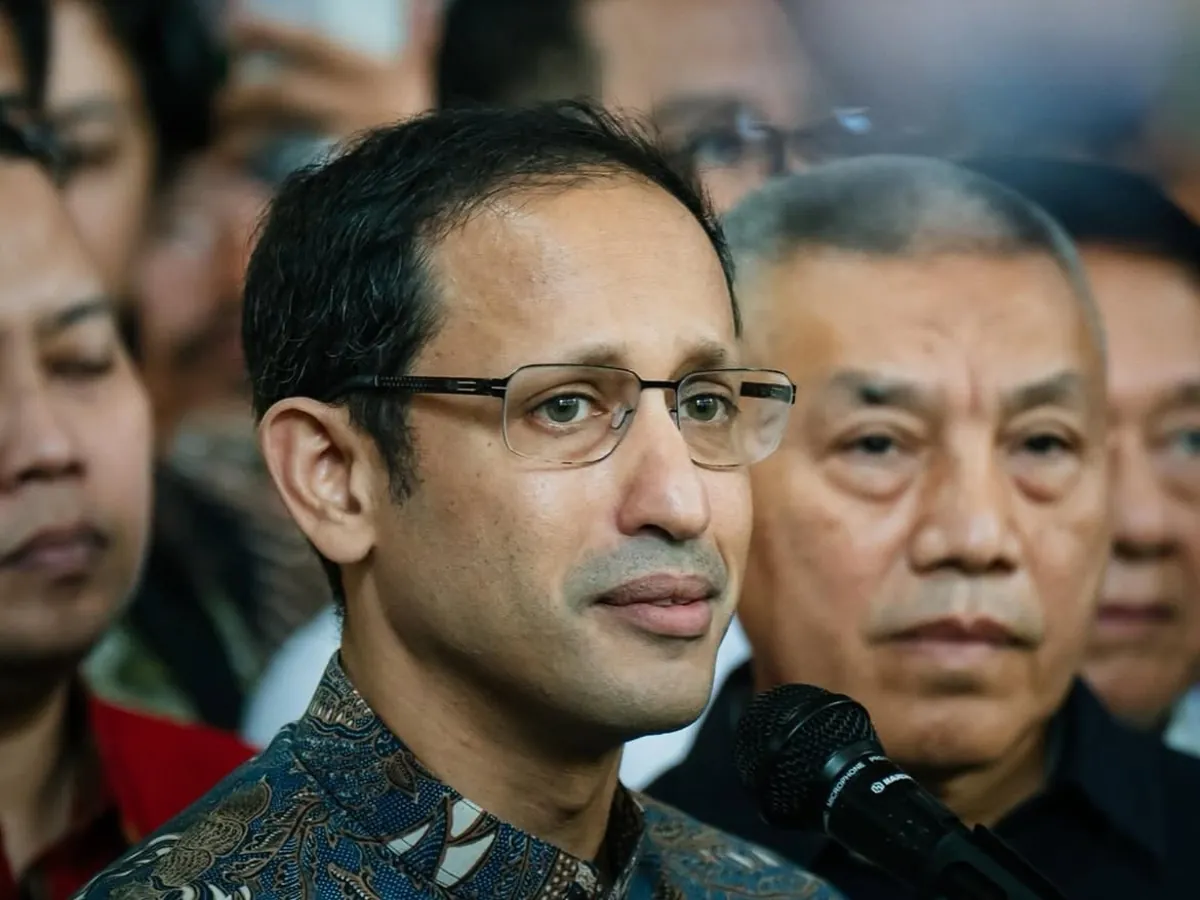

When State Secretary Prasetyo Hadi said the government had no plans to fill two deputy minister seats left vacant by officials caught up in corruption, he probably did not mean it as criticism. But his words, that the ministries could "still run normally" without their deputies, lit up a question that had been quietly building: if a ministry can function without its deputy minister, why does the seat exist at all? That question now clings to the Red and White Cabinet (Kabinet Merah Putih), a 56-deputy-minister lineup that is the largest in any Indonesian government since 1966.
The trigger was the fall of Silmy Karim. The Deputy Minister of Immigration and Corrections was named a suspect by the Corruption Eradication Commission (KPK) on June 4, 2026, a day after a sting operation that snared more than a dozen people. He was detained alongside seven officials from the Directorate General of Immigration over alleged extortion and bribery tied to residence permits for foreign nationals. President Prabowo Subianto then dismissed him. On the same day Silmy was charged, a second deputy seat formally fell open: former Deputy Minister of Manpower Immanuel Ebenezer Gerungan, widely known as Noel, was sentenced to four years and six months in prison in an extortion case involving workplace safety certification.
Two seats fall within days
What made the week so awkward for the government's anti-corruption message was not one case but two that erupted almost in tandem. The KPK put the alleged extortion within the immigration service at no less than Rp145.5 billion between 2022 and 2026. "At the very least, the value or the figure is Rp145.5 billion," said KPK Chairman Setyo Budiyanto. According to investigators, the money was collected and shared out routinely every Friday, with Silmy estimated to have received roughly Rp100 million a week. The claim of a "Friday payout" pattern still has to be proven in court, but if true, it points to an alleged practice that was systematic rather than occasional.
Noel's conviction ran on a separate track but arrived at the same place. The former deputy manpower minister was found to have accepted Rp3.43 billion in bribes plus a Ducati Scrambler motorcycle, linked to occupational safety and health (K3) certification between 2024 and 2025. He was sentenced to four years and six months and fined Rp200 million. Two cases, two different ministries, but the methods were close cousins: both involved levies on permit and certification services, the classic meeting point between state officials and businesses that need an official stamp to operate.
This is where a thread harder to ignore comes into view. Immigration handles residence permits for investors, workers, and expatriates; the labor ministry handles the K3 certificates that industry is required to obtain. Both are gates that businesses must pass through, and both, according to the indictments, turned into collection counters. The pattern points to a vulnerability more structural than a few bad actors: wherever the state holds the power to grant or withhold a permit, permit rents can grow. Read separately, the Silmy and Noel cases yield two corruption stories. Set side by side, they show that both struck sectors that act as gateways to the economy.
A deliberate vacancy
The palace's stance on the vacancies is the most telling part. The government is in no rush to plug them. "For now there is no plan to fill the positions left by the two deputy ministers who are going through legal proceedings," Prasetyo Hadi said. Their duties are being carried out for the time being by their respective ministers; the work left behind by Silmy is being handled by Immigration and Corrections Minister Agus Andrianto.
The official rationale is logical: the vacant posts are deputies, not ministers, so the machinery of the ministries does not stop. "Because the position is, after all, deputy minister. That means the ministry's activities or duties, carried out by the minister, can still run normally," Prasetyo said. Administratively, the explanation holds. Politically, it carries an implication no one intended. If two ministries can run normally without deputies for weeks, the line between a substantive post and one that merely accommodates allies grows blurrier.
The Red and White Cabinet is an anomaly in sheer size. It runs to about 109 members, made up of 48 ministers, five officials of ministerial rank, and 56 deputy ministers, the largest arrangement since the Dwikora III Cabinet of 1966. The deputy minister role itself has drawn scrutiny from the start, partly because some seats were filled to make room for members of the governing coalition. The scandal does not create the question of an overstuffed cabinet; it simply hands that old question a concrete test case. For the first time, the public can see, in practice rather than in theory, what happens to a ministry that loses its deputy. The palace's interim answer, "running normally," is a double-edged blade for the government itself.
A reformer ensnared
Silmy Karim is not a name the public forgets easily. Before becoming deputy immigration and corrections minister, he built a reputation as a state-owned enterprise executive, including in the defense industry, then served as Director General of Immigration, where he was often portrayed as a fixer of public services. That reformer image now collides hard with his status as a suspect. The irony of an official known for cleaning up a system and then accused of squeezing it from the inside has given the case resonance far beyond an ordinary legal story.
The institutional backdrop adds context. The Ministry of Immigration and Corrections is a relatively new body, carved out of the former Ministry of Law and Human Rights under Prabowo. That split went hand in hand with a swelling number of ministerial and deputy posts. In other words, the seat Silmy left behind was born of the same wave of bureaucratic expansion whose efficiency is now in doubt. The scandal and the questions about cabinet size grow from the same root.
Silmy's wealth has drawn attention too. Based on the state officials' asset declaration (LHKPN) cited by several outlets, his wealth was reported at around Rp234 billion. That figure comes from his asset declaration, not from the case findings, and the two should not be conflated. The same caution applies to the charges: investigators are said to be using Article 12e of the Anti-Corruption Law, covering extortion in office, though the precise sub-articles still need to be confirmed against the official KPK file.
What will be tested ahead
Parliamentary oversight is beginning to stir, at least at the level of statements. Andreas Hugo Pareira, deputy chair of the House of Representatives' Commission XIII, stressed that such a sensitive post cannot be filled carelessly. "Immigration, as the gateway for foreigners entering and leaving, must be filled by people with capacity and competence in immigration matters," he said. He argued the case exposes weak internal oversight within the immigration agency and pledged to press for answers on audit and whistleblowing mechanisms. Whether that commitment stops at a statement or turns into hearings and concrete recommendations will be the measure of how serious the House is.
A few things are worth watching in the weeks ahead. The first and most decisive is Prabowo's decision on the empty seats. If the "organizational review" the palace has hinted at leads to merging or abolishing deputy posts, that is a real signal of commitment to efficiency. If it is only a delay until the spotlight fades, with the seats quietly refilled afterward, the story reads very differently. Second is the legal trajectory of Silmy's case: the identities of the seven other suspects, the completeness of the file, and whether the allegedly routine flow of money reaches other names within the Directorate General of Immigration.
There is also a dimension that touches business directly. Immigration is one of the first points of contact between foreign investors and workers and the Indonesian bureaucracy. A scandal of this size risks pushing things in two equally troublesome directions: a sudden tightening that slows residence-permit services, or, conversely, a leadership vacuum that lets services stall amid an internal cleanup. For a government working hard to attract investment, disruption at this entry point is no small matter.
In the end, the Silmy Karim case puts Prabowo's government before a test bigger than a single name. The two deputy seats left empty now function like an accidental experiment: proving, or instead breaking, the assumption that the largest cabinet in six decades really needs every one of its seats. The answer will not come from the KPK's courtroom, but from what the palace decides to do, or not do, about two seats it has deliberately left open.