
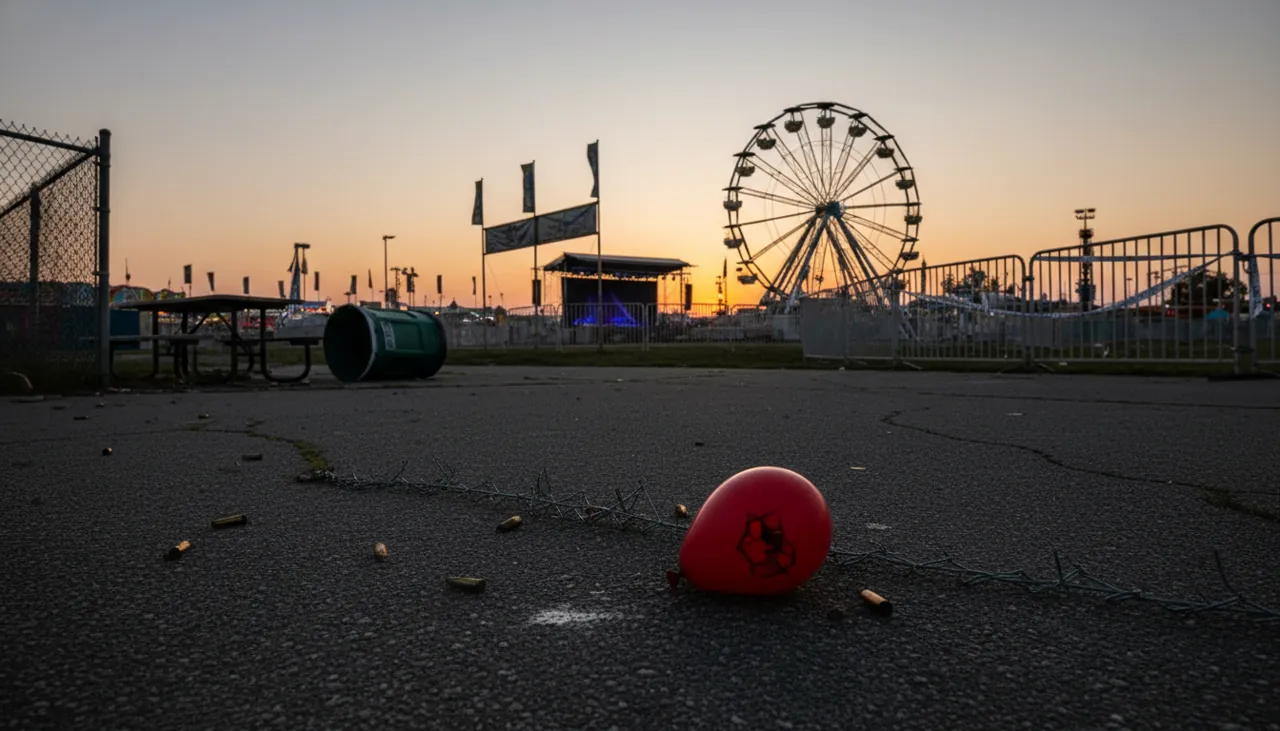
When a dozen people were shot near an environmental festival in Toledo, Ohio, on Saturday afternoon, the first image to surface was a familiar American archetype: a lone gunman spraying a crowd. Police accounts pointed somewhere different, and arguably more disturbing. The victims, 12 people aged 14 to 61, were most likely not the targets. They were hit, investigators believe, because they happened to be caught between two armed parties who were allegedly shooting at each other.
The shooting unfolded around 5:37 p.m. local time (EDT) on June 6, 2026, roughly 4:37 a.m. WIB early Sunday, at the intersection of Delaware Avenue and Glenwood Avenue, near the Old West End Festival grounds. The annual community event had drawn several hundred visitors, many of them families. By Saturday night, two victims were reported in critical condition, though some officials had earlier cited a higher figure of four to five. No deaths had been reported. The shooters fled and remain at large.
Not a lone shooter: two groups suspected of trading fire
The distinction is more than a technical detail. It changes how the entire event reads. Toledo Deputy Police Chief Joe Heffernan said investigators believe at least two armed people were involved and were firing toward one another. "They were probably shooting at each other," he said.
In a scenario like this, the crowd is not the target but the backdrop, and that is precisely where the danger lies. A private dispute carried into a packed public space, combined with easy access to firearms, produces a large number of random casualties without a single one being the intended target. Unlike ideologically motivated shootings or the "active shooter" attacks that often dominate international coverage, this kind of violence grows out of personal quarrels that should never have drawn in bystanders.
Police said extra officers had been specifically assigned to secure the festival, along with a large number of off-duty officers who were also on hand. Their presence did not prevent the shooting, a fact likely to hang over debates about securing open-air events through the summer.
Victims of all ages, a safe space violated
The age range of the victims offers a picture of who was there: from a 14-year-old to a 61-year-old resident, with most in their 20s. That mix confirms the festival was a cross-generational gathering, exactly the kind of event officials say should be immune from violence.
Ohio Governor Mike DeWine voiced the same dismay. "Summer festivals should be safe spaces for families to spend time together without fear of violence," he said. His statement followed a pattern now familiar in the United States after each shooting: concern, prayers, and a pledge of law enforcement, which critics often say rarely translates into changes in gun policy.
The Old West End is one of Toledo's historic neighborhoods. Toledo, Ohio's fourth-largest city, sits on the shore of Lake Erie, and the district is known for its rows of Victorian-era homes. Its annual festival draws thousands of visitors across the weekend. The shooting erupted during a busy late afternoon, when the grounds were still full.
When one definition merges two different phenomena
With 12 people shot, the Toledo incident meets the "mass shooting" threshold used by the Gun Violence Archive (GVA): four or more people shot at a single location at nearly the same time, not counting the shooter. The group recorded a sharp rise, 94 mass shootings in the first quarter of 2026, up from 69 in the same period a year earlier.
This is where the numbers call for caution. The GVA definition is quantitative, simply counting how many people were shot, so it folds two mechanically very different things into one statistic. A planned school shooting, a hate-driven act of terror, and an intergroup gunfight like the one in Toledo all land in the same bucket. As a result, the jump from 69 to 94 can be misread as a rise in "mass shooters" in the popular sense, when in fact most American gun violence is born from everyday disputes that end in gunfire. Understanding the difference matters because the solutions are not the same: preventing active shooters demands a focus on security and early detection, while curbing intergroup gunfights deals more with the roots of gun circulation and conflict resolution within communities.
The seasonal trend also matches officials' worries. Summer has historically been the peak period for gun violence in the United States, and GVA data for early 2026 shows that curve is not flattening. The Toledo shooting came right at the threshold of that season.
Hundreds of witnesses' phones become the backbone of the investigation
The biggest challenge now is both forensic and collective. There were no arrests as the first reports came in, and the shooters vanished into the crowd. Police said there was "a lot of evidence," but much of it sits in the hands of the public.
Toledo Public Safety Director George Kral is pinning hopes on footage from residents. "There were several hundred people there tonight, and everybody has one of these... I know in my heart that footage is out there," he said, holding up a phone. The remark captures how investigations into modern violence increasingly rely on a flood of amateur video rather than surveillance cameras alone or witnesses willing to talk. The city has formally asked attendees to hand over any photos or video they recorded during the festival.
Toledo City Council member John Hobbs III demanded a firmer stance. "We have to set a tone that this will not be tolerated anymore in our city," he said. Police said the investigation would not stop at who the shooters were but would also trace what set off the dispute.
A mirror for Indonesians living in US cities
For Indonesian readers, the Toledo episode offers a stark contrast in gun governance. The United States protects civilian gun ownership through its constitution, while Indonesia maintains a regime so strict that it is nearly impossible for civilians to own firearms legally. The consequence is concrete: in Indonesia, personal disputes can still turn violent, but the absence of easily obtained firearms means they rarely escalate into incidents with a dozen random casualties in a matter of seconds.
The more immediate relevance concerns the tens of thousands of Indonesian families, students, and workers who live in or travel to US cities. Open public events such as an environmental festival generally have no entry screening, and the Toledo case shows that even a police presence is no guarantee of safety. The practical implication is that situational awareness in crowds, knowing the exits, and following local authorities' advisories become real considerations, not excessive worry, for a diaspora used to the relatively safe public spaces back home.
What will determine the direction of the case
A few things will be decisive in the days ahead. First, final confirmation of the number and condition of the victims from hospitals and police, including whether anyone could not be saved. Second, the outcome of the manhunt and the identities of the shooters, which will also test whether the suspected "intergroup gunfight" holds up once all the evidence is analyzed.
Also worth watching are the motive behind the dispute and whether the incident pushes Toledo and other cities to tighten security at open-air summer events. Further statements from Governor DeWine and local members of Congress will show whether the case stops at a ritual of concern or spurs a push for new policy at the state level. Meanwhile, Gun Violence Archive data will remain a marker of whether the summer of 2026 repeats the old pattern: the season when American gun violence reaches its peak.