
Pertamax RON 92 jumped 32 percent in a single day, and the government moved quickly to reassure the public that inflation would stay under control. Both statements can be true at once, and together they conceal a cost the middle class absorbs through a channel the price index never captures. The inflation argument is about goods on store shelves; the real pressure works elsewhere, on the wallets of millions of drivers who fill up every day with non-subsidized fuel.
One Day, Two Price Signals
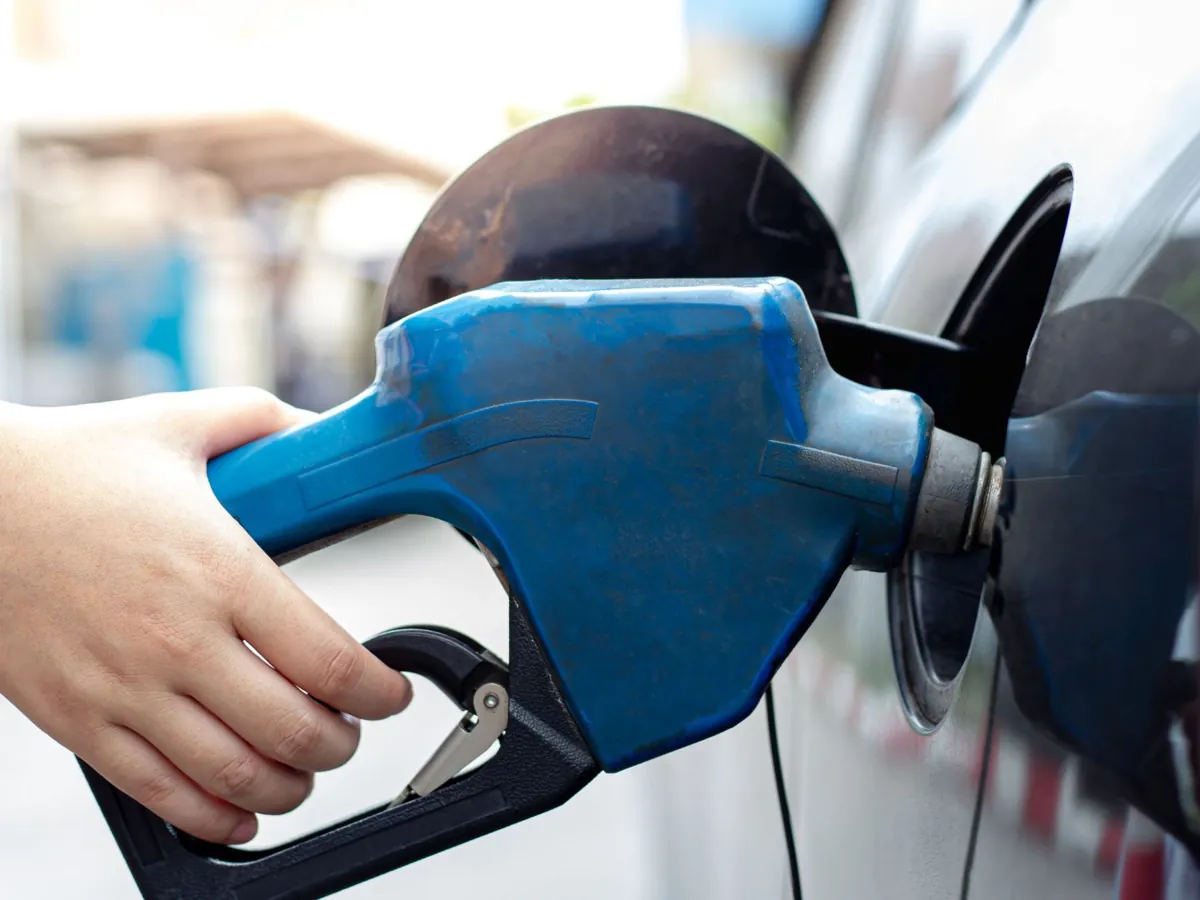
Pertamina raised the price of Pertamax RON 92 by Rp3,950 per liter from June 10, 2026, lifting it from Rp12,300 to Rp16,250. That is a 32 percent increase, applied all at once with no phased transition. Over the same period, Pertamax Green 95 climbed from Rp12,900 to Rp17,000, a gap of Rp4,100, or roughly 32 percent as well. Pertalite and Biosolar, the two subsidized fuels that underpin public transport and logistics, did not move at all.
The pattern reveals a dividing line that is deliberately maintained: non-subsidized products are left to follow the market, while subsidized ones are locked in place as a buffer. Pertamina Patra Niaga said the adjustment followed the pricing formula set by the government. The company's corporate secretary, Roberth MV Dumatubun, quoted by the news agency Antara on Tuesday (09/06) night, stressed that the price increase had been "coordinated with the government as the regulator."
Pertamina President Director Simon Aloysius Mantiri added that the adjustment took into account "global geopolitical dynamics and the prevailing oil price on international markets." That benchmark has a measurable form. On June 11, 2026, WTI crude traded at US$92.06 per barrel — the anchor for the pricing formula on non-subsidized fuel.
The Government Is Right About One Channel
The government's argument rests on a reasonable premise. Finance Minister Purbaya Yudhi Sadewa explained his confidence: "The impact (on inflation) should be relatively minimal because Pertamax isn't used by freight transport."
That premise holds for one route of price transmission. Logistics trucks, container haulers, and public transport mostly run on Biosolar or Pertalite, whose prices have not budged. As long as the fuel cost for moving goods stays flat, the cost of distribution from factory to warehouse to store shelf remains relatively stable. This is the channel the monthly inflation figure picks up fastest: when diesel prices spike, the prices of staple foods and consumer goods are pushed up within weeks. Because that channel is deliberately protected by locking subsidized prices, the claim that inflation is contained rests on solid ground.
The trouble is that the consumer price index only measures what it measures. The logic that "Pertamax is not a freight fuel" points precisely to where the inflation spotlight does not fall. Two other routes escape that monitoring, and both lead back to the same group.
The Channel the Index Cannot Read
Millions of Pertamax users — ride-hailing drivers, teachers, office workers, and anyone with a higher-octane vehicle — absorb this increase directly at the pump, with no goods-price middleman. Their daily transport costs rose instantly on June 10, far faster than any rise in goods prices an inflation survey might detect. When the transport line item swells while income stays fixed, the first thing sacrificed is spending that can be deferred.
Rahma Gafmi, a professor at the Faculty of Economics and Business at Universitas Airlangga, described the transmission mechanism: "It will lead to the postponement of non-essential spending; middle-class households are very likely to hold back or cut consumption in the secondary and tertiary sectors."
Consumption in the secondary and tertiary sectors — eating out, entertainment, lifestyle purchases — is the component that props up domestic economic growth. A slowdown in this line does not automatically show up as a jump in the current month's inflation figure; it works the other way, by holding down demand. The effect is delayed, spreading slowly into services and retail, and only surfaces as weaker household consumption several quarters later. "Safe" inflation can run alongside purchasing power that quietly erodes.
Squeezed in the Middle: On Par With the Minimum Wage, Far From Subsidies
The burden piles onto one specific layer. CELIOS Director of Public Policy Media Wahyudi Askar named them directly: "There are workers, employees, teachers, ride-hailing drivers and millions of middle-class people who have all along chosen better fuel for their vehicles."
This group, earning around the Provincial Minimum Wage (UMP), sits in a policy blind spot. Their income is too high to be classified as poor and qualify for subsidized fuel or LPG, yet too thin to absorb a sharp rise in non-subsidized prices without cutting elsewhere. That squeeze is what makes a 32 percent increase feel heavier than the number suggests: there is no subsidy cushion beneath them and no income slack above them. When prices move, the only variable they can adjust is their own consumption.
Migration to Subsidies and the Risk of Shortages
Price pressure rarely stops at the household decision. It drives behavior, and mass behavior can turn back to strain the very system designed as a shield.
To cope, some Pertamax users will look for the most rational way out: switching to subsidized products whose prices are locked. Moving from Pertamax to Pertalite, or from non-subsidized LPG to the small "melon" canister, is a natural economic response when the price gap widens. But if this shift involves millions of consumers and persists, the subsidy quota — calculated on older usage assumptions — could be drained faster than planned. Here is the irony: a policy that keeps subsidized prices low to protect vulnerable groups can trigger a surge in demand that threatens the availability of those very subsidized goods. A potential shortage of Pertalite and subsidized LPG becomes a real downstream risk if pressure on non-subsidized prices does not ease.
The line kept neatly at the pump — non-subsidized follows the market, subsidized stays locked — can ultimately blur on its own when squeezed consumers decide to cross over.
What to Watch Going Forward
The claim of contained inflation will be tested not by speeches but by data in the coming months. Three indicators are worth tracking. First, whether official inflation releases stay subdued even as consumption in the secondary and tertiary sectors weakens — the combination that would vindicate economists' warnings. Second, how quickly sales volumes of Pertalite and subsidized LPG climb after June 10, a marker of the migration wave. Third, whether the government prepares an adjustment to the subsidy quota before demand pressure hardens into shortages on the ground.
The government is right that prices on store shelves remain relatively safe. The unanswered question is how long the middle class can carry a burden that never appears in the inflation figures, before the way they cope ends up shaking the subsidy pillar that has held them up all along.