
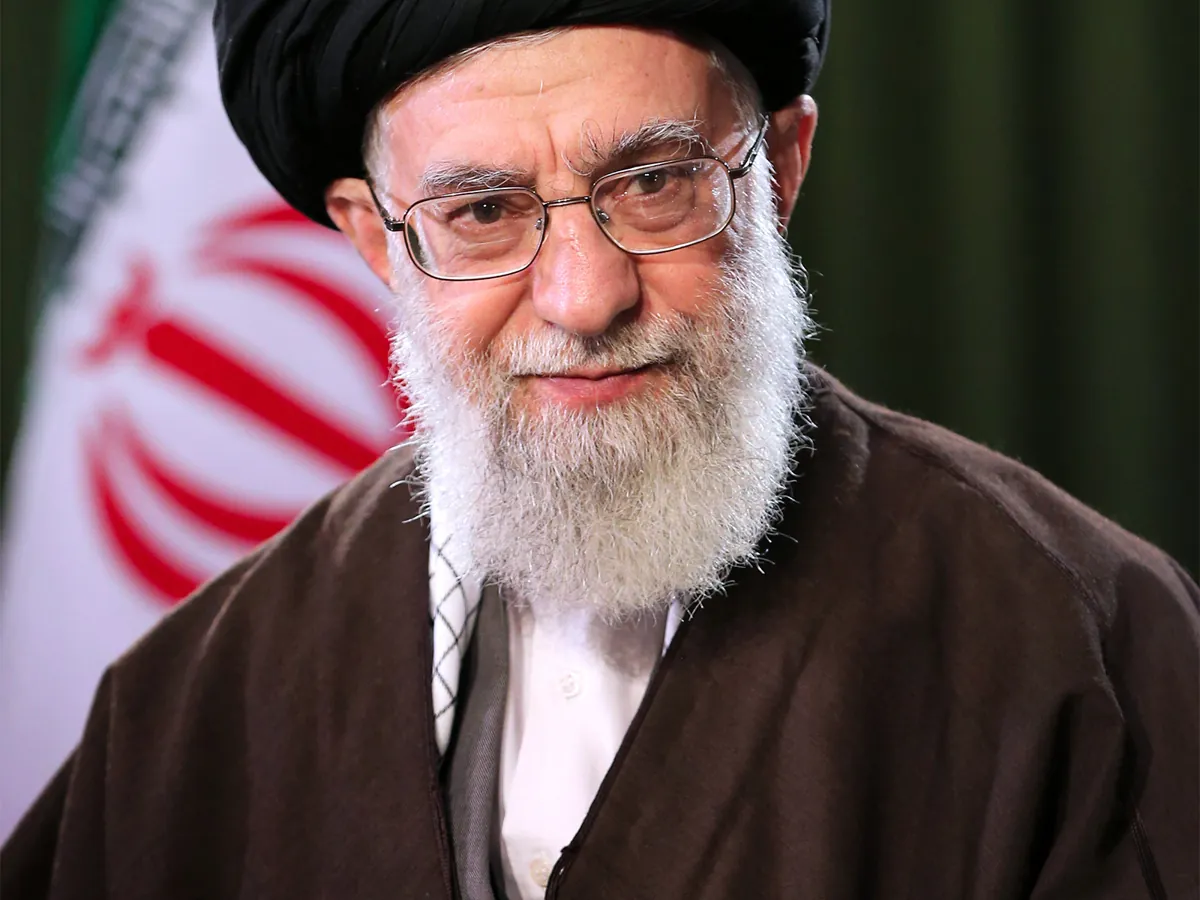
Iran has scheduled a state funeral for Supreme Leader Ayatollah Ali Khamenei for July 4-9, 2026, more than four months after his death in a combined U.S.-Israel operation. Iranian officials expect up to 20 million mourners in Tehran, with 18 million to 35 million across three cities.
The official schedule spans multiple cities: public farewell at Tehran's Imam Khomeini Mosque (July 4-5), a procession through Tehran (July 6) and Qom (July 7), passage through the Iraqi holy cities of Karbala and Najaf (July 8), and burial at the Imam Reza Complex in Mashhad (July 9). Iranian officials have called the agenda "an unparalleled display of public participation."
But what stands out is not the scale. It is the number 131.
Why was Khamenei's funeral delayed 131 days?
From February 28 to July 9 spans four months and nine days: the full 31 days of March, 30 of April, 31 of May, 30 of June, plus nine days of July.
The repeated delays reflect a concrete security calculation. A state funeral that gathers Iran's entire regime hierarchy in one place presents the same vulnerability that the U.S.-Israel operation exploited on February 28. Khamenei died in a strike on his Tehran residence; in the weeks that followed, several other senior officials were targeted in separate attacks.
The 131-day wait is a risk calculation, and the logic is clear: stage a ritual of regime unity while minimizing the exposure of surviving leaders.
Karbala and Najaf route: a geopolitical signal
Before his body is taken to Mashhad, Khamenei's coffin will pass through Karbala and Najaf in Iraq. Tehran's mayor, Alireza Zakani, confirmed the plan; two Iraqi politicians said the detour has been diplomatically confirmed.
For Iraqi writer Mohammad Sadiq al-Hashimi, the scale of the procession and its route through two holy Shia cities send a message to regional rivals: demonstrating the depth of Iran-Iraq ties, both religious and strategic, to an audience far beyond mourners. Delegations from Turkey, Azerbaijan, Afghanistan, India, and Pakistan have been confirmed to attend. The funeral serves as a display of Tehran's transnational network of influence.
Mojtaba appears in writing, not on camera
Mojtaba Khamenei is now Iran's Supreme Leader, the de facto head of state with the highest authority above the president in Iran's Islamic system. He was appointed to replace his father in March 2026, more than a week after Khamenei's death. Since then, he has barely appeared before cameras. His leadership has operated through written statements and posts on digital platforms, backed by hardline factions, Islamic Revolutionary Guard Corps commanders, and security officials.
On June 28, 2026, Mojtaba published his most significant political statement to date in a series of posts on X:
"The investigation of crimes committed during the 2nd Imposed War, as well as the 3rd Imposed War, and continuously pursuing this matter until a verdict is reached is entrusted to the competent authorities, and this will in turn serve to prevent the recurrence of such crimes."
In his strongest public signal since taking office, Mojtaba has chosen legal and diplomatic channels as instruments of pressure against Washington and Tel Aviv. The larger question is whether he will appear in person at his father's funeral in July, given no public appearances since his appointment.
Hormuz and Indonesia's fuel prices
For Indonesia, Tehran's developments ripple primarily through energy markets. The escalation that killed Khamenei and shook the Persian Gulf has repeatedly driven up global oil prices. A similar pattern emerged during the Hormuz crisis: the Pertamina Pride, an oil tanker bound for the Cilacap refinery, was held up for months during peak tensions. When Iran announced a Hormuz closure, 55 vessels still transited, but the risk premium was already reflected in futures prices.
Indonesia is not on the official delegation list. But as an oil importer dependent on Gulf shipping lanes, every shift in Tehran's tone, including Mojtaba's call for investigating war crimes, potentially adds to the risk premium that ultimately shows up in domestic fuel prices.
Three questions will determine what follows: Will Mojtaba appear in person at the Mashhad burial? Will the 35 million attendance figure hold without security incidents? Will the call to investigate war crimes become concrete legal action or remain symbolic rhetoric? The funeral begins July 4.