
On June 16, Indonesia's National Disaster Management Agency recorded 2,245 residents in Bekasi, West Java, and Klaten, Central Java, without access to clean water after natural sources dried up. Three days earlier, 1,624 people in Cilacap, Karawang, and Bogor faced the same shortage. The crisis spans western to central Java as forecasters warn of a prolonged dry season expected to peak between July and November.
Villages Dependent on Water Trucks
The figures break down sharply by district. In Bekasi, 296 households—roughly 800 residents—depend on emergency water deliveries from the district disaster agency. In Klaten, 393 households with 1,445 residents face the same dependency. Emergency distributions began last week: 10,000 liters for 30 households in Nagasari village, Bekasi; 5,000 liters for 127 households in Gunung Sari village, Bogor; 4,000 liters for 40 households in Kedungbenda village, Cilacap.
"The dry season underway in these areas has reduced water flow from natural sources," said Abdul Muhari, head of the National Disaster Management Agency's Data, Information and Communication Center.
These water deliveries are a temporary fix. They are meant to hold until rainfall—which the climate agency says is likely to arrive later than usual.
Will Conditions Worsen?
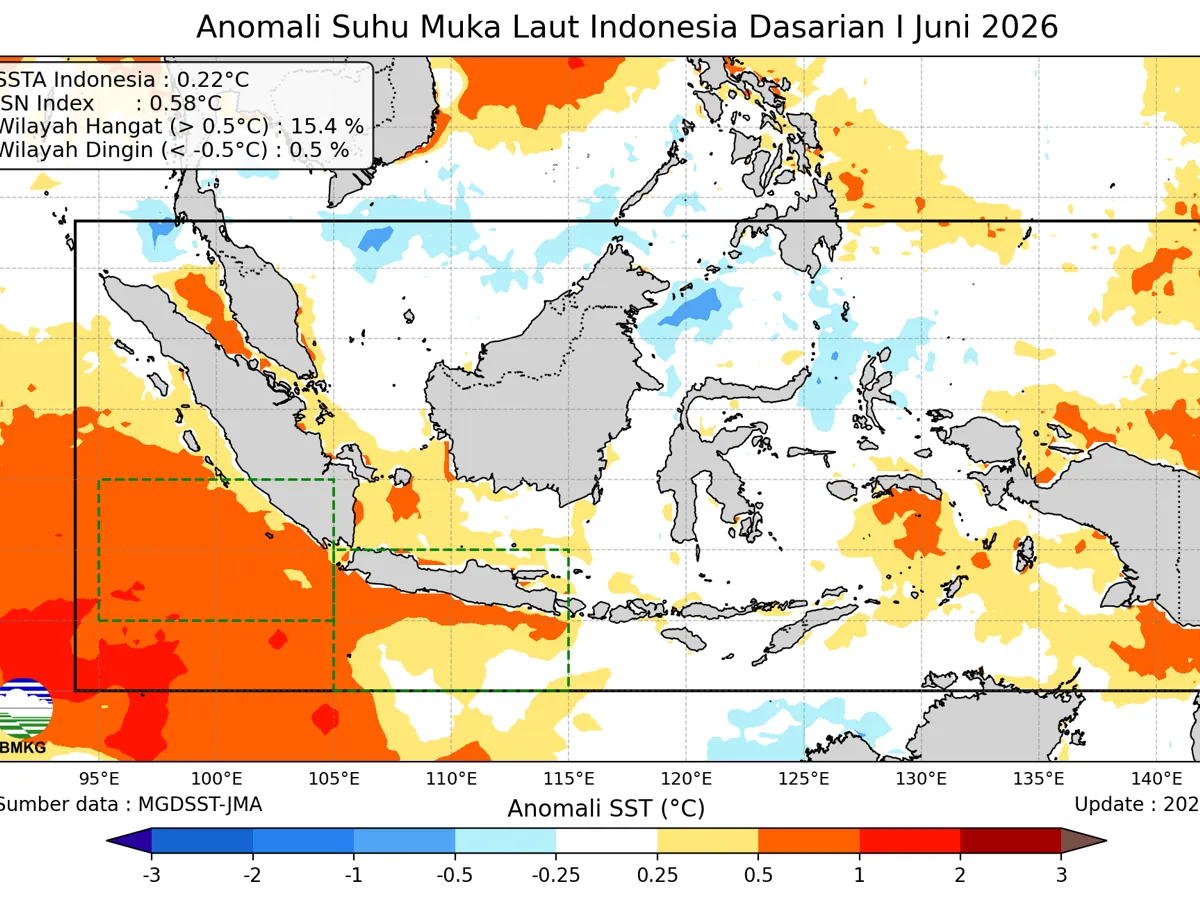
Yes, significantly. Indonesia's climate agency forecasts a weak to moderate El Niño active through the second half of 2026 with a 50 to 80 percent probability, potentially lasting into early 2027. The current dry season has arrived earlier than the historical average and threatens to be both longer and more severe.
Teuku Faisal Fathani, director-general of Indonesia's meteorology agency, clarified a distinction often blurred in public understanding: "It's important to understand that drought and El Niño are two different phenomena. Drought is a climatological cycle, but when it coincides with El Niño, rainfall drops sharply and conditions become much drier."
What hasn't fully materialized yet is the tail end of the cycle—when water reserves in reservoirs and dams dwindle after months without adequate replenishment. Aris Pramudia, a researcher at Indonesia's Research and Innovation Agency, adds a longer-term dimension: "If we look at these forecasts, one potential consequence is a delayed onset of the 2026-2027 rainy season." A delayed rainy season means farmers lose not just water during the dry period but also the planting window at the start of the next cycle.
Forest Fires and Food Security: Two Looming Threats
Beyond the household water crisis, two secondary threats loom with far broader reach.
First: forest and land fires. As of early April 2026, Indonesia's meteorology agency detected 1,601 hotspots nationwide, higher than the same period in prior years. The agency mapped Riau as the region entering critical fire risk starting this month, followed by Jambi and South Sumatra, then West Kalimantan and South Kalimantan in July and August. The thick haze from major fires suppresses air quality across regions far wider than the fire source itself.
Second: food security. Rice and corn are most vulnerable to water stress during critical growth phases. If the drought deepens as predicted, planting schedules in Java and Kalimantan's major agricultural zones will slip, threatening supply just as the government evaluates and restructures its free school nutrition program.
Responses Stuck at the End of the Pipeline
Indonesia's meteorology agency has already urged regional authorities to stockpile raw water, optimize reservoir and dam management, and revise planting schedules before the drought peaks. The water truck distributions now underway address today's need but sit at the far downstream end of a mitigation chain that should be activated far upstream.
Three indicators will shape the coming weeks: whether the number of affected residents and districts continues climbing or levels off; whether hotspots in Riau spike as forecasters predict starting this month; and whether local governments activate water reserve mechanisms beyond emergency distribution schemes. Answers to all three should emerge before July—the month identified since March as the true onset of the critical phase.