
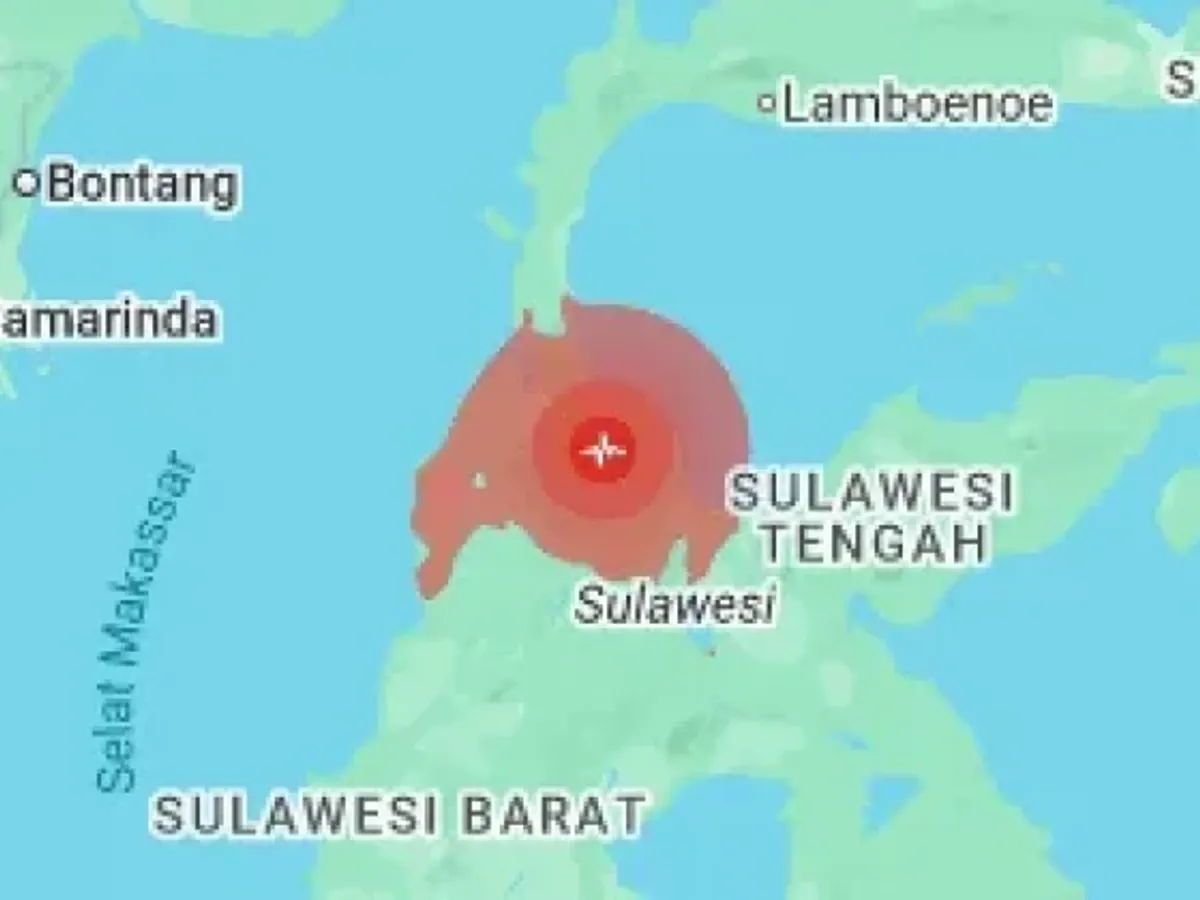
A magnitude 6.7 earthquake shook central Sulawesi's Palu region on Tuesday morning, with the tremor centered 42 kilometers southeast of the city at a depth of 16 kilometers. The rupture came from the Sausu Fault, not the Palu-Koro Fault that devastated the region in 2018.
A Different Fault, A Broader Hazard
The distinction matters. The Sausu Fault ruptured as a normal fault, moving downward, whereas the Palu-Koro Fault is a strike-slip fault. For Indonesia's Meteorological, Climatological and Geophysical Agency (BMKG), this is seismology. For Palu, a city rebuilt on trauma, it signals something more unsettling: earthquakes in central Sulawesi don't originate from a single fault line but from an active network spanning the region.
No Tsunami, Yet Fear Spread
The BMKG said the earthquake posed no tsunami risk. "Modeling shows this earthquake has no tsunami potential," said Nelly Florida Riama, deputy director of the BMKG's Geophysics Division. At Pantoloan Port, tide sensors recorded a 7.5-centimeter rise in sea level, but according to Wijayanto, the BMKG's director of earthquake and tsunami operations, such a small fluctuation posed no danger.
The shaking was widely felt. BMKG's intensity scale recorded Palolo in Sigi Regency at level VII, Torue and South Parigi at VI–VII, and Palu and Sigi Biromaru at V–VI. Tremors reached Poso, Donggala, and Pasangkayu at levels IV–V. By noon, the BMKG had counted 20 aftershocks, the largest at magnitude 5.2.
Casualties and Damage
By early afternoon, eight residents had been injured with no deaths. According to Muh Rizal, head of the Search and Rescue Agency's Palu office, two people suffered serious injuries—fractures and head trauma sustained in Nokilaki Subdistrict and now hospitalized at Torabelo Hospital. The rest were treated for minor injuries in Sigi and Palolo. "Zero fatalities, two serious injuries from fractures and head trauma, and the rest minor injuries," Rizal said.
Structural damage was reported at multiple sites. The Sigi regent's office sustained significant damage, with ceiling collapse and cracked walls.
Trauma From 2018 Overshadowed Science
The physical destruction was relatively contained. But its psychological impact was not. Many Palu residents refused to return home and spent the night in open spaces—the same response that gripped the city during the 2018 disaster.
On September 28, 2018, a 7.4-magnitude earthquake from the Palu-Koro Fault triggered a tsunami and liquefaction that killed thousands in Petobo, Balaroa, and Jono Oge, destroying vital infrastructure including Anutapura Hospital. Eight years later, that memory still shapes public response more powerfully than BMKG's scientific assurances of no tsunami threat. Palu's mayor, Hadianto Rasyid, acknowledged the pattern. "Some of our residents are still afraid to return to their homes and are using open spaces," he said. "We understand, because we lived through this in 2018. The trauma is still very much with us."
Similar patterns emerged after last year's earthquake in Sangihe, which prompted mass evacuations before the tsunami warning was lifted 3.5 hours later. In Palu, the situation differed because the BMKG issued no tsunami warning from the start, yet residents' anxiety ran as high as it would have during a genuine tsunami threat.
What Officials Are Monitoring
The BMKG is tracking aftershock patterns from the Sausu Fault and may revise initial parameters. Regional disaster management agencies in central Sulawesi, Sigi, and Parigi Moutong have not yet released final counts of evacuees or damaged buildings. The central government, including the National Disaster Management Authority, has not announced next steps, while the status of critical facilities—hospitals and government offices in Sigi—remains in recovery mode.