
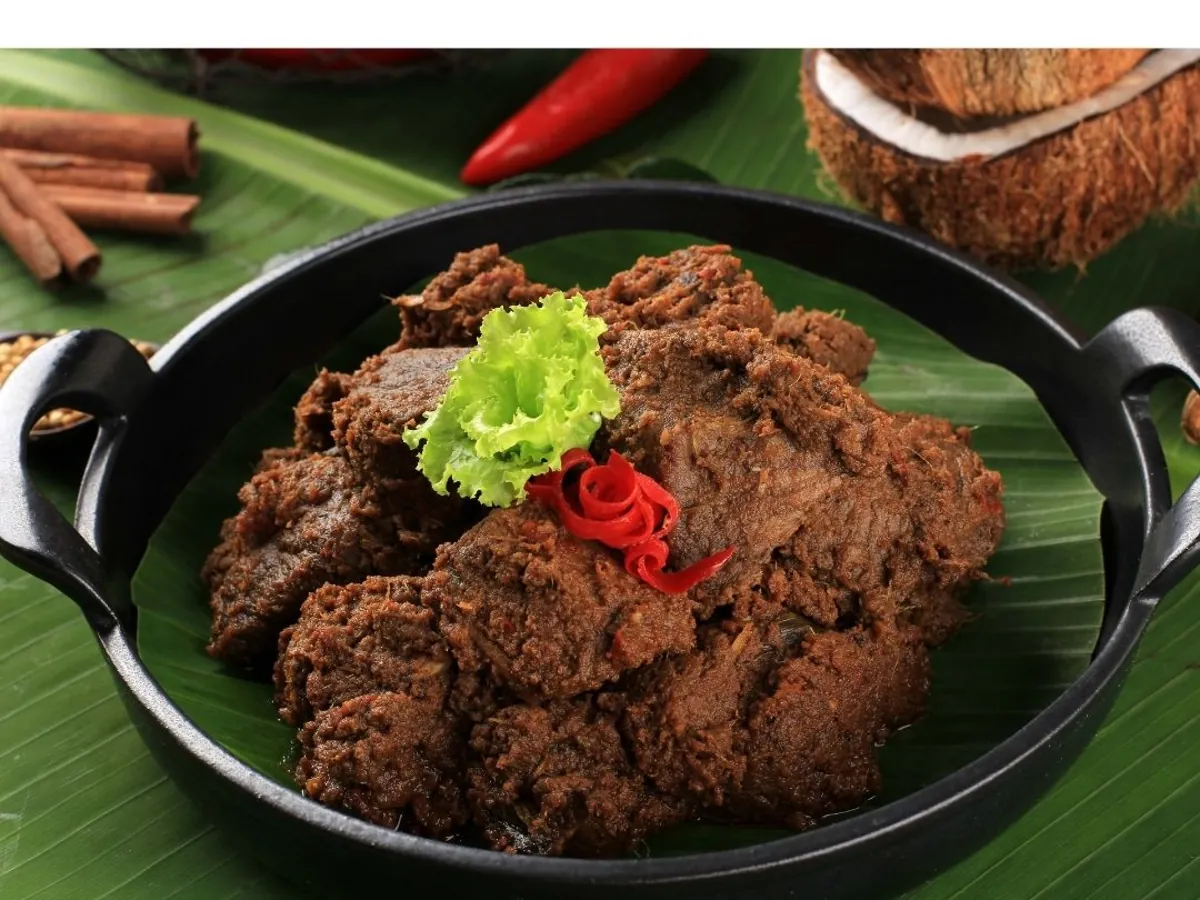
Many home cooks make one mistake before they even grind the spice paste: they buy tender beef. Padang-style rendang asks for the opposite. Naturally tough, sinewy cuts like shank and top round turn perfectly soft after hours of slow cooking, while soft premium cuts shred and fall apart long before the spices sink in. Rendang is a Minangkabau beef dish simmered in coconut milk and spices until it is fully dry, oily, and dark brown.
This counterintuitive logic is what separates real rendang from beef merely stewed in coconut milk. Minang cooks and national food experts agree: a soft, intact texture comes from a tough cut, not from meat that was tender to begin with. The guidance below draws on techniques from Chef Dian Anugrah (Uda Dian), published by detikFood, and from William Wongso, the expert often called the "Master of Rendang."
Which cut of beef is best for tender rendang?
Choose shank or top round. Both are dense, rich in collagen, and hold up to long cooking without disintegrating. Avoid pricey cuts that are already tender raw, like tenderloin, sirloin, and ribeye, because their fine fibers break down when you stir them for hours. The final texture of rendang depends on the meat's ability to survive a long cook.
William Wongso states the principle plainly. "For me, the important thing is no tenderloin, sirloin, or ribeye. Top round works fine," he told Kompas. He also warns about fat. "Don't use fat. If you use beef fat it settles like lipstick. Even minced beef makes good rendang, as long as there isn't much fat."
Chef Dian Anugrah adds the technical reason behind the shank. "Choose shank because it takes about 4 to 5 hours to turn soft," he said. Once you have the meat, cut it against the grain so the fibers shorten and soften more easily, at a medium thickness so the pieces do not crumble during the long stir.
Why does tough beef turn tender after cooking?
The key is collagen. The connective tissue that makes raw shank feel chewy breaks down into gelatin when heated slowly over a long time. That process gives the meat a soft texture that still holds its shape. Premium cuts, by contrast, have almost no connective tissue to break down, so their fibers loosen and fall apart the moment they meet hours of heat.
That is why rendang belongs to the slow-cooking category and cannot be rushed without changing the result. Shank needs about 4 to 5 hours to soften, and 6 to 7 hours total over low heat for the dark brown color and full spice aroma to come through. That dark color comes from the caramelization of spices and coconut milk through the Maillard reaction, not from burning.
Stirring matters too. "Rendang is slow cooking, so you have to stir it often and never leave it," Uda Dian said. Regular stirring keeps the coconut milk from splitting at the bottom of the pan and makes sure the spices coat every piece of meat evenly.
Mature coconut milk and the right equipment
Use milk from mature coconuts, freshly pressed, not low-fat instant coconut milk. Mature coconuts hold more natural oil, and that oil is what makes rendang fragrant, glossy, and long-lasting. "Mature coconut milk produces the natural oil you need when cooking rendang," Uda Dian said. As a rough guide, one kilogram of meat needs the milk from about five mature coconuts.
Chilies should be fresh and ground rather than blended, so their texture and aroma stay intact. Uda Dian mixes red chilies with green bird's eye chilies at roughly a 1:10 ratio. Ground chili that has started to froth or smell sour is a sign the ingredients are no longer fresh and will affect the final taste.
The cookware shapes the result too. A thick cast-iron wok or pan, at least half a centimeter thick, stores and spreads heat evenly, so a low flame stays steady through the long cook. A thin pan tends to heat unevenly and lets the coconut milk scorch in spots.
Rendang or kalio? Know when to stop
This is the distinction people often miss. If you stop while the sauce is still golden brown and wet, what you have made is kalio, rendang's quicker-cooking sibling. True rendang cooks on until the sauce reduces away completely, the meat turns oily, and the color is dark brown. Both are good, but they are not the same dish, and they keep for very different lengths of time.
That difference is rooted in rendang's origins. The dish grew out of the Minangkabau tradition of merantau, leaving home to seek a living, in West Sumatra: the meat was cooked until fully dry so it would last as provisions for long journeys without refrigeration. The complete dryness and the high oil content from mature coconut milk act as natural preservatives. Cutting the cooking time short or using low-fat instant coconut milk turns it into kalio, which spoils faster.
Rendang's reputation as a long-keeping travel food now sits alongside its recognition on the global stage. The Indonesian government designated rendang a national Intangible Cultural Heritage, and its name soared after CNN Travel, through a poll of tens of thousands of readers in 2017, ranked it at the top of the world's tastiest foods, followed by nasi goreng.
Four common mistakes that ruin rendang
- Using tender premium beef. Tenderloin and ribeye fall apart before the spices penetrate. Choose shank or top round.
- Heat too high. Rendang is a 6 to 7 hour low-heat dish. High heat splits the coconut milk and toughens the meat.
- Low-fat instant coconut milk. Without the natural oil of mature coconut, rendang does not turn glossy and spoils quickly.
- Rarely stirring as it thickens. In the final stage, the coconut milk scorches and sticks to the bottom of the pan if you walk away.
For anyone chasing a shorter cook, a pressure cooker or slow cooker can help soften the meat faster. The result is still tasty, but it tends to land closer to wet kalio than authentic dry rendang. For the real texture and keeping quality of rendang, low heat and hours of patience are still hard to beat.