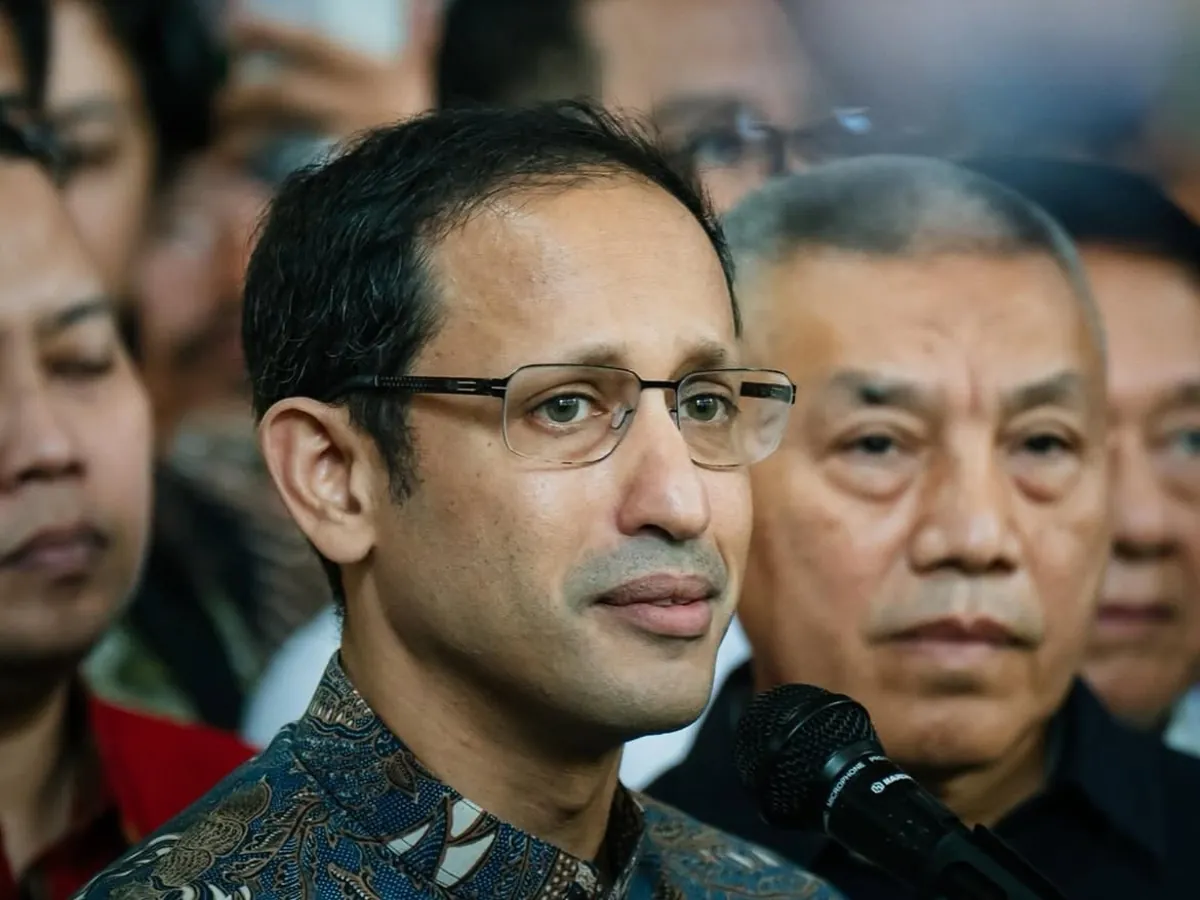


What stands out about Natalius Pigai's proposal is not its content but who was first to swat it down. The minister of human rights suggested opening senior non-operational posts inside the National Police (Polri) to professional civilians. Within hours, the idea was rejected not by the opposition but by a coalition politician who holds the pen on the revision of the National Police Law. That pushback from inside the circle of power is what lifts Pigai's idea above ceremonial talk.
Pigai floated the proposal on the sidelines of the 11th Congress of the Marhaenist Youth Movement in Jembrana, Bali, and the news spread widely on June 5–6, 2026. He tied it directly to the ongoing revision of Law No. 2 of 2002 on the police, calling it a moment to strengthen civilian supremacy over the security apparatus.
Not the Commander's Chair, but the Manager's
This needs to be set apart from the start, because it is where the proposal is most easily misread. Pigai is not proposing that civilians lead security operations, hold field command, or replace officers in the chain of enforcement. He means strategic support roles: planning, human resources, internal oversight, digital transformation, financial management, personnel, and organizational governance. According to remarks cited by Kompas on June 5, 2026, those posts are reckoned to be roughly equivalent to echelon I, or senior high-level leadership.
The gap between "leading the police" and "managing the police budget" is wide, and ignoring it sends the debate off course. Pigai's argument rests on a principle of reciprocity, not on a wish to civilianize law enforcement itself.
"I propose that one of the items in the revision of the police law be the opening of senior official posts in the police that can be filled by civilians."
— Natalius Pigai, Minister of Human Rights
An Asymmetry Long Treated as Normal
At its core, Pigai's idea points to an imbalance that has long passed for routine. Active police officers commonly hold posts in ministries, state agencies, and state-owned enterprises. The reverse path barely exists: civilians moving in to fill senior posts within the police. The door has only ever opened one way.
"If police officers have so far been able to become officials in civilian institutions, ministries, and agencies, then civilians should also be able to hold senior posts within the police."
— Natalius Pigai, Minister of Human Rights
This is where Pigai's proposal turns the police-law debate around. For the previous two weeks, controversy over the bill had centered on fears of expanding police powers, a current the government had at one point framed as the road to a "people's police." Pigai offers a counter-current. The question shifts from "what may the police do" to "who may sit in the police's managerial chairs." That change of lens is raised far less often, and for precisely that reason it touched a nerve at once.
Pushback from the Wrong Place
Had the opposition rejected this, it would be an ordinary story. The opposite happened. The sharpest pushback came from Ahmad Sahroni, deputy chair of the House of Representatives' Commission III, from the NasDem faction, on Friday, June 5, 2026. Commission III handles law and security and is the body drafting the police-law revision. Sahroni is no spectator on the touchline; he is one of the hands that will write its clauses.
"Pak Pigai, don't go proposing nonsense."
— Ahmad Sahroni, Deputy Chair of Commission III, House of Representatives
Sahroni even suggested Pigai tend his own garden in the human rights field rather than reach into police affairs.
"Just handle the human rights violations; there are so many that need defending. Take the Antasari case, for example—there's plenty there that needs defending."
— Ahmad Sahroni, Deputy Chair of Commission III, House of Representatives
Read politically, the speed and source of this rejection say more than its substance. Sahroni and NasDem are part of the governing coalition. When a minister from the same cabinet is met with "don't go proposing nonsense" by a coalition colleague, the signal is more than a personal difference of opinion. It hints at how little appetite the legislature has for structural reform that touches the leadership makeup of an armed institution. Resistance to change of this kind, it seems, recognizes no line between coalition and opposition.
The Palace Chooses Not to Choose
The government's own stance is left hanging. State Secretary Prasetyo Hadi, asked on June 6, 2026, gave an answer built to neither close nor open the door.
"Well, as a proposal, I think anyone can put one forward, can't they?"
— Prasetyo Hadi, State Secretary
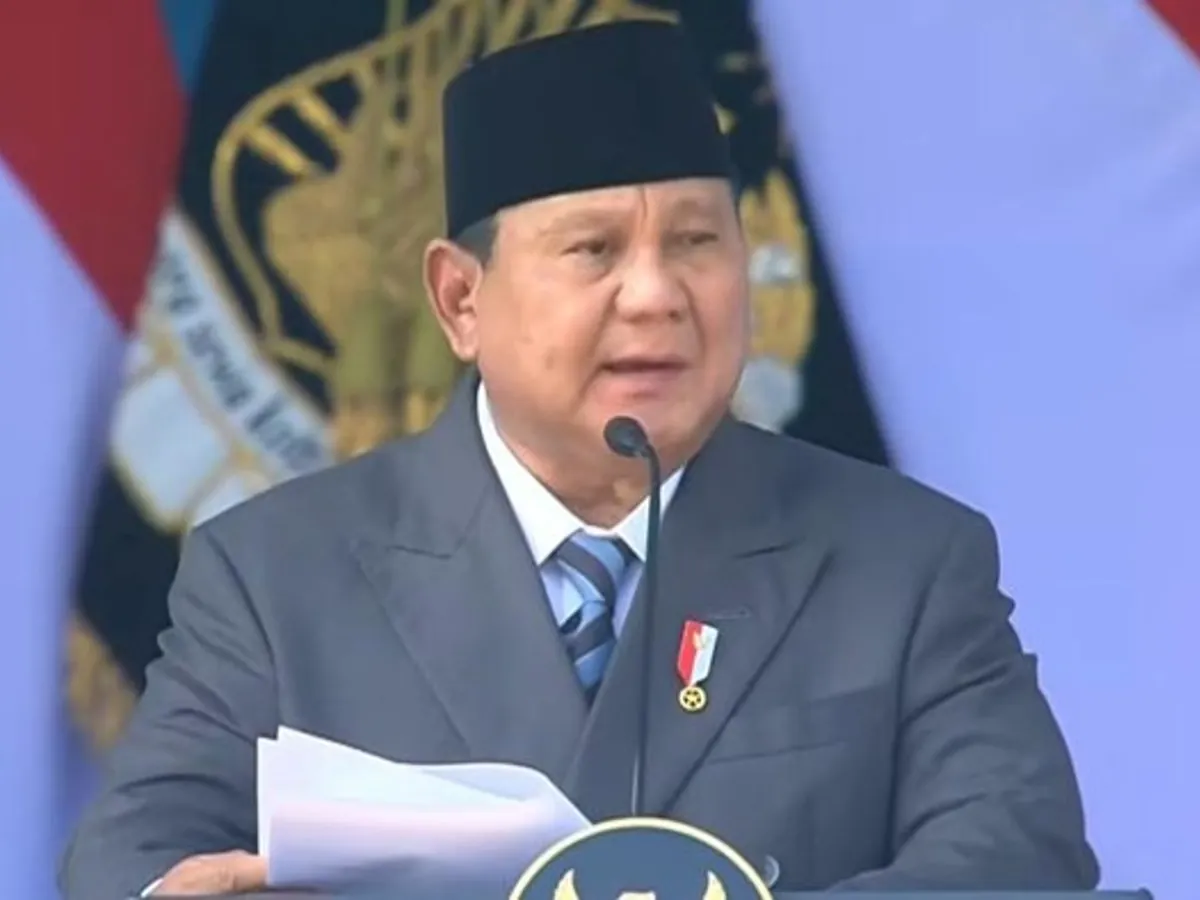
The statement affirms everyone's right to propose while withholding any substantive backing. The message: the idea will be weighed against need, with no commitment. In other words, the Palace lets the hot potato roll through the public square without attaching its name to it. That wait-and-see posture is itself telling. If President Prabowo saw his minister's proposal as a political asset, early support would cost little. Instead, the distance is carefully kept.
The Real Question: Civilian Oversight or Just New Chairs
Pigai frames the proposal in the vocabulary of reform: professionalism, civilian oversight, civilian supremacy, and democratic governance. As reported by detik, he described civilian professionals in non-operational roles as common practice in modern democracies. The claim is not far-fetched. In many countries, police budgeting, internal audit, and information technology are indeed run by career civilian officials, while enforcement stays with uniformed personnel.
In Indonesia, civilian supremacy was one of the promises of the 1998 reform, yet it has rarely been tested on an institution that bears arms. The debate has more often run the other way, toward placing active officers in civilian posts, a pattern repeatedly criticized as a new strain of the military's old dual-function role. Pigai's proposal holds up a mirror to that habit.
Even so, there is a gap worth marking honestly. Opening managerial chairs to civilians does not automatically produce real oversight. Without an institutional framework guaranteeing independence, authority, and security of tenure, the civilians who enter risk becoming new tenants in an old structure, bound to a chain of command that has not changed. The police's internal oversight and budget management are often questioned on transparency, and whether independent professionals can fill that gap depends entirely on technical detail that does not yet exist. The definition of "senior non-operational posts," the selection mechanism, and the civil-service status of civilians within the police all remain blank. Without them, the idea may stall as a symbolic gesture rather than a change in governance.
What Will Decide Its Fate
The first test is simple: whether the idea enters Commission III's list of problem inventory for the police bill, or evaporates as a weekend talking point. The stance of the factions, especially the parties backing the government, will be decisive, and Sahroni's early rejection already shows which way the wind is blowing in that commission.
The second marker is the voice of the police themselves. As of June 6, 2026, neither police headquarters nor the Legal Division had spoken out firmly. The force's reaction to the prospect of civilians filling echelon I–level posts will show how open the institution is to opening its door both ways. The third marker is at the Palace: whether Prabowo ultimately backs or distances himself from his minister's proposal after that noncommittal answer.
In the end, Pigai's proposal tests something larger than itself: how serious the promise of civilian supremacy is when it touches the institution most reluctant to change. The most honest answer so far comes not from the content of the proposal but from the speed with which the coalition shut the door.