

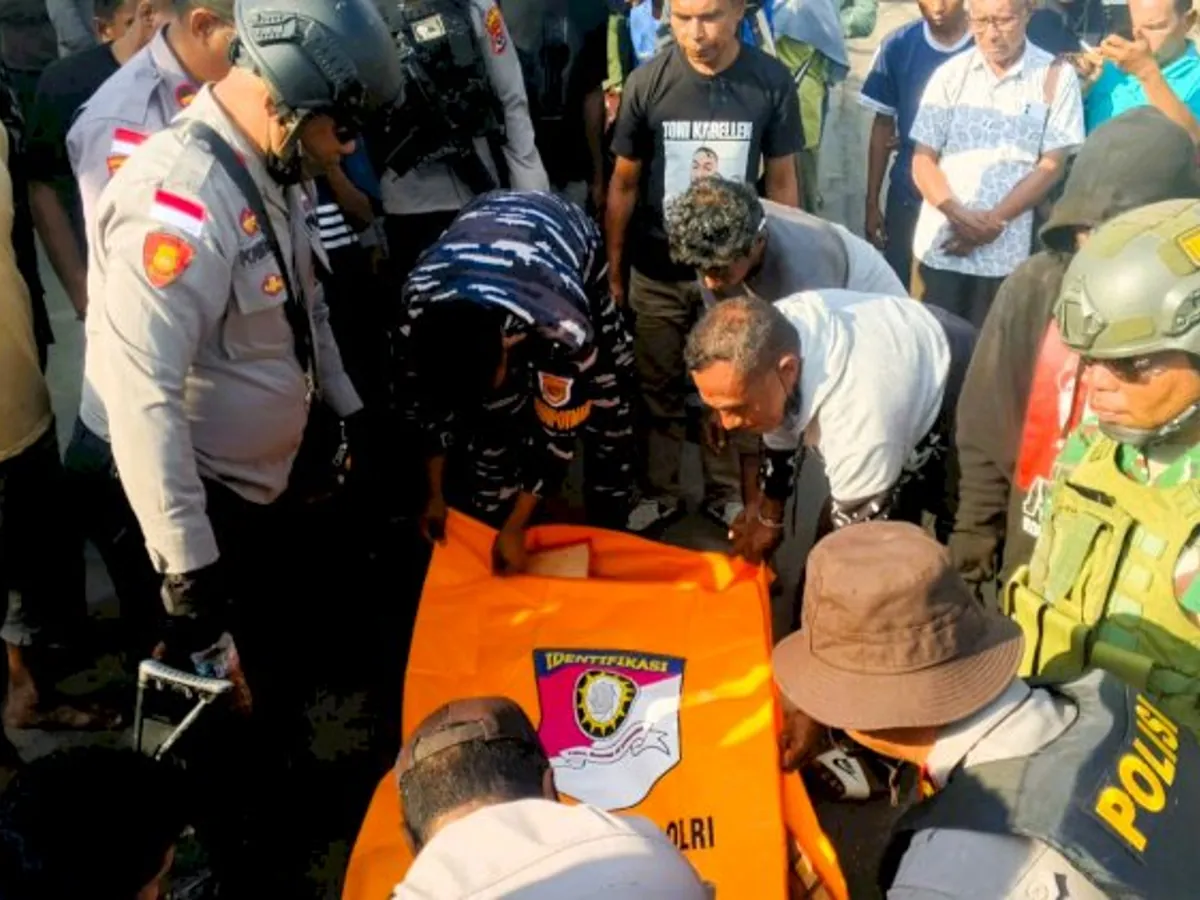
Village clashes over customary land rights broke out again in the Adonara Timur subdistrict of East Flores regency, East Nusa Tenggara, on Saturday morning, July 18. Gunfire from homemade firearms and homemade bomb blasts erupted on the border between Narasaosina and Waiburak villages, killing three people from gunshot wounds and burning at least 20 houses, shops and a pharmacy.
East Flores Police Chief Adjunct Senior Commissioner Adhitya Octorio Putra confirmed three deaths, all men: two from Narasaosina and one from Waiburak, aged 21 and 60. Four other people were injured and referred for intensive care: one Narasaosina resident to Larantuka Regional Hospital, while three residents of Dusun Bele were split between two hospitals, two to Lewoleba Regional Hospital in Lembata and one to Larantuka Regional Hospital.
Disputes over customary land boundaries between village residents have repeatedly triggered clashes in Adonara Timur over the past year. This time the dispute came with gunfire from homemade firearms that killed three residents, plus homemade bomb blasts that also set the settlement ablaze. Residents heard several loud explosions before the fire grew, then fled toward nearby plantations. The Trans Adonara road, the only route through the area, was paralyzed after it became the site of the clash.
Why did the clashes flare up again after the homemade weapons were destroyed?
The July 18 clash erupted less than a month after security forces destroyed hundreds of homemade firearms owned by Adonara Timur residents in early July 2026 as a symbol of peace between the villages. That destruction apparently did not reach every weapon still circulating at the grassroots level: firearms and homemade bombs remained in use and have now caused the highest death toll yet in the Narasaosina-Waiburak conflict.
The dispute is also not the first this year. In May 2026, a related conflict broke out between Dusun Bele, part of Waiburak village, and Dusun Lewonara, triggered by accusations that homemade bombs were being hidden near a security post. A similar trigger pattern resurfaced in the July 18 clash.
Casualty count rose sharply as the first report was updated
The casualty figures changed quickly within hours on Saturday morning. Stefanus Ola Bura, head of the Ile Boleng community health center, initially reported one death and three women seriously injured and undergoing intensive care. "Four patients came to us. One was declared dead, while the other three, who are women, are still being treated. Given how serious their injuries are, we will likely have to refer them," he said. That early morning report also recorded 12 houses burned.
Once Police Chief Adhitya gave an official briefing later that day, the death toll rose to three, the injury count to four, and the number of houses destroyed by fire to 20. "All three people who died in the clash were men," Adhitya said. The gap between the two counts reflects how fast the situation on the ground was still developing when the first report was written, hours before the second official briefing.
Joint security forces deployed, further mediation still awaited
East Flores Police deployed hundreds of officers, backed by the military, to secure the area and prevent further clashes. "The situation is under control now, but personnel are still on site in case of further incidents," Adhitya said. East Flores Police spokesperson Adjunct Inspector Eliezer A. Kalelado urged residents to stay calm, let police handle the situation, and preserve unity for a safe and peaceful East Flores.
Police are still investigating the specific trigger of the July 18 clash and the origin of the firearms and bombs used, while the four injured residents referred to Larantuka and Lembata remain under treatment. Dozens of families who lost their homes, shops and pharmacy now depend on the district government's emergency response, including possible temporary housing assistance.



Comments