

The case for and against an electric car in Indonesia in 2026 now fits in one line: it wins as transport, but loses as an asset. Daily running costs can be five times lower than a comparable gasoline car, while resale value can halve in just three years. For a buyer weighing the math, both sides have to be read together, not one at a time.
A pure electric car, or BEV (battery electric vehicle), runs entirely on an electric motor and battery, with no gasoline engine at all. On paper, the economics are tempting. The catch is that most of those savings only show up if you keep the car for a long stretch and do not trade it in quickly.
Cheap to run: here is the math
The strength of an electric car is daily operating cost. By PLN's own illustration, driving 10 kilometers in a gasoline car costs about Rp13,000, while an electric car needs roughly 1.5 kWh, or about Rp2,600. The gap is nearly five times. PLN president director Darmawan Prasodjo said EV users are proven to spend less, citing that comparison.
The tariff at public EV charging stations (SPKLU) was around Rp2,466 per kWh as of March 2025, with a 30 percent discount for charging between 10 p.m. and 5 a.m. local time. Owners disciplined enough to charge overnight can push the bill down further. Maintenance is also lighter, because there are far fewer moving parts than in a combustion engine.
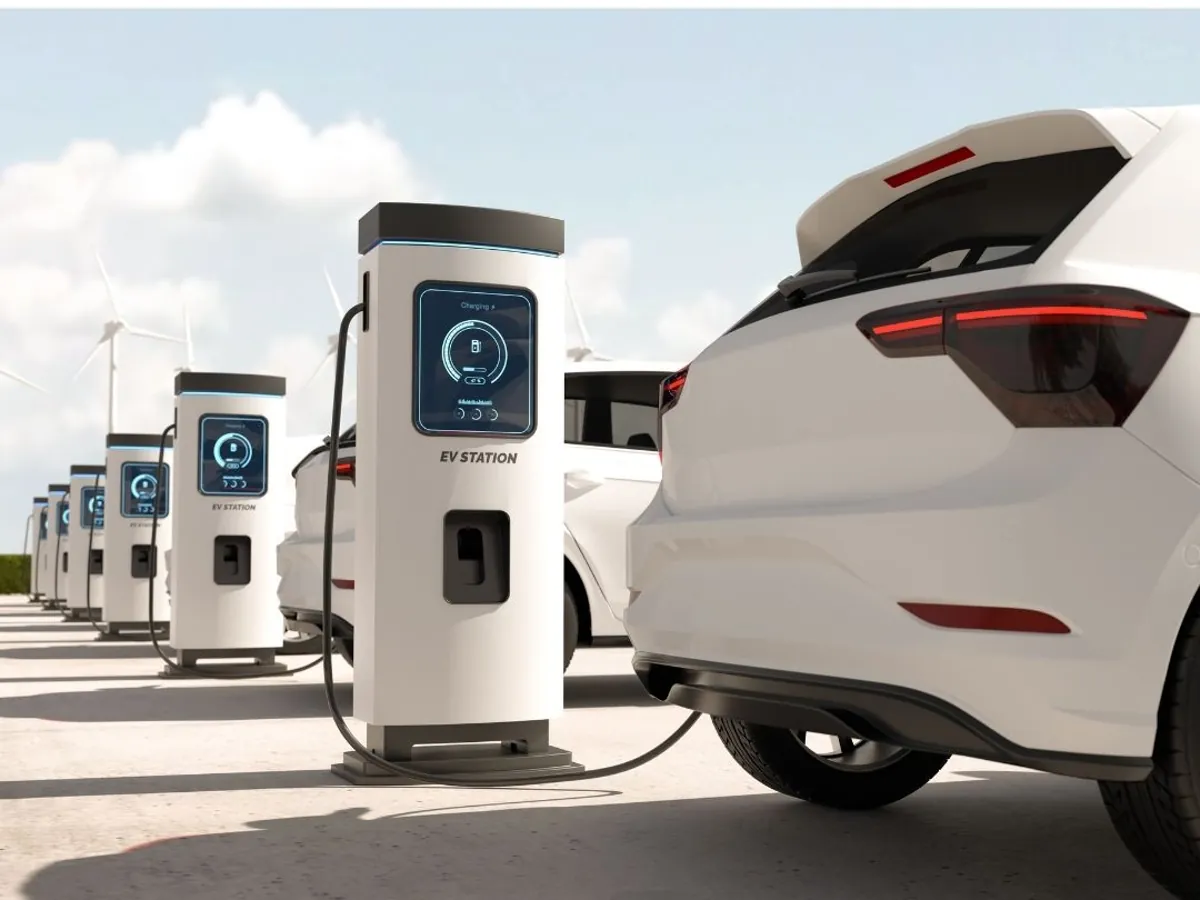
The infrastructure is catching up. Through 2025, PLN and its partners ran 4,655 SPKLU units across 3,007 locations, up about 44 percent from 3,223 units in 2024. The government is targeting 24,720 public charging units by 2030, a sign that coverage is still being built out. For city drivers, the network is already adequate. For intercity trips and travel outside Java, range anxiety is still reasonable. Power supply itself has drawn attention lately, as seen when blackout compensation was tossed back to PLN.
Why can a used EV's resale value crash 50 percent?
Because new EV prices keep falling and used-car financing is still tight. Every time a cheaper, more advanced model launches, the value of older units gets dragged down with it. OLXmobbi director Agung Iskandar said depreciation on a used EV around three years old can reach 50 percent, well above a comparable gasoline car.
"The drop is quite significant. For an electric car about three years old, the price can depreciate by as much as 50 percent," Agung said.
The Hyundai Ioniq 5 from 2022 is a concrete example. A car once priced around Rp800 million now changes hands at about Rp350 million on the used market, a drop of roughly 56 percent. At that rate, three years of fuel savings can be wiped out by the loss in resale value.
Lenders deepen the pressure. According to Agung, credit for used EVs is still rare. "This happens because financing institutions still rarely provide credit facilities for used electric cars," he said. Without easy financing, the buyer pool shrinks and resale prices fall with it. Technical doubts pile on: battery condition that declines year over year, and warranties that are often treated as void once the car changes owners.
The market is slowing just as choices grow
The irony is that all of this is happening while the market is soft. BEV sales in May 2026 came to just 9,290 units at wholesale, down 37.34 percent from 14,825 in April and the lowest figure so far this year. The cause is not the product. Gaikindo (the Association of Indonesia Automotive Industries) chairman Jongkie Sugiarto pointed to policy uncertainty as the culprit.
"It's about the postponed incentives, the weakening rupiah, and so on," Jongkie said.
The certainty on incentives, once pointed at mid-2026, has slipped again, and many would-be buyers are choosing to wait. Pressure on the rupiah is also holding back demand, a pattern that shadows the market amid a swelling state budget deficit.
Even so, this weakness reads better as a pause than a collapse of the trend. Through 2025, BEVs logged 103,931 units and a 12.9 percent market share. The brand map is shifting fast: May 2026 was led by newcomer Jaecoo J5 with 2,943 units and Geely EX2 with 1,395 units, while BYD, usually dominant, dropped out of the top ten. The BYD M6 sat in 12th place with just 197 units. For buyers, this tight competition means more aggressive new-car pricing, but also sharper depreciation on older units.
Who is a 2026 EV right for?
The buyers who gain most are those who drive medium daily distances in the city, have charging access at home, and plan to keep the car five years or more. For that profile, the savings on energy and maintenance really do add up over time.
The opposite holds for buyers who like to swap cars every two or three years. Over that span, depreciation can swallow all the operating savings. The same goes for those who often drive intercity routes outside Java, where the SPKLU network is not as dense as in big cities.
Indonesia now holds about 98,000 four-wheel electric cars, with a projection of more than 130,000 units by the end of 2026. More and more middle-class families face a decision worth hundreds of millions of rupiah armed with information that often shows only one side, either the savings or the slump.
Verdict
As transport, the 2026 electric car is mature and clearly cheaper to run. As a financial instrument, it is still risky, especially if you do not plan to hold it long. The practical advice: buy if your usage is long-term and you have home charging, wait if you are chasing resale value or holding out for certainty on incentives.
Three things will decide whether this math improves over the next few months: certainty on tax incentives, stability of used prices as the wave of cheap new models continues, and the arrival of third-party financing schemes and battery warranties that could lift used EV values back up.