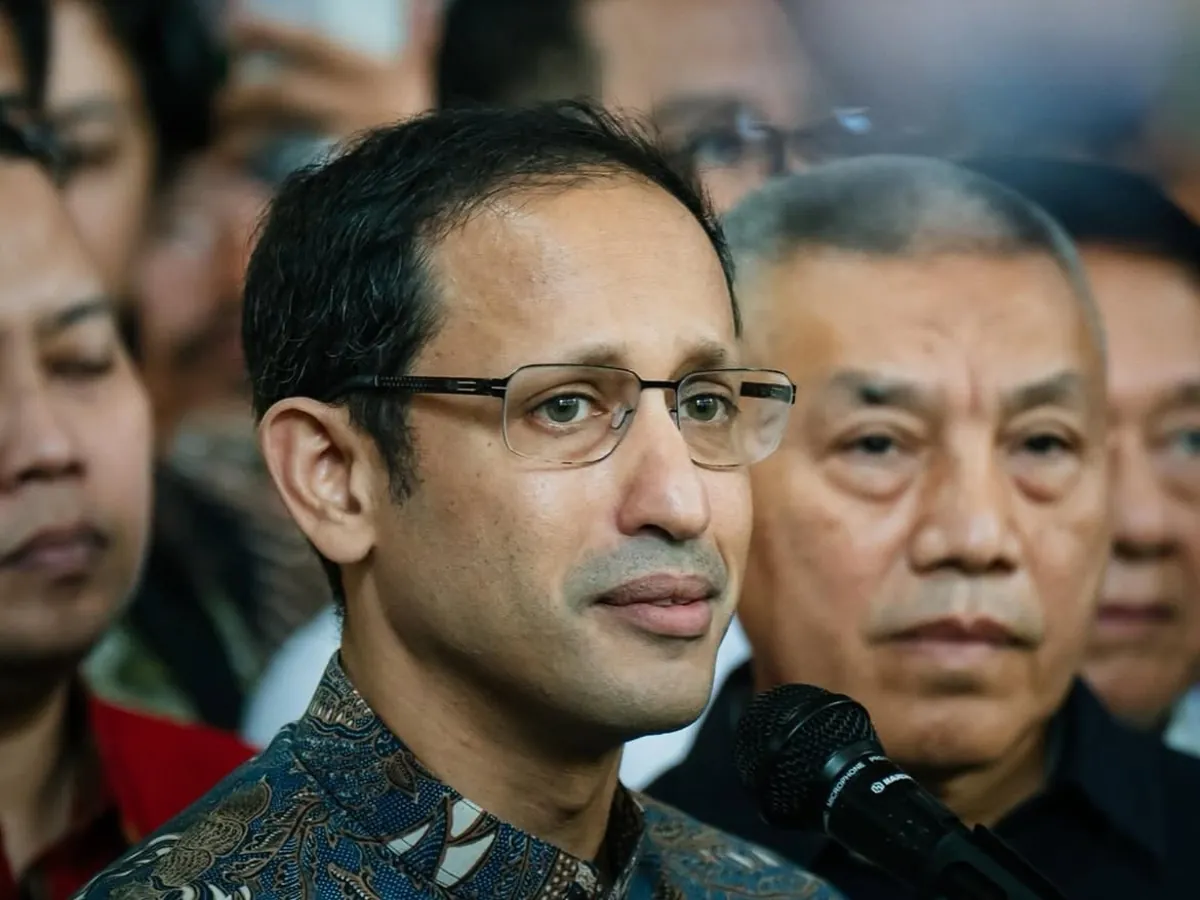

Asked by reporters about customers hit by the rolling blackouts across Java through June 2026, Energy and Mineral Resources Minister Bahlil Lahadalia steered the question toward state utility PT PLN. "Ask PLN about that, because it's PLN's business," he said at the Presidential Palace in Jakarta on Monday. He gave no assurance that compensation would be paid.
The catch is that the rule on blackout compensation came from the ministry he now leads. ESDM Regulation No. 2 of 2025 on the Service Quality Level (TMP) for electricity already lays out when customers are entitled to compensation and how much. Under the rule, that entitlement is meant to apply automatically, without customers having to file a complaint first.
A Rule That Points Back to His Own Desk
The "PLN's business" line exposes an odd accountability gap: the regulator points to the operator, while the legal basis the operator uses was set by the regulator itself. PLN is indeed the body that calculates and pays the compensation, but its obligation to pay does not stem from company policy. It is ordered by the ESDM regulation.
The June 2026 blackouts were triggered by failures at major power plants. ESDM has pointed to Cilacap coal plant unit 1, with a capacity of 300 megawatts, and unit 4, at 1,000 megawatts, as the culprits, and Bahlil ordered the Finance and Development Supervisory Agency (BPKP) to audit PLN's coal procurement. The question of why supply could fail has been widely discussed, including doubts over PLN's reserve margin. What remains unsettled is the aftermath: once the power actually goes out, what are customers entitled to?
How Much Compensation Are Customers Owed?
Compensation is calculated from the standing charge or the minimum bill, on a sliding scale tied to how long an outage runs beyond the TMP threshold. The threshold for the outage-duration indicator is set at one hour per month; above that, the right to compensation kicks in.
The scale climbs in steps: 50 percent for outages of up to two hours, 75 percent for more than two and up to four hours, then 100 percent for more than four and up to eight hours. Longer outages are paid out more heavily — 200 percent for 8 to 16 hours, 300 percent for 16 to 40 hours, and 500 percent for outages beyond 40 hours. The value is applied as a deduction on the following month's bill, or on the next token purchase for prepaid customers.
The 500 percent figure sounds large, but the base it is calculated from is small. The standing charge is only one component of a household's total bill, so the deduction that shows up the following month often feels out of proportion to the disruption endured.
The Gap Between Formal Payout and Real Loss
This is where the Indonesian Consumers Foundation (YLKI) is applying pressure. Niti Emiliana, chair of YLKI's daily management board, stressed that the compensation is an attached right, not a discretion that waits for customers to demand it.
"Compensation should still be given automatically to consumers without them having to file a complaint first, in line with ESDM Regulation No. 2 of 2025." — Niti Emiliana, chair of YLKI's daily management board
YLKI also flagged the limits of the rule as it stands. The regulation covers only deductions from the electricity bill. Damage to electronics from unstable voltage, and revenue lost when a business is forced to stop operating, fall outside the compensation. For the owner of a small shop, a home business, or a household with a fridge full of stock, a cut to the standing charge plainly does not cover those losses.
A Legal Demand and a Seven-Day Deadline
The pressure does not stop at the consumer group's appeal. Lawyer Azas Tigor Nainggolan filed a legal demand (somasi) against PLN on Monday, citing Law No. 8 of 1999 on Consumer Protection and Articles 1365 and 1366 of the Civil Code, with a seven-day deadline before further legal action.
"With these rolling blackouts, the public is not getting the electricity supply they were promised when they signed their subscription agreement with PT PLN. This is a failure of PT PLN's management performance that has caused real losses for millions of consumers." — Azas Tigor Nainggolan, the lawyer behind the legal demand
That deadline sets a concrete marker. Over the next seven days, several things will shape the direction of the case: whether PLN confirms automatic compensation for the June 2026 blackouts and how it calculates each customer's cumulative outage duration; whether the demand is answered within the deadline or escalates to a lawsuit; and whether ESDM, as the author of the rule, issues implementing instructions instead of leaving everything to the operator. The simplest test will show up on the July 2026 bills and tokens: whether or not a deduction appears to prove the "automatic" clause is working.