

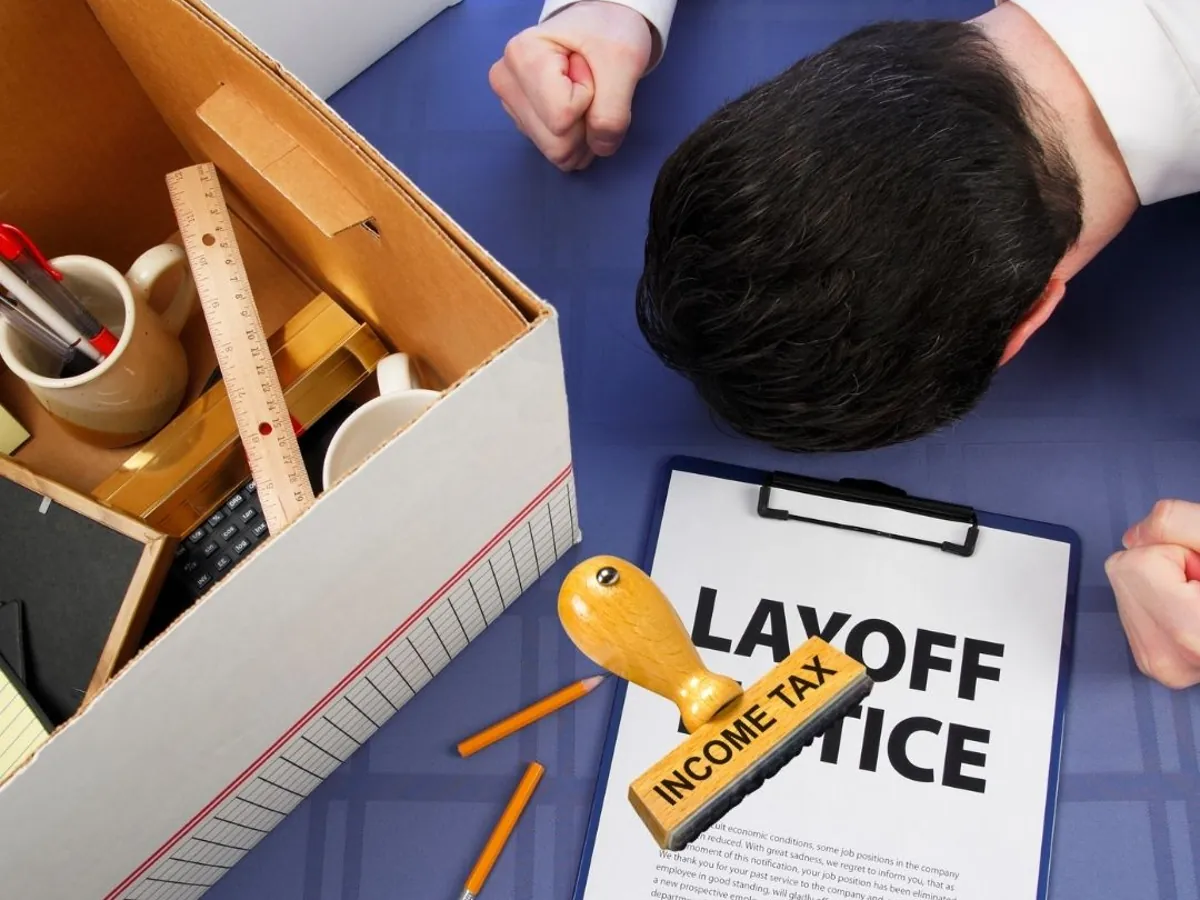
Said Iqbal walked into Indonesia's Ministry of Finance in Jakarta on Wednesday, July 8, 2026, with one concrete demand: scrap the tax on withdrawals from old-age savings (JHT), holiday bonuses (THR), severance pay and pension funds, and raise the tax-free threshold from Rp50 million to Rp400 million.
Iqbal, the president's special advisor on labor and worker welfare and president of the Confederation of Indonesian Trade Unions (KSPI), took the demand straight to Finance Minister Purbaya Yudhi Sadewa. Behind it lies a troubling pattern: JHT tax rates can run as high as 30 percent, and the workers hit hardest aren't those retiring on schedule but layoff victims who withdraw their savings in installments because they need the cash fast.
Three tax schemes, one traps layoff victims
JHT withdrawals are subject to Article 21 income tax under Government Regulation No. 68/2009, Finance Ministry Regulation No. 16/2010, and the Tax Regulation Harmonization Law. Together these rules split the tax into three schemes with sharply different rates.
Withdrawals made at retirement, within two years of the first payout, get the final rate: 0 percent on balances up to Rp50 million and 5 percent above that. It's the lightest scheme. As Inge Diana Rismawati, the Directorate General of Taxes (DJP)'s director of education, service and public relations, put it: "In principle, JHT withdrawals are subject to Article 21 income tax when benefits are paid to participants."
The other two schemes hit much harder. Partial withdrawals made while a worker is still employed face a progressive, non-final rate. So does any withdrawal made more than two years after the first retirement payout, which falls under the same progressive Article 17 rates: 5 percent up to Rp60 million, 15 percent for Rp60 million to Rp250 million, 25 percent for Rp250 million to Rp500 million, 30 percent for Rp500 million to Rp5 billion, and 35 percent above that. These two schemes are what typically catch workers who lose their jobs suddenly and draw down their JHT bit by bit as they need it. Workers who wait for retirement and cash out in one go rarely see these rates.
Why do layoff victims get hit with the highest rates?
Layoff victims end up paying the highest rates because their withdrawal pattern automatically falls into the progressive scheme instead of the lighter final one. Workers who are laid off typically withdraw their JHT in stages, some while still job hunting and the rest later, which pushes them into Article 17 rates that climb as high as 35 percent, far above the 0 to 5 percent final rate that ordinary retirees pay.
Mirah Sumirat, president of the All Indonesia Workers' Union Association (ASPIRASI), says this group loses out the most. "JHT is a worker's right," she said. "It's money from years of a laborer's sweat, saved up to live on once they can no longer work. It's deeply unfair that workers facing financial hardship, who have been laid off, or who want to use their JHT as business capital still get taxed on it." For formal-sector workers, JHT contributions equal 5.7 percent of monthly wages, 3.7 percent from the employer and 2 percent deducted from pay, built up over years, so every extra percentage point in tax cuts directly into savings workers set aside themselves long ago.
The 95 percent claim versus what workers actually experience
Purbaya has a different number. He says about 95 percent of JHT withdrawals have always been tax free, falling under the 0 percent final rate. But that claim runs into the experience of workers who say they hit the progressive rate specifically when withdrawing funds after a layoff, the opposite of the light final scheme the government points to as typical. Said Iqbal challenged the accuracy of the 95 percent figure directly to Purbaya's face.
"The burden on social security savings should fall on the tax from their returns, not on the principal itself," Said Iqbal said. Purbaya responded with a promise to review the rules. "I'll look at what the regulations can accommodate," he said. "We'll check Mr. Said's request against the existing rules and weigh the impact." He asked for complete data from the Employment Social Security Agency (BPJS Ketenagakerjaan) before deciding on any revision.
Said Iqbal's math behind the Rp400 million figure
The Rp400 million figure Said Iqbal proposed isn't an arbitrary round number. He compared it to gold: the Rp50 million threshold set in 2009 was worth about 152 grams of gold at the time. At today's gold price, those same 152 grams are worth roughly Rp400 million. "So it would be fair if only people whose JHT gets taxed above 400 million get hit," he said. His argument is straightforward: a tax-free threshold set more than a decade ago was never adjusted for inflation or asset prices, so more withdrawals get taxed every year even though their real value hasn't changed.
Why this issue is exploding now
JHT was designed as mandatory savings paid out when a participant retires, becomes permanently disabled, or dies. It isn't a commercial investment product. Its tax rules have been in place for more than a decade under PP 68/2009 and PMK 16/2010, but they only became a flashpoint after waves of layoffs across multiple sectors pushed more workers to withdraw funds outside the standard pattern, partially or in stages, tripping progressive rates originally meant for high earners rather than emergency cash-outs. Tighter scrutiny of citizens' income data under the tax office's Coretax system has also made the tax bite on JHT more visible to workers comparing their own withdrawal slips.
The pressure nearly led to a protest by thousands of workers outside the Ministry of Finance. That plan was called off after the July 8 meeting, once Purbaya promised to review the rules using BPJS Ketenagakerjaan data.
What to watch
Three things will determine whether Purbaya's promise turns into real change. First, whether the Finance Ministry issues a revision to PMK 16/2010 or its implementing rules, and when. Second, whether the promised BPJS Ketenagakerjaan data actually confirms or disproves the 95 percent tax-free claim. Third, whether the proposed Rp400 million threshold gets adopted as is, revised to a different figure, or rejected outright, given that any change would affect Article 21 income tax revenue in the state budget. The unions' next move matters too: plans for a protest could resurface if the government's review drags on without a firm timeline.



Comments