

For a family trip to Bandung, the question that decides how smoothly the day goes is not where to visit but when to leave and which route to take. The shortlist of family attractions barely changes from year to year: Lembang Park & Zoo, Farmhouse, Floating Market, Dusun Bambu, and Orchid Forest Cikole in the north; Kawah Putih and the Rancabali tea plantations in the south; plus themed parks inside the city. What separates a day full of laughing kids from a day spent stuck in the car is how you plan the route.
Bandung's family attractions cluster in three zones separated by distance and terrain: the north around Lembang and Cisarua, the south around Ciwidey and Rancabali, and several spots inside the city. The second-semester school break for 2025/2026 runs from June 29 to July 10, 2026, and Bandung is again among the domestic destinations families want most, alongside Bali, Yogyakarta, and Malang, because it is close and affordable for residents of Greater Jakarta and West Java.
Why pick one zone per day?
Because the three clusters sit far apart and the mountain roads that link them are narrow. Pairing Kawah Putih in the south with Lembang in the north on the same day means crossing the city and climbing two equally congested uphill routes, so the time meant for the kids gets eaten by driving. Sticking to one zone a day keeps the schedule loose and cuts the risk of getting stuck in traffic.
The most common mistake among families who drive themselves is stacking two destinations across zones: south in the morning, then forcing a run north in the afternoon. Geographically that route is hard to do without hours of jams, especially on the middle weekend of the break.
The northern zone: Lembang for young children
Lembang and Cisarua, in West Bandung Regency, draw families with cool highland air and a dense cluster of child-friendly parks. Lembang Park & Zoo works for a first look at animals, Floating Market offers water rides and food over a lake, and Farmhouse and The Great Asia Africa lean on photo spots and themed settings. Orchid Forest Cikole and Dusun Bambu give the wide open space that active kids need.
The West Bandung Regency Tourism and Culture Office (Disparbud) expects visits to the zone to surge during the school break. "Our hope and our forecast is that visits will definitely rise over this school holiday, and every attraction is of course already preparing," said Asep Dendih, head of the West Bandung Regency Tourism and Culture Office.
The southern zone: nature that sits far out
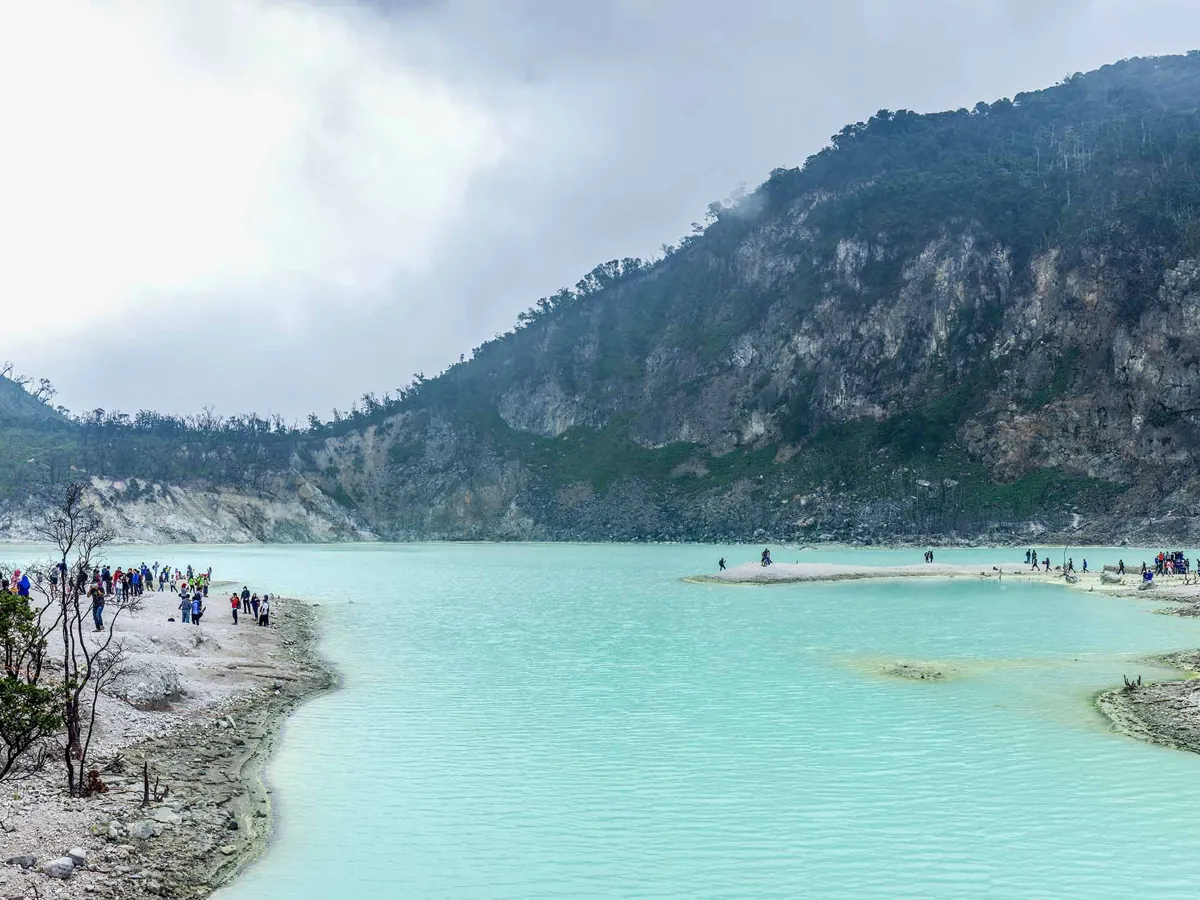
Kawah Putih, Situ Patenggang, and the Rancabali tea plantations lie in the opposite direction, in Ciwidey and Rancabali. The landscape favors open scenery and suits families with older children who can handle a long drive. Because these sites line up along the same route, the southern itinerary is best left to fill a full day on its own and not mixed with a Lembang plan.
In-city options for arrival and departure days
On the day you arrive or just before you head home, the themed parks and museums inside Bandung are a safe bet. They sit away from the crowded mountain roads, so families can still fill the time without risking a long jam when everyone is already worn out from traveling.
When traffic peaks and how to work around it
Access to northern Bandung relies on a few of the same uphill stretches, mainly the Kolonel Masturi and Setiabudi corridors toward Lembang. When traffic volume tops the roads' capacity, bottlenecks form right away on Jalan Kolonel Masturi, the Beatrix junction, the Cikole area, Jalan Raya Tangkuban Parahu, and Tugu Lembang. The Cimahi Police traffic unit (Satlantas Polres Cimahi) monitors all of these points.
To ease the congestion, police use limited traffic engineering. The "one way sepenggal" is a partial one-way scheme applied only on the busiest stretch and adjusted to conditions on the ground, without closing the whole main route. "To ease congestion we usually run the partial one-way scheme. But we apply it based on what we see on the ground, whichever point is busiest," said First Inspector Bayu Subakti, an operations officer at the Cimahi Police traffic unit.
The flow shifts through the day as well. "Today there was a fairly sharp rise in traffic volume compared with yesterday, both from Lembang toward Bandung, but more vehicles are moving from the top down," said Adjunct Commissioner Aviandre Maliki, head of the Cimahi Police traffic unit. For families, the takeaway is simple: leave early before the uphill flow thickens, and check the traffic unit's official channels before the car pulls out of the lodging.
How much are Bandung attraction tickets in 2026?
Entry to family attractions in Bandung ranges from about Rp20,000 to Rp80,000 per person, with some sites raising prices on weekends and during peak season. Here are the latest price ranges as a budget guide before you set off:
- Lembang Park & Zoo: about Rp65,000 on weekdays, about Rp80,000 on weekends
- Farmhouse Lembang: about Rp35,000, including a drink voucher
- Orchid Forest Cikole: about Rp50,000
- Floating Market Lembang: from about Rp40,000
- Dusun Bambu: from about Rp30,000
- Taman Lembah Dewata: about Rp20,000 to Rp25,000
These are base entry prices and do not cover the rides inside, parking, or meals. Check the prices again on each destination's official channels, since seasonal adjustments are common.
Ride safety, not just ticket math
Many Lembang destinations sell high-adrenaline rides such as zip lines, sky bridges, and ATVs. When visits surge, safety oversight is at stake, so matching a ride to a child's age matters as much as counting the ticket cost. The local government stresses tourism service standards as a condition for operating.
"Sapta Pesona must be put into practice at every attraction in West Bandung. Visitor safety, security, and comfort have to come first," said Asep Dendih, referring to the "seven charms" tourism service standard. Before letting a child onto an extreme ride, parents should make sure the operator fits the safety restraints and follows the capacity rules.
What to check before you go
Traffic usually peaks on the middle weekend of the break, around July 5 and 6, when the partial one-way scheme is most likely to be switched on at Kolonel Masturi and Cikole. Beyond the traffic status, check the holiday-season operating hours at your destination too, since some extend or limit their hours on busy days. For families who want to avoid the crowds, the southern zone and the in-city attractions are quieter than Lembang, which is sure to be packed.