
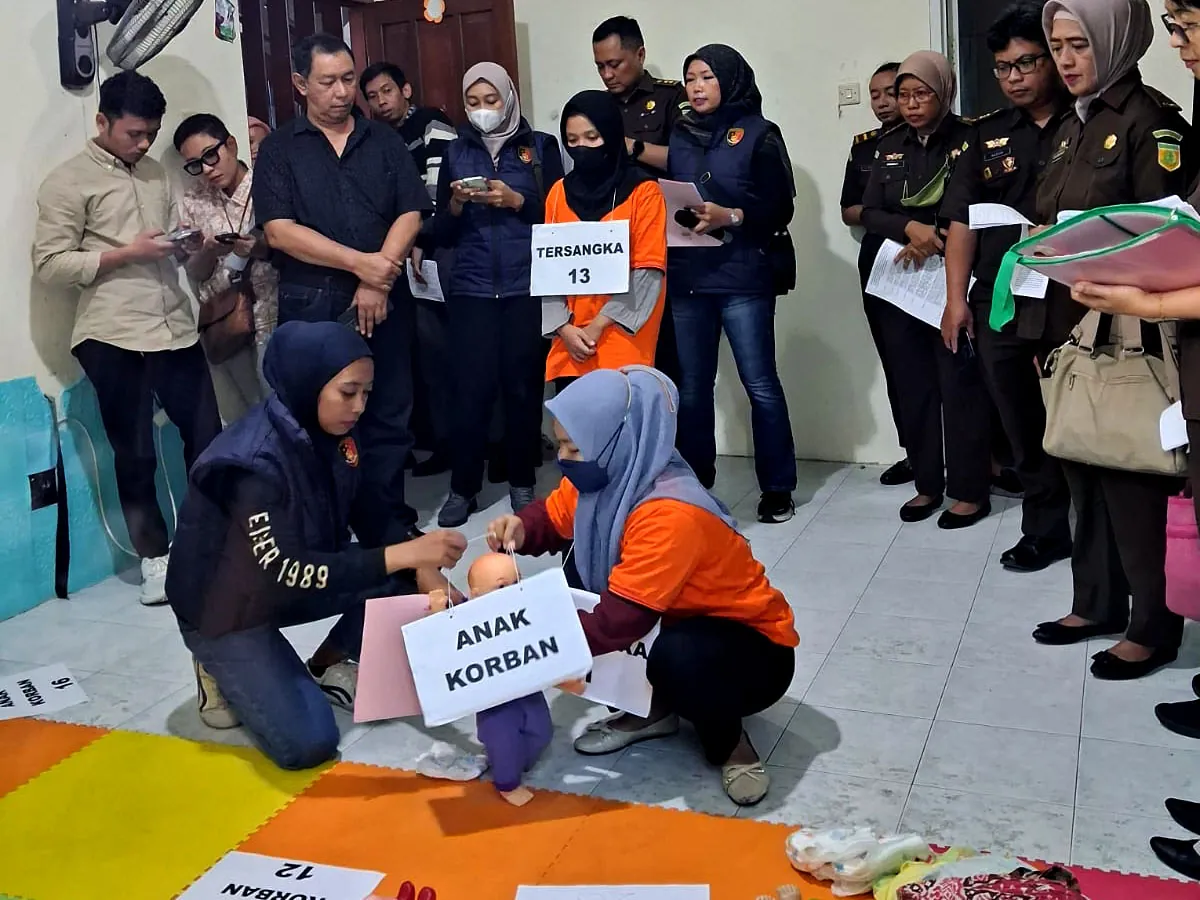
Thirteen women in orange detention uniforms, their hands cuffed, arrived at the Little Aresha daycare in Umbulharjo, Yogyakarta City, at around 10:15 a.m. local time on Tuesday, June 9, 2026. Twenty minutes later, police began a crime-scene reconstruction that ran through 23 scenes, from the morning handover of children at the entrance to the afternoon pickup, and lasted about three hours. The exercise led investigators from the Yogyakarta city police to conclude that tying up the children's hands and feet was a daily routine carried out on the orders of the foundation's head, not the initiative of the caregivers on the floor.
"The command came from her (DK), she watched it directly, and she was here every single day," said Commissioner Riski Adrian, head of the criminal investigation unit at the Yogyakarta city police, after the reconstruction.
Why the Foundation Head Is the Key Suspect
The reconstruction established that DK was at the site every day, witnessed the abuse firsthand, and that the instruction to restrain the children flowed from her down to the caregivers. That kind of full chain of liability is rare in cases of institutional child abuse, where frontline staff are usually charged while those in charge escape because direct involvement is hard to prove. In the Little Aresha case, investigators traced the chain of command all the way to the top.
Yogyakarta police chief Senior Commissioner Eva Guna Pandia confirmed that all 13 suspects are women: DK, 51, the foundation head; AP, 42, the school principal; and eleven caregivers — FN, 30; NF, 26; Lis, 34; EN, 26; SRm, 54; DR, 32; HP, 47; ZA, 30; SRj, 50; DO, 31; and DM, 28. Beyond the 13 suspects, 17 other people remain under an obligation to report regularly to police.
Twenty-Three Scenes, Three Hours
The opening scene of the reconstruction showed something that plays out in thousands of Indonesian daycares every morning: a caregiver taking a child from a parent's arms at the door. The closing scene was just as ordinary, with children handed back toward late afternoon. What the 23 scenes in between captured was what had been hidden from parents all along: children with their hands and feet bound, some swaddled, placed in a cramped room. The restraints were removed only when a child ate, bathed, or was about to be picked up, according to investigators.
The reconstruction serves a specific legal purpose: building the element of intent, or mens rea, into the case file. Investigators need to show prosecutors that restraining the children was a planned procedure, repeated daily and carried out with the full knowledge of every level of management — material that will shape the weight of the charges once the file is handed to the Yogyakarta District Court.
A Report From the Inside
The case came to light through a report by a former caregiver, who went to Yogyakarta City's Office for Women's Empowerment, Child Protection and Population Control (DP3AP2) on April 20, 2026. Four days later, police raided the premises. The investigation went on to ensnare every layer of management — the foundation head, the principal and eleven daily caregivers — a pattern that signals police are treating the abuse as an institutional practice.
Of roughly 103 children recorded as having been left at Little Aresha, 53 have been confirmed to have suffered physical and verbal abuse. About 100 children have been examined in all, a figure not yet reconciled with the initial 53 victims and one that will bear on the prosecution's charges. Some of the children are now in psychological therapy four to five times a week, while medical examinations have found signs of nutritional problems and developmental disorders in a number of the victims.
A mother who watched the reconstruction could not hide her emotion. "I'm furious. My child was a victim. We entrusted our child here, we paid for them to be cared for properly, and instead this is what they did to my child," said N, a parent of one of the victims, to reporters.
The Law and the Trial Ahead
The suspects have been charged under Articles 76A, 76B and 76C of Law No. 35 of 2014 on Child Protection, linked to the aggravating provisions of the new Criminal Code (Law No. 1 of 2023), carrying a maximum penalty of 10 years in prison.
The reconstruction marks the final stage of the investigation before the file is transferred to prosecutors. One question will shape the direction of the trial: whether prosecutors will charge DK under different, heavier articles than the frontline caregivers, following the chain-of-command findings drawn out of the reconstruction. The case is now under scrutiny from the National Human Rights Commission (Komnas HAM) and the Ministry of Women's Empowerment and Child Protection, and the pressure to overhaul daycare oversight standards nationwide is unlikely to ease before a verdict is handed down.