

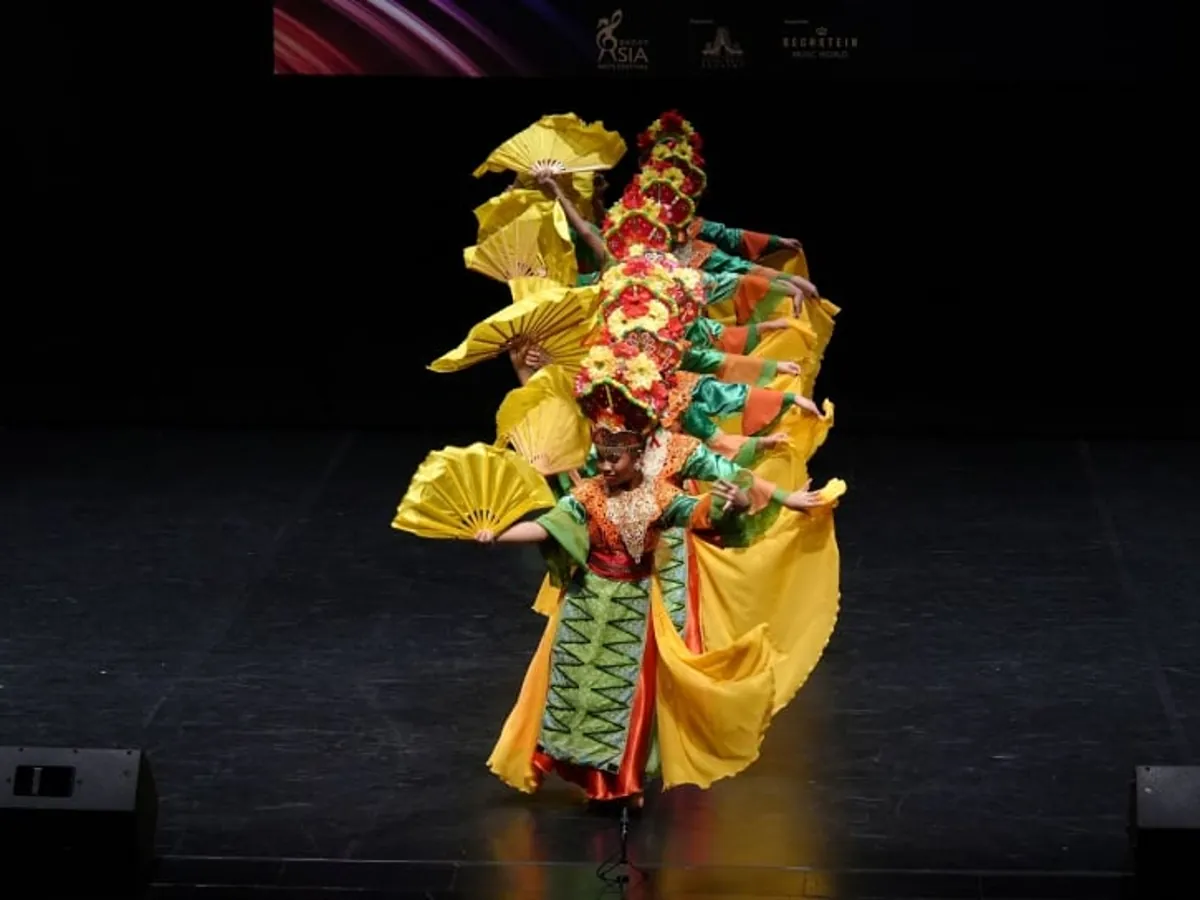
Svadara Warna Indonesia, a dance studio backed by the Jakarta Provincial Culture Office, won the Gold Medal in the Small Group A category at the 13th Asia Arts Festival (AAF) 2026, held at the School of the Arts (SOTA) in Singapore. The winning piece, Tari Kipas Ajer, is a new dance built from Betawi Cokek and Topeng movements, and it already holds a Certificate of Creation Recordal (Surat Pencatatan Ciptaan), Indonesia's official copyright registration, for its choreography.
Eleven dancers and the philosophy of the Betawi fan
Eleven dancers performed Tari Kipas Ajer on the AAF 2026 stage, built around the philosophy of the fan as a symbol of a Betawi girl's beauty. They trained under Camelia Ashe, who served as both dance coach and team official for the Singapore mission.
Diah Sri Utari, known as Didi, is Program Manager and Team Leader of Svadara Warna Indonesia. She said the mission's value goes beyond the trophy. "For us, a cultural mission is always more than just entering a competition. It's a space for the dancers to build discipline, independence and adaptability, and pride in Indonesian culture. Winning is something to be proud of, but the experience of serving as cultural ambassadors is the biggest thing they bring home," she said, as quoted by Suara.com and recorded identically by Okezone.
After the competition, the Svadara delegation held an audience with the Indonesian Embassy (KBRI) in Singapore. They were received by Deputy Ambassador Thomas Ardian Siregar and First Secretary for Social and Cultural Affairs Rizki Kusumastuti. The embassy praised Svadara's consistency in bringing Indonesian arts and culture to international stages and encouraged young performers to keep pursuing achievement through the arts.
Why does copyright matter for Tari Kipas Ajer?
A Certificate of Creation Recordal is an official document that registers ownership of a copyrighted work. For Tari Kipas Ajer, it protects the choreography, developed from traditional Betawi movement, against unauthorized claims or use, and legally recognizes Svadara as its creator.
Few regional dance studios in Indonesia take this step. Works derived from oral tradition or movements passed down through generations are usually treated as communal heritage with no formal legal status. By registering its copyright, Svadara offers a concrete example of how a new creative work rooted in tradition can gain legal protection, adding weight to its gold medal win in Singapore. The broader question of protecting creative work is also moving through other legislative channels, including the Press Council's push to have journalistic work protected in a planned revision of Indonesia's Copyright Law.
Svadara's track record on Asian stages
The AAF 2026 gold medal continues a run that started in 2025. That year, the same studio won a Gold Award at AAF, performed at Indonesian Night Kyoto and the Osaka World Expo 2025 in Japan, won a Bronze Award in the International Folk Dance category at the Powerful Daegu Festival in South Korea, and took part in the Borneo Art Festival 2025 in Labuan, Malaysia.
Diah outlined plans to expand the cultural mission beyond competition stages. "Going forward, we hope the cultural mission won't just focus on competition, but will also include a comparative study program with art schools and dance studios in Singapore. Through this exchange of knowledge and experience, we want to broaden the dancers' horizons and build an international network that can strengthen Indonesia's cultural diplomacy," she said.
Svadara's participation in AAF 2026 was backed by the Jakarta Provincial Culture Office, Bank Jakarta and Banyu Communications, the same support pattern as its 2025 cultural mission. Plans for a comparative study program with Singapore's art schools and dance studios, along with a possible staging of Tari Kipas Ajer on a Betawi cultural stage in Jakarta, remain on the agenda.

Comments