

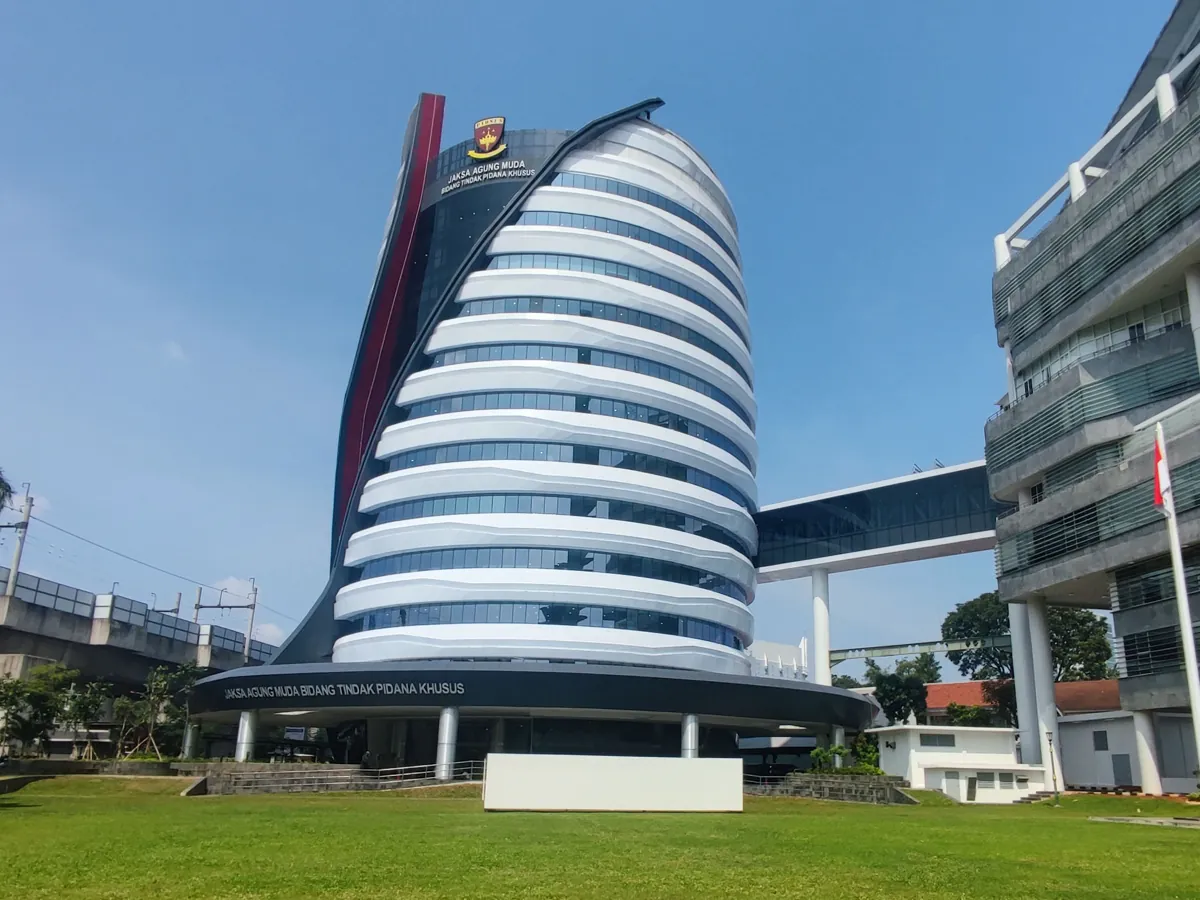
Nine days after publicly insisting his institution was operating normally, Febrie Adriansyah, Indonesia's deputy attorney general for special crimes, is now a suspect in a case handled by the same Attorney General's Office (AGO) he served. The AGO formally received the case files, evidence, and a suspect from the National Police on Friday, July 17, 2026, covering three alleged corruption cases that also name Febrie. The move has drawn conflict-of-interest accusations from Indonesia Corruption Watch (ICW) and constitutional law academics.
The sequence began on Friday, July 10, 2026, when Febrie held a press conference at the Attorney General's Office building in Jakarta, reading a six-point statement in response to a police raid tied to three corruption cases implicating the prosecution service and its officials. "As we all know, there is a lot of reporting and information circulating about law enforcement actions by the National Police," Febrie said at the time, insisting that the special crimes unit's work was proceeding as normal and that the AGO respected the police's legal process.
Less than 24 hours later, his position flipped. On Saturday, July 11, 2026, Febrie resigned as deputy attorney general for special crimes and was immediately named a suspect by the police's anti-corruption task force (Kortas Tipidkor) in an alleged coal-procurement corruption case tied to a coal-fired plant owned by PLN, the state electricity utility.
Why did the police hand this case to the Attorney General's Office?
Under Indonesian criminal procedure, prosecutors hold the authority to investigate and prosecute corruption cases involving state officials once investigators declare a case file complete. Brigadier General Boro Windu, deputy head of the police's anti-corruption task force, said the AGO took full authority over the ensuing investigation once the transfer was completed on July 17, 2026.
The transfer carried significant weight: suspect Don Ritto, described as a subordinate of Febrie's, along with evidence gathered from raids at 12 locations. Police Commissioner Budi Hermanto, head of the Jakarta Metro Police public relations bureau, detailed the evidence handed over: Rp6.059 billion in cash, 74 gold bars weighing about 74.01 kilograms, $6,370,921 in cash, and S$16,068,804. Investigators searched two of Don Ritto's houses in Gandaria Selatan and Cilandak, plus a cafe and a money changer in Cipete, South Jakarta. The convoy transferring the case was escorted by fully armed Brimob officers, and Don Ritto was detained at the Attorney General's Office's 7C detention facility the next day, July 18, 2026, following a pattern similar to other corruption suspects held at the institution, including former National Nutrition Agency head Dadan Hindayana, who was detained by the AGO over free-meal program corruption.
Why are there conflict-of-interest allegations?
The lead suspect in this string of cases, Febrie Adriansyah, is a former top official in the very unit now assigned to investigate his own case. Beni Kurnia Ilahi, a researcher at Andalas University's Center for Constitutional Studies (Pusako), said the public has a logical reason to question the process's objectivity. "But institutionally, the public has a logical reason to doubt the objectivity of this process because of the potential for a conflict of interest," he said, recommending that the Corruption Eradication Commission (KPK) consider taking over the case under its authority in the KPK Law.
ICW researcher Almas Sjafrina said returning the case to the AGO, rather than to the KPK, which is independent of Febrie's institution, undermines the point of the crackdown. "Instead of efficient case handling, this move looks more like legal acrobatics loaded with conflicts of interest," she said.
That scrutiny surfaced earlier, on Monday, July 13, 2026, four days before the formal transfer, meaning the conflict-of-interest criticism was raised before the AGO actually took over the files, not after. The KPK, through its spokesperson, took a neutral stance, saying it trusted both institutions' professionalism and urging the public to respect the ongoing legal process, without directly addressing the conflict-of-interest questions raised earlier by ICW and Pusako.
Three cases ensnaring Febrie and Don Ritto
The cases now before the AGO span three separate files: alleged corruption in coal procurement for a PLN power plant, alleged corruption in the management of PT Asabri funds from 2020 to 2025, and alleged money laundering tied to the settlement of PT CBS's debt to PT KNI, a subsidiary of PT Krakatau Steel. Febrie has been questioned as a suspect over the flow of funds, while Don Ritto is a suspect in all three.
According to several reports, both men remain witnesses, not suspects, in the Krakatau Steel and coal money-laundering cases, even though both already hold suspect status in the other case, a gap that could slow the process if the AGO does not explain it openly.
What to watch
The public is waiting to see whether the AGO will form an independent investigation team or bring in external oversight, such as the Prosecutorial Commission, to ensure the handling of Febrie and Don Ritto's case is free of internal interference. Pusako's recommendation that the KPK use its supervisory or takeover authority has not yet drawn a concrete response. The value of the evidence now in the AGO's custody, from rupiah, US dollars, and Singapore dollars to gold, still leaves a question ICW says remains unanswered: who legally owns the funds, and where did they come from.
Comments