


Indonesia is one of the fastest countries to embrace generative AI. About 92 percent of knowledge workers there already use it, the highest rate in the world. Measured by its effect on productivity, though, the payoff has not matched the enthusiasm. That is the paradox behind our carousel: the country most eager to try AI has not yet turned that into economic value.

Plenty of users, not yet plenty of gains
The 92 percent figure leads the world. The question is no longer how many people want to try AI, but what happens after they do. Usage that high has not automatically translated into a jump in productivity. Adoption is climbing fast, while the value it creates lags behind.

AI is in use, but for what?
The data explains the gap. Among generative AI users in Indonesia, only 12.37 percent use it for productivity. The rest goes elsewhere: 43.98 percent for learning and finding ideas, 29.52 percent for entertainment. The tools have entered the daily routine, but the way people use them does not yet point toward work output. AI is more often a companion for exploration than a machine for getting jobs done.

High adoption does not mean maturity
The 92 percent figure is easy to read as a sign of maturity. But AI maturity in an organization is not measured by how many people try it. It is measured by whether AI is connected to work processes, clean data, and clear decisions. Without that foundation, adoption stalls as a number. The signal lines up with the finding that most companies say they are not truly ready to operate AI, even as their employees already use it.

What sets that 12 percent apart
The group that turns AI into productivity does not win by using the most advanced model or by writing flawless prompts every time. The difference is simpler and harder at once: they know which task they want AI to help with. They do not just experiment. They take one specific job, do it with AI, then measure the time it actually saves and the quality it actually raises.

AI does not make us productive on its own
AI can speed up work, but only if you know which work you want to speed up. Without a clear goal, it easily settles into being an exploration tool that is interesting to try but does not necessarily change the outcome. The most common uses, like summarizing a chat and stopping there, rarely touch core work. The same tool could lift more important tasks, but it is rarely taken there.
From adoption champion to results champion
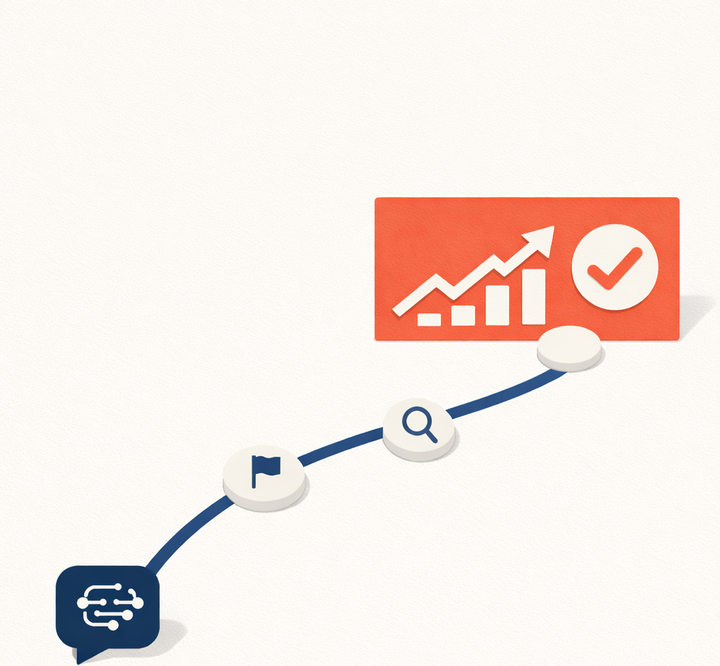
Indonesia has already proved it can adopt AI quickly. The next challenge is no longer about who tries it the most, but who can turn it into real work output. The gap between adoption and productivity is not a verdict but room to improve: start with one routine task, do it with AI, measure the impact, then expand what proves to work. That is where the world's highest adoption rate can become an advantage you can actually feel.